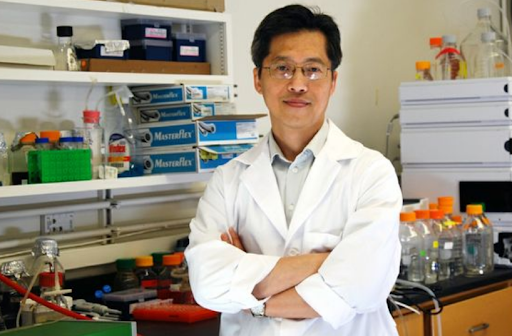





Martin Schrimpf is a researcher specialized in NeuroAI, an interdisciplinary field that connects neuroscience with artificial intelligence and advanced computational systems. His work seeks to understand how the brain functions through technological modeling. He currently develops artificial intelligence systems inspired by the structure and dynamics of human neurons.
Schrimpf is a lecturer and researcher at the Neuro-X Institute of the École Polytechnique Fédérale de Lausanne, a center recognized for integrating neuroscience with advanced AI systems, neurotechnology, and neurocomputation. There, he leads a research group focused on examining how the brain responds to computational stimulation and how those responses can inform artificial models.
Martin completed a Bachelor of Science in Information Systems, followed by a Master’s degree in Software Engineering, and later earned a PhD at the Massachusetts Institute of Technology, where he deepened his expertise in brain and cognitive sciences. He also teaches two courses: one on the foundations of neuroscience for engineers and another on computational systems.
Why is he a prominent figure? Within his field, and in collaboration with the Lausanne institute—one of the early institutions systematically analyzing NeuroAI—he has been recognized by companies and scientific publications for his influence. Scientific journals and MIT News have highlighted his work and research contributions.
Schmidt Sciences is a scientific organization that promotes solutions through science and technology. One of its initiatives, AI 2050, awarded Martin a fellowship, making him part of the program. Throughout his career, he has received multiple grants supporting innovation in NeuroAI.
The scientist has also received awards from research organizations. Alongside his entrepreneurial project, he was a finalist in the Google.org Impact Challenge, an initiative designed to fund promising innovative ventures led by emerging leaders.
What does Martin Schrimpf seek within NeuroAI?
The specialist tests human participants on vision and language tasks and then replicates the same processes using AI models. The purpose is to use human behavioral and neural evidence to train artificial systems, aiming to align machine intelligence more closely with biological cognition.
As a researcher, Martin focuses on comparing artificial neural networks with human neural data, seeking to approximate intelligence and comprehension mechanisms observed in the brain. Brain-Score is one of the startups he has founded. The company maintains a large database containing hundreds of neural recordings and computational models.
“Artificial neural networks show similarities at the neuronal level with the brain’s processing units,” Martin has stated, adding that the most complex aspect of his work is data analysis. In interviews, the German-born researcher has expressed his ambition to develop a digital twin of the brain, a goal that drives his company’s long-term research agenda.
Aware of both the scope and the limits of AI, he has noted that certain areas remain far from technological replication, although he remains optimistic about current advances. Vision and language were the first domains explored by Brain-Score.
Before focusing on his startup and other ventures he previously founded, the German scientist worked at MIT, at Salesforce Einstein—the company’s artificial intelligence division—and briefly at Harvard Medical School as a neuroscience researcher.
Brain-Score, Schrimpf’s platform
Brain-Score, the startup founded by the researcher, collects, analyzes, and interprets neural data from the human brain through structured vision and language tasks, using these prototypes to evaluate artificial intelligence models. After benchmarking performance, the platform provides ranked models to researchers for further study and development.
Neurocomputation, neurotechnology, and the broader NeuroAI field converge with cognitive science and the study of brain function. Schrimpf established a scoring system for implemented models, ranking them from highest to lowest according to benchmark performance as a reference standard.
On the platform’s website, the two principal domains highlighted are vision and language. In interviews, Schrimpf has emphasized that these two areas currently offer the most accessible and measurable pathways for aligning AI systems with neural data.
Martin Schrimpf has become a reference figure in NeuroAI. His international recognition and the impact of Brain-Score consolidate his current influence within the field.