

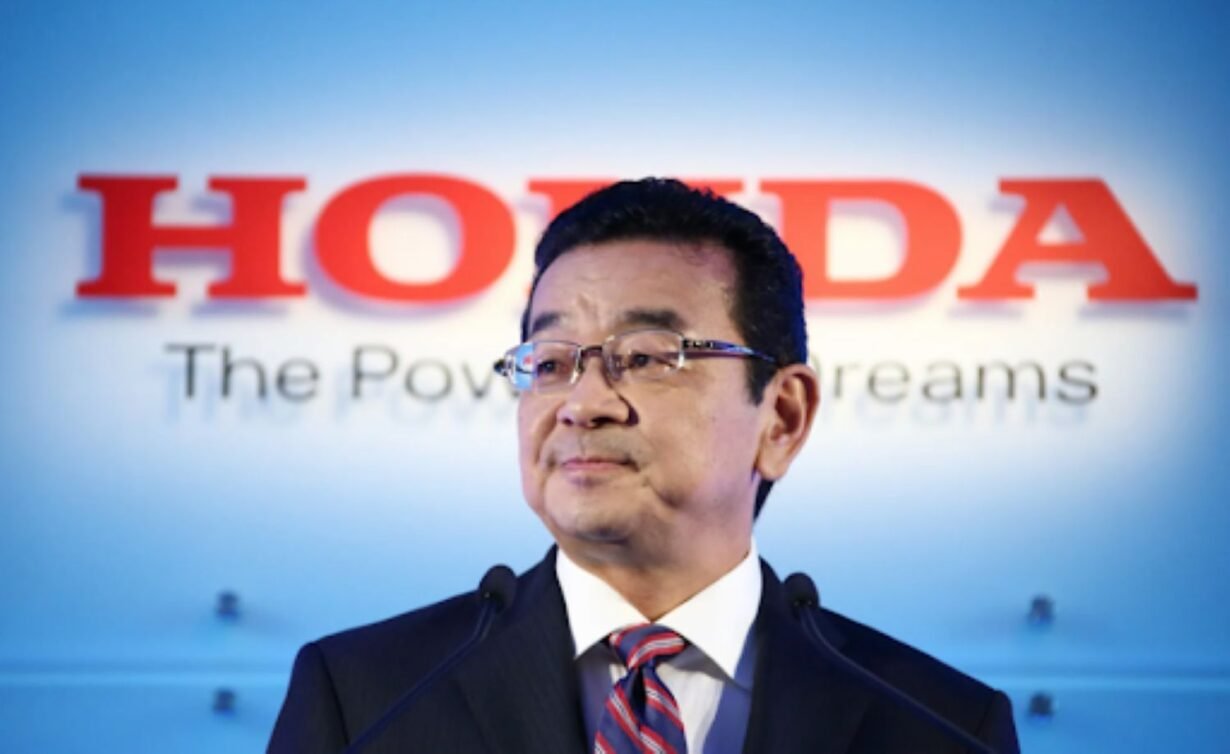
Takahiro Hachigo, born on May 19, 1959, in Japan, is an engineer who served as Chief Executive Officer of Honda Motor Co. from June 2015 to April 2021. During his six-year tenure, he faced significant structural challenges, including the closure of two major production plants and the operational disruptions caused by the Covid-19 pandemic.
Hachigo spent most of his professional career within Honda. He joined the company in 1982 as a chassis engineer, a technical role involving vehicle structure and performance systems. After stepping down as CEO, he remained a member of the board of directors, contributing strategic oversight based on decades of internal experience.
Throughout his progression within the company, he held multiple international assignments. He worked in Europe and later in the United States, two of Honda’s most strategic global markets. He was subsequently appointed Managing Officer in China, acting as a bridge between executive leadership and corporate governance. In 2015, he succeeded the previous CEO and assumed leadership of the company.
What were Hachigo’s most decisive measures as CEO?
His appointment did not represent a radical break with Honda’s prior direction, given his long-standing involvement in the organization. In his early years as CEO, he implemented model optimization strategies across selected production plants to reduce costs and address declining margins. His broader strategy focused on the gradual electrification of Honda’s product portfolio, with long-term targets extending to 2030 and beyond. Under his leadership, Honda strengthened alliances with U.S.-based partners to reinforce its competitive positioning.
In 2019, following operational setbacks, Hachigo reduced the size of the senior management structure and initiated internal restructuring. More significantly, Honda announced the closure of two key plants: Swindon in the United Kingdom and Sayama in Tokyo. The Swindon decision, revealed in 2019, triggered political and labor backlash. Honda justified the move as part of a global reorganization strategy aimed at cost control and resource concentration in core markets.
Production at the Sayama plant had declined by approximately 40 percent over two decades, prompting a reassessment of operational efficiency. The closures were aligned with the company’s long-term electrification roadmap and cost restructuring objectives. During his tenure, Honda established a target of achieving a fully electrified lineup by 2040.
Despite a turbulent period beginning in 2019, Hachigo stabilized financial performance by year-end, though annual profits remained below previous benchmarks. His leadership centered on restructuring operations, streamlining model portfolios, and concentrating production in key markets such as the United States, China, and Japan.
Electrification
Electrification refers to the strategic shift from internal combustion engines toward hybrid and fully electric vehicles. Under Hachigo’s direction, Honda accelerated the development of hybrid models and expanded its electric vehicle roadmap. His tenure formalized long-term timelines for transitioning the company’s fleet toward electrified systems.
After leaving the CEO position in 2021, Takahiro Hachigo stepped away from the forefront of the automotive industry, concluding a four-decade career defined by engineering expertise and corporate restructuring during a period of global industrial transformation.