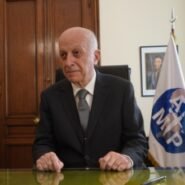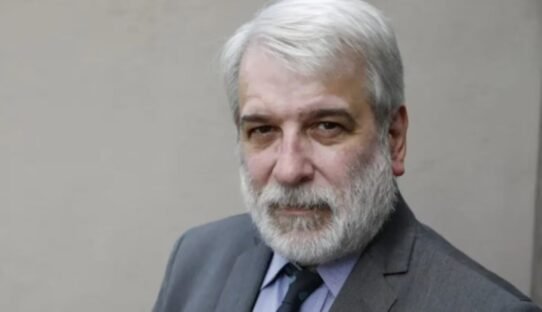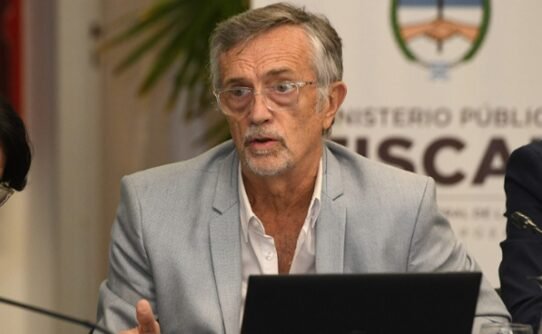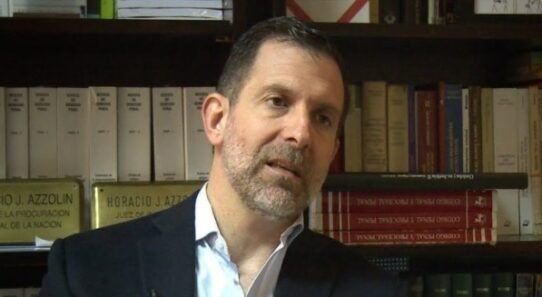




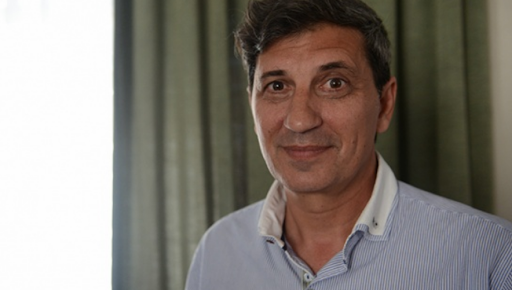
Alejandro Alagia, born in 1963 in Caballito, Buenos Aires, Argentina, serves as General Prosecutor before the Federal Oral Criminal Court. He is also a full professor of Criminal Law at the University of Buenos Aires. His professional trajectory is linked to criminal law and to the field of human rights. Alagia received his academic training at the University of Buenos Aires and later obtained a Doctorate in Criminal Sciences in Guatemala, strengthening his specialization in penal theory and legal doctrine.
In 1985 Alagia formally entered the Argentine judicial system, and in 1993 he became a prosecutor representing the National Public Prosecutor’s Office. Since 2009 he has served as General Prosecutor within the unit responsible for assisting cases involving human rights violations committed during the period of state terrorism. In 2001 he also participated in a selection process organized by the Office of the Attorney General of the Nation and was later appointed prosecutor before federal oral criminal courts.
His position allowed him to participate in major trials, including the ABO case initiated in 2009, which investigated clandestine detention centers operating during the last military dictatorship. Throughout his career Alagia has taken part in numerous trials related to crimes against humanity. These crimes involve serious violations of international human rights law and include acts such as kidnapping, torture, killings, forced disappearances, and other forms of repression.
The trajectory of Alejandro Alagia within the Judicial Branch
Alagia assumed responsibilities as General Prosecutor in cases related to human rights violations committed during the period of state terrorism. His work focused on trials concerning crimes against humanity, a field that requires extensive legal analysis and historical investigation. Within the Argentine criminal justice system, prosecutors must present accusations, analyze evidence, and participate in oral proceedings before federal courts.
Through his role within the Federal Oral Criminal Courts in Buenos Aires, Alagia developed broad experience within the Public Prosecutor’s Office and later continued his career in prosecutions related to human rights violations. These judicial processes are particularly significant because they address acts considered serious breaches of international law.
Crimes against humanity typically involve investigations concerning abductions, torture, killings, and other forms of violence carried out during systematic repression. Argentine courts have determined that such acts constitute violations of international human rights law and therefore must be prosecuted under the category of crimes against humanity.
The position of General Prosecutor involves not only participation in trials but also extensive investigative work. This includes examining archival documentation, coordinating expert analysis, and reviewing historical records connected to different cases. The role therefore combines legal responsibilities with administrative and investigative tasks within complex judicial proceedings.
Alagia’s work also requires coordination with various institutions and research teams that investigate human rights violations. These include human rights organizations, the Public Prosecutor’s Office, and other sectors that collaborate in the reconstruction of historical evidence.
The academic profile developed by General Prosecutor Alagia
Alongside his judicial career, Alagia has maintained an academic profile linked to the University of Buenos Aires. He studied law at the Faculty of Law of the University of Buenos Aires and later became a professor of Criminal Law at the same institution. His Doctorate in Criminal Sciences obtained in Guatemala strengthened his knowledge in specialized areas of legal doctrine, and he later produced academic work examining the structure of criminal law and the functioning of Argentina’s penal system.
He has also completed postgraduate studies and delivered lectures at various universities on topics related to criminal law. His academic influence extends beyond Argentina and has reached other countries in Latin America through his teaching and publications.
Alagia is coauthor of Derecho Penal, Parte General, one of the most widely used academic texts in Argentine legal education. The book provides analysis of criminal law doctrine and examines the limits of state authority within the penal system.
Another area of his academic work explores the concept of punishment and the representation of the offender in trials concerning crimes against humanity. These studies present institutional critiques of the Argentine criminal justice system and examine the role of victims within legal processes.
His reflections often focus on the expansion of criminal law and on the challenges created by the growth of penal intervention within judicial systems. Throughout his professional career Alejandro Alagia has worked in different areas of the legal field while maintaining a consistent engagement with debates surrounding criminal law and human rights.
As General Prosecutor and specialist in criminal law, he has spent many years analyzing, regulating, and participating in trials related to crimes against humanity, cases that represent some of the most serious violations recognized under international law.