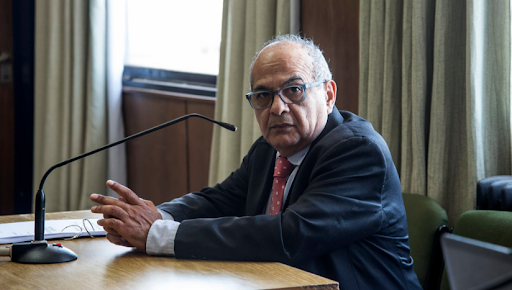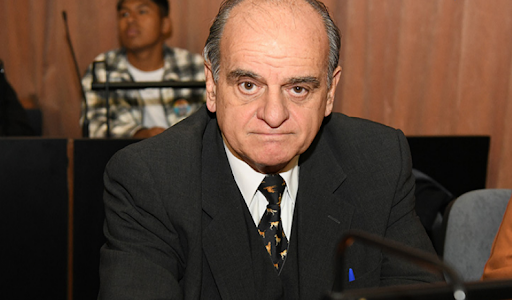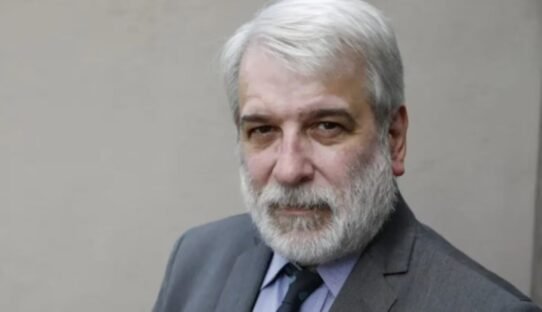




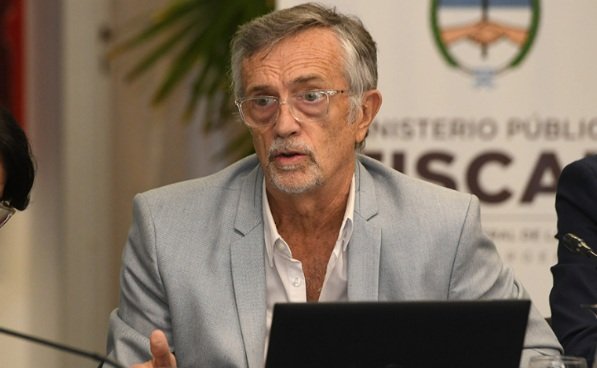
Carlos Cearras, born on December 26, 1958, in Buenos Aires, Argentina, is a federal prosecutor whose professional trajectory has been closely linked to economic criminal cases. He is a lawyer and serves within the Federal Prosecutor’s Office connected to the Federal Court of San Martín, specifically in the Federal Criminal and Correctional Prosecutor’s Office No. 7. This office forms part of the Public Prosecutor’s Office, an institution that operates independently from the Judicial Branch. Over the course of his career he has also worked within National Criminal and Correctional Courts and within the Public Defender’s Office.
Cearras holds several academic qualifications in addition to his law degree from the University of Buenos Aires. He completed postgraduate studies and a master’s specialization related to law, economics, and international relations. His academic background has also led him to participate as a speaker and panelist in different legal conferences and professional forums.
His professional work is closely associated with the investigation of complex crimes, particularly those related to corruption, economic crime, smuggling, and offenses against public administration. As a specialist in economic criminal cases, he has recently been involved in investigations with strong political and social impact, including judicial proceedings connected to the Argentine Football Association and allegations involving money laundering and shell companies. In that context, Cearras determined that the investigation concerning certain authorities of the organization should continue under the jurisdiction of the original judge assigned to the case.
His participation in judicial files reflects the increasing complexity of investigations related to money laundering operations, tax evasion, smuggling, and administrative corruption. These cases often require detailed analysis of corporate structures, financial transactions, and asset movements. For that reason, the work of prosecutors in this field involves close coordination with forensic accountants, regulatory agencies, and specialized units dedicated to financial crime investigations.
The importance of Cearras in economic criminal cases
Federal prosecutors play a significant role in economic criminal investigations because these cases demand extensive technical analysis and complex investigative work. Financial documentation, banking transactions, corporate records, and accounting reports must be carefully examined to determine whether irregularities or illegal activities have occurred. Prosecutors therefore work in coordination with specialists and regulatory bodies capable of analyzing financial evidence.
Economic criminal cases are often sensitive because they involve the management of public resources or the actions of public officials. Allegations concerning money laundering, corruption, or misuse of funds frequently have political and institutional consequences that extend beyond the legal sphere. In this context, the role of the prosecutor involves not only technical investigation but also maintaining the judicial process within an institutional environment that may be influenced by public scrutiny and political tension.
Cearras’s professional trajectory within the judicial system reflects a profile oriented toward investigating economic crimes that have institutional and political relevance. His work within the Public Prosecutor’s Office frequently involves cases that examine alleged administrative irregularities, complex financial structures, and high-level institutional decisions.
The intervention of prosecutor Cearras in the AFA case
Federal prosecutor Carlos Cearras played a notable role in the judicial investigation related to the controversy involving the Argentine Football Association (AFA). Within this process he promoted several preliminary investigative measures designed to analyze the credibility of the accusations and determine the appropriate jurisdiction for the case.
The investigation examined the role of leading authorities within the organization, including its president Claudio Tapia and the treasurer Pablo Toviggino, in connection with allegations regarding the institutional functioning of the body that governs professional football in Argentina.
Cearras requested analytical measures aimed at clarifying whether the accusations presented sufficient legal grounds and whether federal courts had the competence to intervene. These actions fall within the responsibilities of the Public Prosecutor’s Office, which must evaluate the legal viability of complaints before the formal progress of judicial proceedings.
He also raised questions regarding the initial jurisdiction of the case, arguing that the matter might have been more appropriately examined within the Economic Criminal Court rather than the Federal Court of San Martín. Such procedural considerations are common in complex economic investigations, where jurisdictional questions can influence how cases are processed.
The participation of Cearras in this investigation illustrates the broader role played by the Public Prosecutor’s Office in overseeing possible irregularities within institutions that, although formally private, have significant influence on public life. In the case of the Argentine Football Association, its economic and social impact within the country explains why institutional decisions can become matters of public and judicial interest.
The legal opinion issued within the investigation involving the AFA and alleged irregularities among its leadership prompted deeper examination of the case. Cearras’s involvement highlighted the significance of prosecutorial work in cases with major institutional impact, particularly those connected to financial transparency, governance, and accountability within influential organizations.