


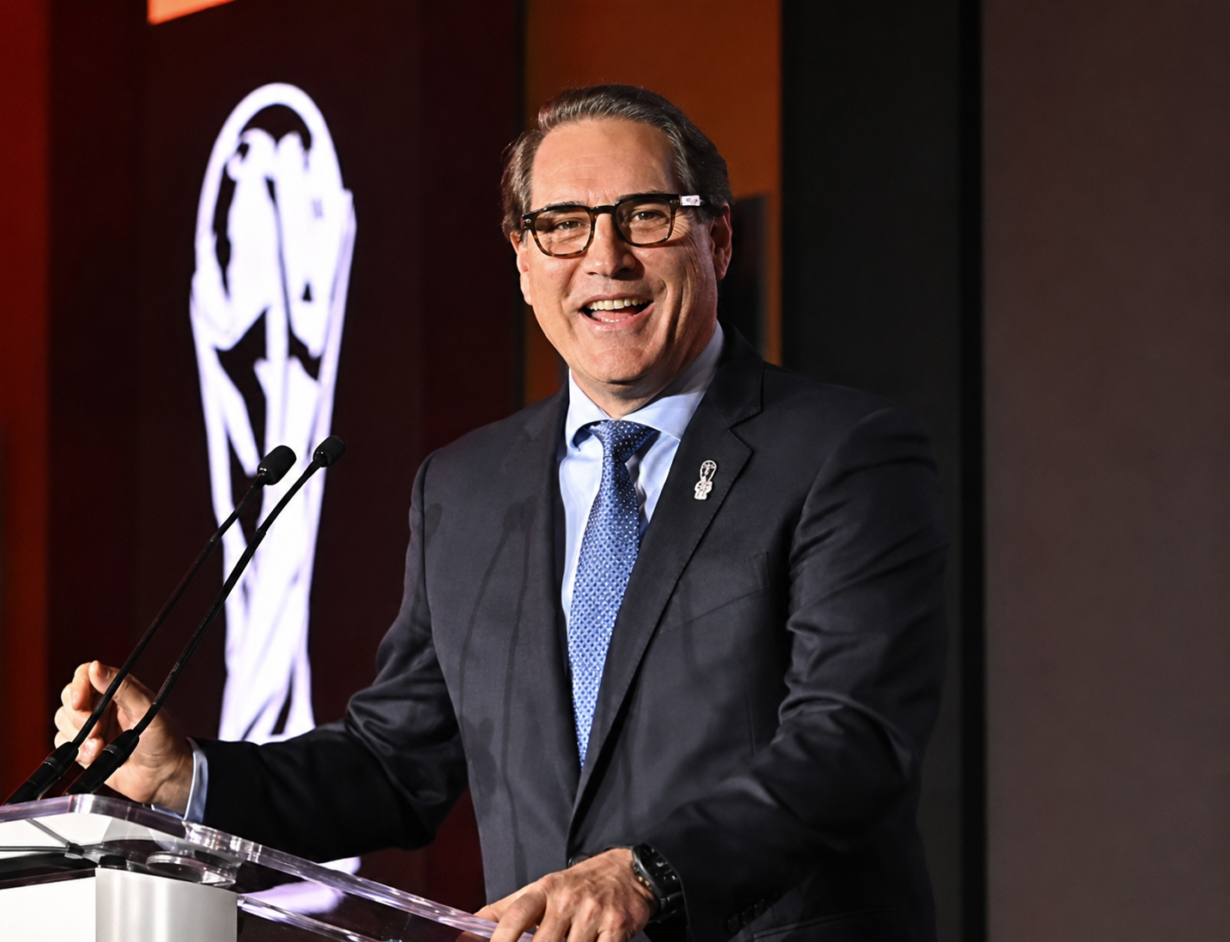
Coca-Cola chose an agricultural engineer as its new CEO, someone who spent much of his career around plants, operations and bottlers. For a company known around the world for its brands and advertising, that detail offers a useful clue about the kind of leader it wanted for this stage.
Henrique Braun became CEO on March 31, 2026, after nearly thirty years with the company. He had joined in 1996 as a global engineering trainee in Atlanta. From there, he moved through supply chain, new business development, innovation and operations, with roles across Europe, Asia and Latin America. He later led Brazil, the entire Latin American region, international development and, before becoming CEO, global operations.
It is not the usual path to the top of one of the world’s best-known brands, but many of the priorities Braun is setting today come precisely from having seen the business from that side.
What the company does not manufacture
There is something about Coca-Cola’s business that is easy to miss from the outside: the company itself does not manufacture or distribute much of what people drink under its brands. It produces concentrate, develops products and manages the brands. Then come the bottlers: independent companies that manufacture, package and distribute the beverages, place coolers in stores and negotiate with supermarkets and other retailers.
In North America alone, there are 64 bottlers, many of them still controlled by families that have been in the business for generations.
That means running Coca-Cola requires a particular kind of management. Sending a strategy down from Atlanta is not enough. For it to work, the bottlers have to believe in it and move in the same direction.
Braun knows that part of Coca-Cola well. When he talks about the company’s recent growth, he insists that much of it came from better coordination between Coca-Cola and its partners in each market. He does not present that as a courtesy to the bottlers: for years, making that system work was precisely his job.
The same package, two prices
Braun says consumer demand remains solid overall, but he also sees lower- and lower-middle-income households paying much closer attention to price.
Coca-Cola’s answer is not to choose between inexpensive and premium products. It tries to offer both.
The example Braun often uses is a small can. Sold as part of a multipack in a supermarket, it can work as a premium option: the customer pays more per liter in exchange for a smaller, more convenient portion. The same can, sold individually through another channel, can be one of the cheapest ways to buy the brand.
For Braun, that shows why price does not explain the entire purchase. What something costs matters, but so does what the consumer wants at that particular moment and whether the product feels worth the money.
Second-quarter results gave him some support. Global volume increased 5%, net revenue rose 7% and earnings per share climbed 16%. Coca-Cola also raised its outlook for the year.
And this time there was an important difference: growth did not come only from charging higher prices. The company also sold more units. After several years in which much of the growth in consumer goods came from price increases, that is not a minor distinction. Every operating unit grew, with water, sports drinks, coffee and tea among the strongest categories.
Braun has organized his strategy around four words that begin with the same letter. He acknowledges that his technical background shows here: he likes reducing a large idea to something people can remember.
The first is about understanding what consumers want in each market and using those insights to build large brands. The second is innovation. Coca-Cola has nine centers around the world dedicated to developing products and testing new ideas.
The third is staying close to the communities where the company operates. And the fourth is preparing Coca-Cola for an increasingly digital business, while recognizing that each country is moving at a different pace.
On that last point, Braun tried something unusual. He brought together Coca-Cola’s top one hundred leaders and added artificial intelligence to the discussion. They created profiles representing an investor, someone from the people function, a bottler and a community voice. The AI followed the entire conversation and, at the end, identified which concerns had been addressed and which had not.
Braun says the result surprised him: the system even recovered issues that had come up during the meeting but that nobody had written down.
Soon afterward, he put an executive in charge of digital transformation, reporting directly to him. She had previously run an operating unit. Even so, Braun draws a distinction: Coca-Cola does not need to become a technology company. It needs to use technology to do better what it already knows how to do.
What he refuses to promise
There are two figures Braun prefers not to put on the table.
One is how much of Coca-Cola’s portfolio will eventually be sugar-free. When asked, he avoids giving a percentage or a deadline. He says consumers will ultimately determine that mix and that the company’s job is to have both options available and try to anticipate what people will want.
The other is how much Coca-Cola should spend in the communities where it operates. Braun does not set a figure there either. He says it matters less whether the money comes from the foundation, the company itself or its bottlers than what that spending actually achieves.
The Coca-Cola Foundation has distributed US$1.7 billion since it was created, including US$277 million in Atlanta. Braun served on its board until becoming CEO, when corporate governance rules required him to step down.
In both cases, he avoids committing to a number that does not depend entirely on him. That may say more about the kind of CEO Coca-Cola chose than any management slogan: someone used to running an enormous system where almost nothing happens alone, and where a decision made in Atlanta only matters if the rest of the network can actually put it into practice.