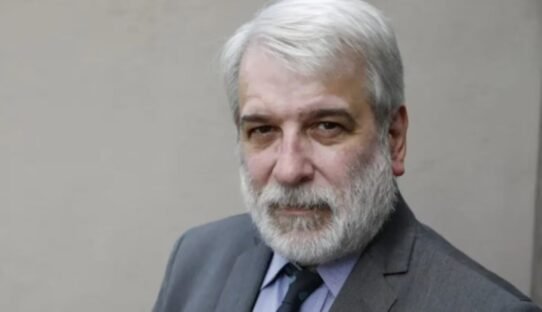


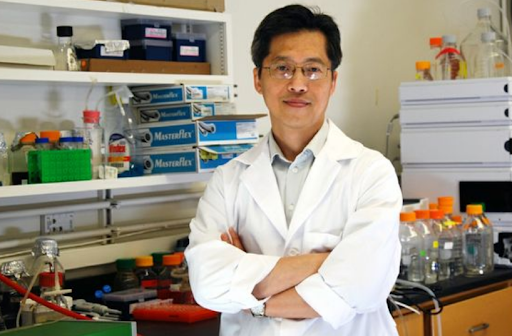
James Liao, born in Taiwan in 1958, is a researcher and chemical engineer who works as a bioengineer between the United States and Taiwan. Over several decades in the U.S. academic and research ecosystem, he has become a bridge between both countries through contributions in metabolic engineering and bioenergy.
His résumé includes awards and recognitions from universities and scientific and engineering institutions. A major part of his influence comes from concentrating on metabolic engineering and bioenergy, two areas that combine chemistry, biology, and process design to reprogram how cells transform inputs into usable energy carriers or industrial molecules. He also built and led a research laboratory focused specifically on metabolic engineering challenges.
The United States has repeatedly recognized his work in science and bioenergy, including election to the National Academy of Sciences and the National Academy of Engineering. He has also been associated with international scientific bodies and received public recognition for innovation connected to renewable energy. In Taiwan, he held a top leadership role at Academia Sinica in Taipei, while maintaining academic activity in higher education and research training.
The academic background of James Liao
He first graduated in Taiwan with a degree in chemical engineering and then moved to the United States, where he completed doctoral training oriented toward metabolic engineering. As a discipline, metabolic engineering operates by identifying cellular pathways, measuring how biochemical “flux” moves through them, and then redesigning genes and regulatory controls so a microorganism produces more of a target compound with fewer byproducts.
Between 1987 and 1997, he worked as a researcher at Kodak. Later, he transitioned into academia, first as an assistant professor and then as a full professor in the United States, joining a chemical engineering department where he developed early lines of research in metabolic engineering.
A distinctive axis of his work has been the link between metabolic engineering and biofuels: instead of treating fuels as a purely petrochemical outcome, his approach has explored how engineered microbes can convert substrates into higher-value, lower-emission energy molecules. His laboratory also connected with U.S. energy programs oriented toward new fuel pathways, including approaches that combine biology with electricity-driven inputs to expand the range of products that can be synthesized.
What are the fields most explored by Liao?
Metabolic engineering is a broad field that draws on chemistry, biology, biochemistry, biotechnology, and energy systems. It focuses on the metabolism of cells—networks of chemical reactions that convert nutrients into energy and building blocks—and intervenes in those networks to redirect outcomes toward a defined industrial or environmental objective.
Biofuels are a recurring focus because they translate cellular redesign into concrete energy applications. In this domain, engineered microorganisms function as “factories” whose enzymes and pathways are tuned to increase yield, stability, and energy density while reducing waste. Synthetic biology appears as a complementary layer, providing tools to design genetic circuits and pathway architectures more systematically, so biological systems can be optimized with an engineering mindset.
The practical endpoint of this interdisciplinary work is its industrial relevance in “green” chemistry and sustainable energy: biochemical production routes that aim to be scalable, lower-carbon, and less dependent on fossil inputs. Alongside research, Liao has also emphasized teaching and training, working with universities and institutions to form new cohorts of scientists fluent in chemistry, engineering, and biology as a single integrated toolkit.
Why does he remain important?
He became influential by advancing metabolic engineering when it was still consolidating as a discipline, strengthening the integration between biology and engineering, and connecting that scientific base to bioenergy challenges with direct relevance to industry and public policy. His recognitions and leadership roles reflect a career built on translating complex cellular science into usable technological pathways.