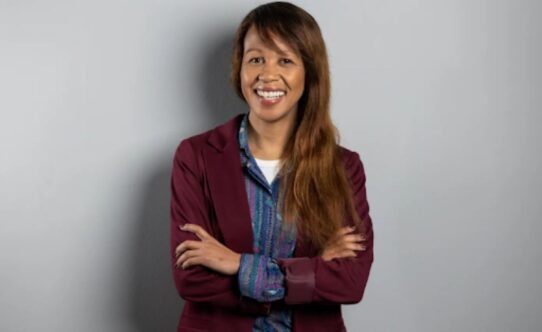

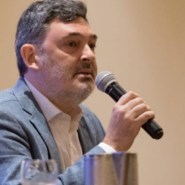



Tan Hooi Ling, born in Kuala Lumpur, Malaysia, is one of the co-founders and former chief operating officer of Grab, a multinational Asian company whose app integrates multiple services, including rides, delivery, and digital payments. In 2023, she announced that she would step away from the company’s operational leadership, and since that year she has served as an adviser to the business.
For several years, Hooi Ling led Grab’s corporate and technology strategy, while also overseeing the customer experience and staff operations. “I feel honored to have been able to stand alongside Anthony and the many incredible Grabbers who share the same values and work ethic to build something that improves lives across Southeast Asia,” she said after her departure from day-to-day operations two years ago.
The Grab co-founder remains at the company as an adviser. The app was created in 2012 and, together with Anthony Tan, the other founder, she raised millions of dollars to position the brand. As former COO, the engineer dealt with Grab’s scale across the region and led the acquisition of Uber’s operations in Southeast Asia, a move that reshaped the market.
In 2019, Forbes, a magazine specialized in the corporate and financial world, launched a section titled “Asia’s Power Businesswomen” and included Tan Hooi Ling as a standout figure for her positive influence at Grab.
Tan Hooi Ling’s Path Before Founding Grab
Her father—a civil engineer—played a role in her initial career choice. She moved to the United Kingdom and studied mechanical engineering at the University of Bath. Her path continued with a first job at McKinsey & Company, a multinational consulting firm focused on strategic and financial management. The American firm supported her Master’s studies at Harvard University, where she attended the Business School.
During her MBA at Harvard, Hooi Ling met Anthony Tan, her future colleague and partner at Grab. She did an internship at pharmaceutical company Eli Lilly and, before founding Grab, worked at Salesforce. Inside the technology company, she applied her academic training and specialized in corporate strategy and operations.
The Grab Co-Founder and Anthony Tan’s Support
In 2014, both returned to Asia and brought Grab to life. Many startups emerge from a problem their founders experience directly. They identify a need and turn it into a product. Grab followed a similar logic, especially around transportation in Malaysia.
How did it begin? While she was in the United States, Tan Hooi Ling developed a manual GPS system to share her location with her mother. She wanted to replicate something similar in Malaysia, given urban congestion and the difficulty of relying on transportation systems. GrabTaxi emerged from the need to connect passengers with drivers in a complex environment.
After finishing her contract at McKinsey, she committed fully to Grab in 2015 and took on the chief operating officer role. In the early years, Anthony Tan played a central role while his co-founder was not yet fully dedicated. He expanded Grab’s taxi service and later added bicycles.
Between 2016 and 2018, the company went through major changes. In 2016 it launched an in-app chat to improve communication between passengers and drivers. A year later, it introduced another feature to streamline contact between drivers and customers through a more organized booking system. In 2018, Tan Hooi Ling led the acquisition of Uber’s services in Southeast Asia, including Uber’s food delivery operation.
As COO, she also influenced Grab’s growth in market share across Asian countries. Indonesia is presented as a clear example of her impact at Grab. From 2017 to 2018, the country reportedly moved from around 30% market presence to more than 60%.
The Three Areas Hooi Ling Led at Grab
When Hooi Ling became COO in 2015, she took on three key responsibilities within the company. She led customer experience, product strategy and development, and human resources. These were different areas, but they were interconnected by the platform nature of the business.
Tan Hooi Ling spent eight years as chief operating officer at her own company. She navigated both strong and highly competitive periods, from the Uber acquisition to significant losses during the Covid-19 period and the rise of new competitors across Southeast Asia. Today, she remains at the company in a secondary role as an adviser.