
In 2012, David Vélez went to a bank branch in São Paulo to open an account. He was made to leave his backpack in a locker and pass through an armored door. There were armed guards. He says he felt under suspicion, even though he had only gone there to deposit his money.
Fifty minutes passed before someone attended to him. The employee handed him some forms and asked what he needed. Vélez came away with the impression that seeing him was a favor.
The process dragged on for five months. When he finally had the account, the fees arrived, along with rates he considered excessive. The branch was in one of São Paulo’s most expensive neighborhoods. He could not stop wondering how customers were treated elsewhere in the country.
He asked his Brazilian friends whether he had been unlucky with that bank. They told him the same thing would have happened at another one. Five institutions controlled around 90% of the system. For them, it was normal, and there was little reason to think it would change.
Vélez could not get used to that explanation. The idea for Nubank emerged from that experience.
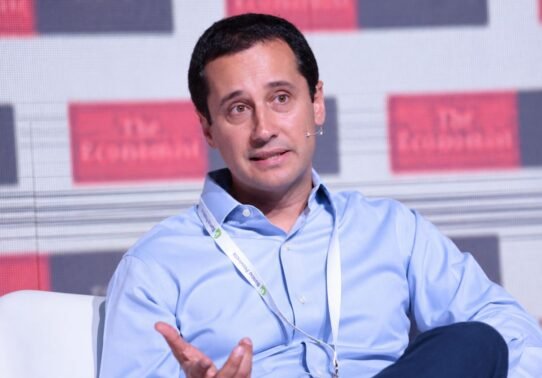
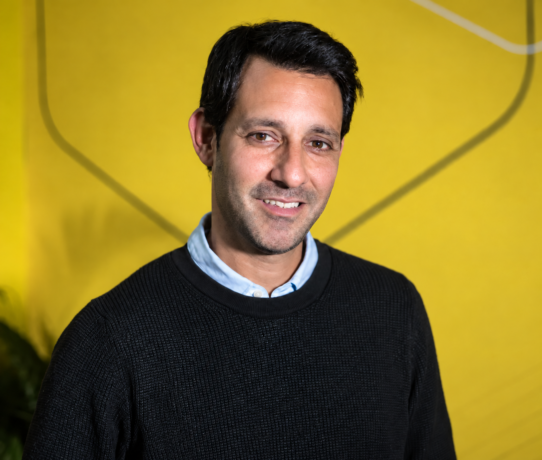
Vélez is Colombian, is 43 and founded Nubank in Brazil, considered the largest digital bank in the Western world. The company reports that it now serves 140 million customers in Brazil, Mexico and Colombia. In January 2026, it obtained conditional approval from the U.S. Office of the Comptroller of the Currency to establish a national bank. In July, Vélez also joined the board of the OpenAI Foundation.
Before Nubank, he had spent twelve years looking for a business idea.
An Idea That Took Time to Appear
There were entrepreneurs on both sides of his family. He grew up with the idea that one day he would have to build something of his own. When he entered university, he was already thinking about founding a company, although he did not know what kind.
As the idea failed to materialize, he began working. Between 21 and 33, he held jobs in the United States and Brazil. An investment fund first took him to the South American country. He returned to the United States and later settled in Brazil again. He still had not found the company he wanted to create, but his years of work had given him more to draw on when choosing.
Vélez believes the idea for Nubank arrived at a good moment. In 2012, smartphone use was growing, and social networks were gaining users. He could already imagine a bank that reached people without depending on a branch.
His former boss, who was also his mentor, had advised him to pay attention to what few people could do. An easy business would attract many competitors. If he chose a difficult one, he would face more obstacles, but also fewer people willing to confront them.
To explain that choice, he often recalls a phrase he attributes to Walt Disney: attempting the impossible means competing with fewer people.
When he reviewed the ideas he had been writing down, he asked himself which would be the hardest and which could change the most things. Banks were among Latin America’s largest companies and provided a service needed by practically the entire population. Competing with them met both conditions.
Looking From the Outside
His former boss listened to the project and pointed out everything he lacked. He had never founded a company, was not a programmer and had never worked at a bank. He had few contacts in Brazil, did not know the regulators and could barely get by in Portuguese.
The list was long. Yet after listing those shortcomings, the same man told him he could hire people who brought that knowledge. And that something worked in his favor: he came from outside.
Having experienced banks in other countries, Vélez found it difficult to accept that things in Brazil had to be that way. His friends were used to it; he still wondered why nobody offered something different.
He often recalls how many Silicon Valley companies were founded by immigrants. He also connects it with his own experience: when someone arrives in a country without family or friends nearby, work can occupy much of their life.
When building the company, he sought partners who brought the experience he lacked. Cristina Junqueira came from Brazilian banking and understood the market from within. Edward Wible brought programming experience. Together, the three could cover many of the gaps his mentor had identified.
A House and a Launch Date
They rented a house in São Paulo for less than a thousand dollars a month. Two of the partners lived upstairs, and the team worked downstairs. There was also a dog.
They had given themselves fourteen months to launch their first credit card. They still had to resolve fundamental questions, including getting Mastercard to work with the company and understanding how to comply with regulation.
Six months in, a change in banking rules shortened their schedule. They lost four months of breathing room and had to reach the market in April 2014.
During that rush, Mastercard told them an approval would take two weeks. Part of the wait involved transporting a document from São Paulo to Amsterdam. They decided to take it personally. The trip saved them two days.
They reached April with twelve people on the team. A video from that time recorded the first attempt to use the card. It failed. They tried again, and it did not work either. Only on the third attempt were they able to complete the transaction.
Initially, the card circulated among friends and family: they went from twelve users to around two hundred. When the public launch arrived, they placed bets on how many people would sign up. They estimated around one hundred applications and received two hundred. Although they had exceeded their forecast, Vélez says they had hoped for more.
In early 2015, articles about the fee-free card began appearing. Applications accelerated: two thousand arrived one day, five thousand another, then ten thousand. They ended the month with thirty thousand applications.
They could not process them all and had to introduce a waiting list. New users needed an invitation from an existing customer. Facebook groups appeared to obtain them, and some people began selling them on Mercado Libre, even though Nubank did not charge for them.
They had calculated that they would reach one million customers in five years. They did it in two.
Room to Grow
For Vélez, what he experienced in Brazil also happens in other countries. If almost the entire business is controlled by a few banks, customers struggle to find alternatives and end up paying more. He believes operating without branches allows costs to be reduced and a cheaper service to be offered.
But opening in another country takes time. The rules must be understood, the authorities consulted and permits obtained. In Brazil, Nubank took four years to obtain its banking license. It also required a presidential decree authorizing an exception to constitutional restrictions on foreign investment in banks.
Colombia shows how much room remains. According to the figures Vélez mentions, only 14% of the population has a credit card, compared with 80% in Brazil. Around half of Colombians have a bank account; in Brazil, that proportion approaches the entire population.
Nubank is already Colombia’s fourth-largest financial institution by customer numbers and, according to the company, the fastest-growing in credit cards. It has users in 98% of municipalities.
In Brazil, almost six out of every ten residents are customers of the bank.
Assistance and Accountability
On August 10, 2026, a magnitude 7.4 earthquake, with its epicenter in San José del Palmar, shook Colombia. It was the strongest recorded in the country this century and affected more than 85,000 people.
Vélez and his wife, Mariel Reyes Milk, announced a donation of 100 billion Colombian pesos, around $32 million. They made it through VélezReyes+, the family foundation that funds education and democracy initiatives in Brazil, Colombia and Peru.
The announced purpose was to rebuild schools and other educational facilities. Priority was given to Chocó, a region with severe deprivation and low literacy levels.
Nubank also took measures for customers in the affected areas. It suspended collections, enabled card cash advances and fee-free withdrawals, and prepared refinancing arrangements of between forty and fifty months.
When asked how the use of donations will be monitored, Vélez speaks of trust structures and external auditors. The intention is to explain what happened to each contribution. They also anticipate requiring organizations receiving money through the app’s donation feature to undergo audits.
In that context, he highlights the possibility of working with the authorities. He believes some governments regard businesspeople with suspicion, even when their activity generates competition and employment. He says that when they found a willingness to work together, they decided to move forward.
Learning to Use Artificial Intelligence
To discuss artificial intelligence, Vélez turns to fire. It allowed people to cook, stay warm and change community life. It also caused burns and fires. Learning to use it meant taking advantage of its benefits and finding ways to stay protected.
He thinks something similar will be necessary with artificial intelligence, although its effects could be much greater. Among the possibilities, he mentions advances against cancer, longer lives and tools to fight hunger. Among the risks are fraud and cyberattacks.
These are expectations about what could happen. His position is that focusing exclusively on dangers can prevent people from benefiting. He therefore proposes developing the technology while learning to control its uses. He sums it up with the image of bringing fire protection into the cave.
At Nubank, he seeks to understand where it can be useful. He says he spent a day at a customer’s home in Salvador, Bahia, listening to how she used the services and what difficulties she encountered. He wanted to know what they could improve before deciding how to incorporate artificial intelligence.
If he had to start another company, he would choose health or education. He sees enormous demand in those sectors and an insufficient supply of quality services. He believes digitalization alone has not resolved those difficulties and that artificial intelligence could help.
It is the same question he asked himself when leaving that branch: why a necessary service has to be so difficult to use.