
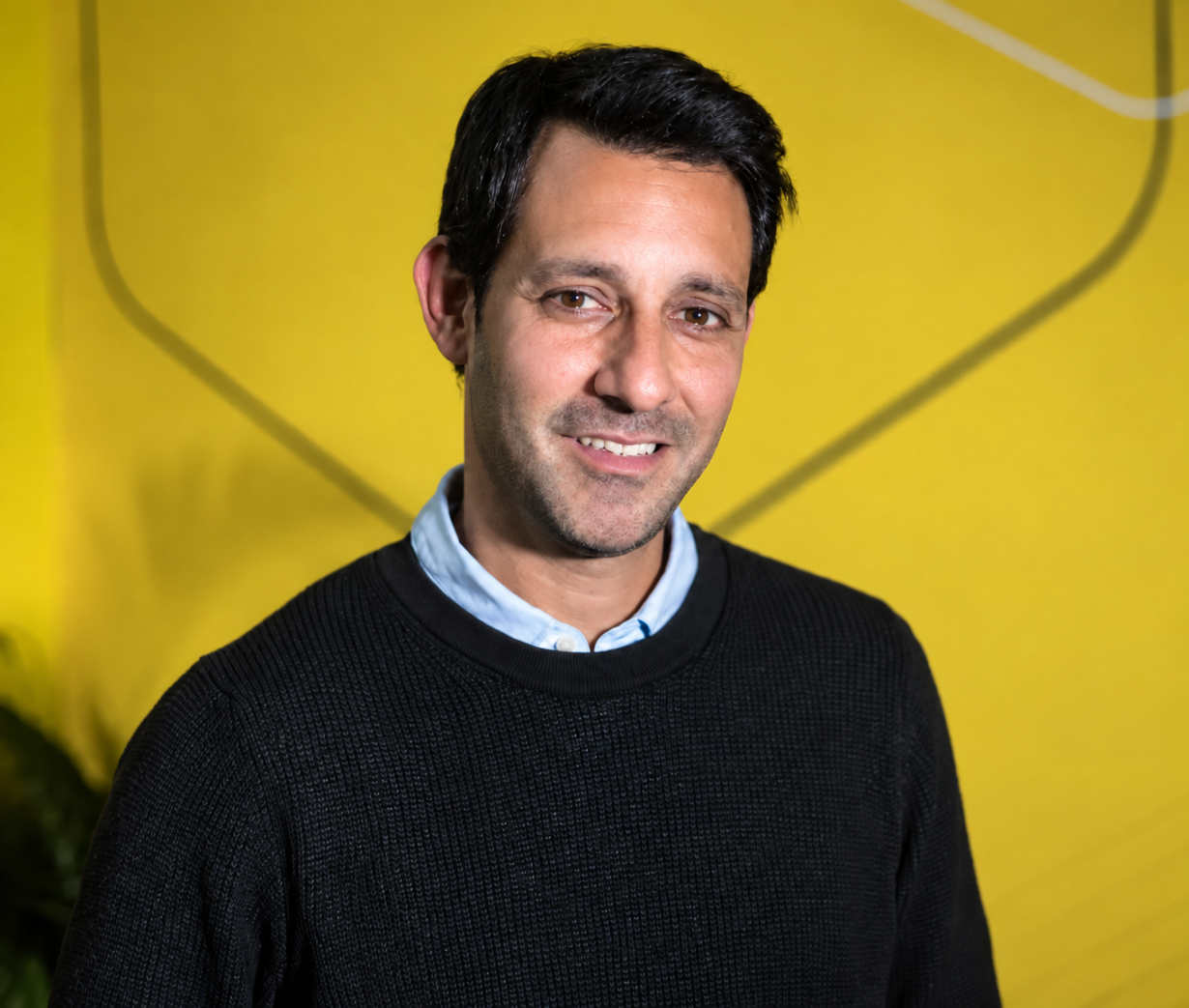
Ariel Szarfsztejn returned to the University of Buenos Aires’ School of Economic Sciences after twenty years. Since graduating, he had been back only once to take care of some paperwork. This time, he had been invited to speak with students and graduates. His father, mother and wife were sitting in the audience.
He was asked how it felt to be there again. He said he was emotional, that returning was “deeply moving.” When the conversation turned to his personal doubts, he laughed and said it felt like a session with a psychologist. Then he answered: he had never felt he could not do it. Problems, he said, usually made him want to keep going.
He has led Mercado Libre since January 2026. He replaced Marcos Galperin, who had held the position since the company’s founding in 1999 and became executive chairman. Szarfsztejn was 43 when the change was announced.
He has an economics degree from the University of Buenos Aires and an MBA from Stanford, although he makes one clarification about his degree: he has never worked as an economist.
He Was Given a Team Before He Had Experience
His first job was in human resources at Citibank. He then joined a pharmaceutical company undergoing insolvency proceedings. With no money to hire an experienced executive, the company offered him responsibility for coordinating production and logistics. He was put in charge of between twenty and thirty people.
He had to learn on the job. He had studied, but a company with financial problems, orders to fulfill and people reporting to him raised questions that did not appear in textbooks.
He later worked at Boston Consulting Group. Every few months, he switched clients and industries: banks, consumer goods, projects with the Chilean government. He says that work taught him how to structure complex problems.
After Stanford, he wanted to move into technology. At Despegar, he began working with developers and understanding how much work lay between having an idea and getting it to function.
He joined Mercado Libre in 2017, recruited by Pedro Arnt, then chief financial officer. He came in to lead strategy, corporate development and investor relations. Nine months later, he was running logistics.
From Sixty People to a Network of Its Own
The change had not been planned. While working in strategy, Szarfsztejn began to see that deliveries were limiting Mercado Libre’s growth. He got involved, helped prepare a plan and ended up responsible for carrying it out.
Until then, he recalls, packages were handled by each country’s postal services. Mercado Libre did not touch the boxes. Changing that meant building warehouses, organizing transportation, developing systems and hiring people.
In 2018, the Mercado Envíos team had sixty people. During the talk, Szarfsztejn said it now had around seventy thousand. He still considers that assignment the hardest job he has ever had.
In 2023, he became president of the commerce business. Three years later, he took over as global CEO.
When asked how he handles the pressure of making decisions involving so much money and so many people, he replied: “The healthiest approach is not being fully aware.”
As he explained, stopping to think about every consequence of every decision could leave him paralyzed. He mentioned around one hundred and thirty thousand employees—admitting he did not have the exact figure—millions of sellers and one hundred and twenty million people who had bought on the platform during the previous year.
What He Sees When Someone Takes a QR Payment
When discussing what he enjoys about his work, Szarfsztejn described a scene on the street: seeing someone using a Mercado Pago QR code to accept a payment or collect a few pesos. In those moments, he says, he understands what their work is for.
He also recalled the introduction of returns on wallet balances in 2018. For him, what mattered was making it easier to invest when doing so had previously required opening an account, filling out paperwork and choosing a product.
In his comparison, Argentina had around four hundred thousand brokerage accounts at the time. Today, he says, twenty million people earn returns on the available balance in the app.
He explains his role through a football comparison. He feels he plays for Real Madrid and is expected to win the Champions League. When asked what that means within Mercado Libre, he answers that it means continuing to improve the lives of those who use its services.
Eight Hours Experimenting With Artificial Intelligence
Szarfsztejn brought some figures to the talk about the use of artificial intelligence within the company. Mercado Libre has twenty thousand developers, he said. The last percentage he had seen indicated that AI generated 40% of new lines of code.
He checked again before the event. He was told they had stopped measuring that percentage because the tools were already part of every developer’s work.
He also uses them to test ideas. One weekend, he spent eight hours at his computer trying to build a program that would bring together his medical records from the previous fifteen years. He wanted to retrieve test results from different medical centers, organize them and track changes over time. He even asked it to produce a diagnosis.
He does not know how to code, he clarifies. He started doing it out of curiosity.
He advised the students to learn how to work with those platforms. He believes that ability will affect their professional opportunities and that they should start now.
Asking Until He Understands
One of his biggest concerns as CEO is preserving Mercado Libre’s way of working as the company grows.
He talks about high standards, collaboration and clear expectations. He also talks about the behavior of those in charge: he believes what they do carries as much weight as what they ask of others.
He likes to get into the details and often asks why a decision was made or why something works a particular way. He acknowledges that this can initially unsettle his teams. He says many of his best ideas come from listening to those answers.
When asked to describe himself, he chooses three traits: demanding, fair and humane.
He Had Not Planned to Get There
Szarfsztejn says he never chose a position based on where he wanted to be ten years later. Nor does he believe he could have planned the path that led him to run Mercado Libre.
His arrival at the company is enough to illustrate the point: he accepted a strategy role and ended up building a logistics operation he knew little about.
That is why, when advising those just starting out, he talks about concrete decisions. Choosing something that allows them to learn, accepting an opportunity even if it was not planned and knowing how to turn down an offer when they feel it is not right for them.
He left the students with a phrase that sums up his way of working: complain less and solve more.