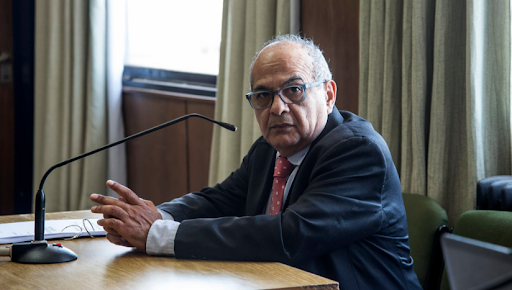




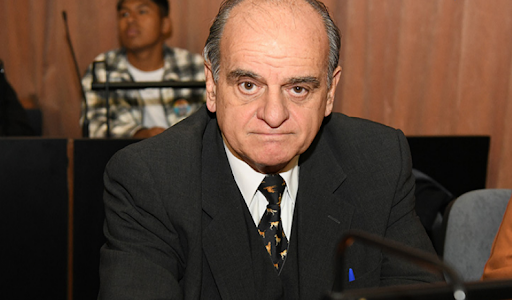
Guillermo Pérez de la Fuente, born in Argentina, is a prosecutor involved in federal criminal cases. He is also the representative and head of General Prosecutor’s Office No. 18 before the Oral Criminal and Correctional Courts. These offices are part of the Public Prosecutor’s Office and represent the State in trials and oral proceedings. Office No. 18 is led by Pérez de la Fuente, who has a trajectory in criminal justice, particularly in investigations related to economic crimes and cases of institutional relevance.
Federal prosecutors within the Public Prosecutor’s Office handle issues such as corruption, money laundering, and crimes against public administration. This institution, part of the judicial system, represents the general interests of society and collaborates with the courts in the investigation and analysis of complex cases.
Within the Public Prosecutor’s Office, several prosecutors operate, including Pérez de la Fuente, who focuses on federal criminal investigations. His name has been associated with cases that had judicial and political impact, particularly those involving alleged irregularities in public administration or large-scale economic activities.
His trajectory is framed within a jurisdiction where investigations may have significant judicial and political consequences. Cases involving public officials or large corporations tend to generate strong public interest, placing prosecutors in positions of high institutional exposure.
The current role of Pérez de la Fuente in the judicial system
Guillermo Pérez de la Fuente serves as a prosecutor within the Argentine judicial system. He participates in investigations related to economic crimes and public administration. His role involves promoting criminal action, coordinating investigative measures, and sustaining accusations when sufficient evidence exists to proceed with a judicial process.
He is a prosecutor with an established career within the Public Prosecutor’s Office, specializing in economic and highly complex criminal cases. His work reflects the central role prosecutors play in investigating crimes that affect both the public and private sectors, within a system where high-impact cases require technical, interdisciplinary, and sustained approaches.
The Lucas González case: the role of de la Fuente and its political and social impact
The case of Lucas González represented a turning point within the judicial system. Classified as a homicide involving the young González, a former youth player of Barracas Central, the case generated controversy and widespread public debate. Pérez de la Fuente played a key role during the process.
As a representative of the Public Prosecutor’s Office, particularly in the final stage, he was actively involved in the oral trial. His intervention focused on reconstructing the accusation, maintaining the aggravated homicide hypothesis, and requesting the highest penalties for those responsible. He emphasized the discriminatory context of the police actions, introducing the aggravating factor of racial hatred or discrimination, arguing that the victims were targeted due to their appearance and social background.
Regarding sentencing, he requested life imprisonment for the three police officers who opened fire, along with severe penalties for those involved in covering up the crime. The ruling determined that Lucas and his friends were victims of institutional violence, validating the prosecution’s argument. The case concluded with life sentences for the officers involved.
In this case, the prosecutor not only upheld the accusation but was instrumental in achieving severe convictions, establishing it as a paradigmatic example of institutional violence in Argentina. The case had a strong political and social impact, particularly regarding issues of police violence.
As a representative of the Public Prosecutor’s Office, Pérez de la Fuente was widely recognized for his work following the trial. He also uncovered evidence of a cover-up, leading to criminal actions against others who attempted to manipulate the case. The investigation demonstrated that the incident was not isolated, but reflected broader patterns of violent police conduct.
Beyond the homicide, the case included serious irregularities afterward: it was revealed that other officers attempted to cover up the crime, including planting a weapon in the victims’ vehicle and falsifying accounts to justify police actions.