




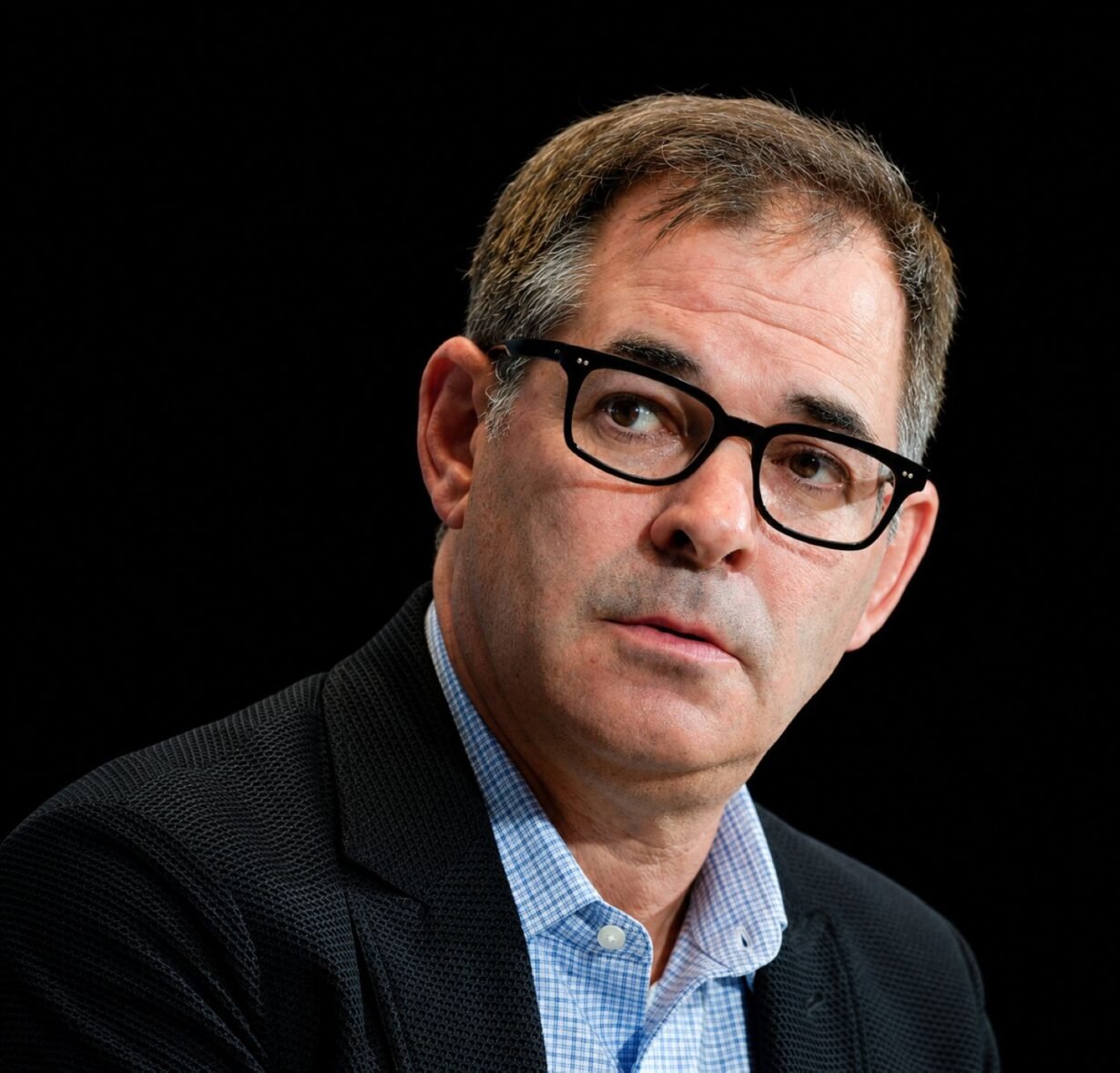
Before running an artificial intelligence infrastructure company, Michael Intrator worked in energy markets. He had studied political science and spent years trading natural gas and emissions credits. His first experience with graphics cards came later, when he and a business partner began experimenting with cryptocurrency mining.
Today, he is co-founder, president and CEO of CoreWeave. The company provides computing power to businesses that develop and use artificial intelligence. Its customers include Microsoft, OpenAI and Meta, which need data centers and chips to train and run their models.
The move from one business to the other took several turns. Intrator started out mining Ethereum with equipment set up in a Manhattan office. Years later, the company left cryptocurrency behind, went public on Nasdaq and began building the infrastructure some of the world’s largest technology companies need.
From Energy Markets to Cryptocurrency
Intrator was born in 1969. He studied political science at Binghamton University and later earned a master’s degree in public administration from Columbia.
His career began far from data centers. He spent about sixteen years at Natsource, a firm specializing in environmental markets, where he worked on transactions involving emissions credits.
In 2013, he founded Hudson Ridge Asset Management with Brian Venturo. The fund specialized in natural gas. The two would team up again a few years later in a very different business.
In 2016, they bought their first graphics card to experiment with cryptocurrency mining. Brannin McBee, who ran a company that supplied data to the fund, joined them the following year, and the three founded Atlantic Crypto.
The company mined Ethereum using Nvidia graphics cards. Venturo recalled that the first machines sat on a pool table in the Manhattan office they shared. Over time, the operation grew into one of the largest in that market, by his account.
Finding Another Use for the Graphics Cards
Cryptocurrency prices fell in 2018, and many miners shut down. Intrator and his partners took the opportunity to buy graphics cards that others were selling at low prices.
Then they had to find a use for the equipment. They began offering computing power to visual effects studios and to companies that needed to render images and video games.
The service proved more stable than relying on the price of a cryptocurrency. The company became CoreWeave and shut down its mining operation for good in 2022.
By then, demand for graphics cards was growing for another reason. Beyond gaming, image rendering and mining, they could be used to train AI models. CoreWeave already knew how to work with them when new customers started to arrive.
The Arrival of Artificial Intelligence
CoreWeave made its first contacts with AI companies through the open-source community. The EleutherAI collective introduced it to Stability AI, and the company also connected with OpenAI through that same network.
In late 2022, Magnetar Capital invested $100 million in CoreWeave. Some of that money went toward buying Nvidia H100 chips, which were in high demand for AI development. Nvidia also became an investor in the company, in addition to supplying its chips.
The expansion showed up in the number of data centers. CoreWeave operated three in 2022 and had more than fifty across the United States and Europe by 2026.
In March 2025, the company began trading on Nasdaq. Its shares were priced at $40, below the expected range, and the offering raised about $1.5 billion. The stock market debut came amid questions about the company’s costs and financing needs.
Revenue continued to grow. In the second quarter of 2026, CoreWeave reported revenue of $2.575 billion, more than double the figure for the same period a year earlier. It projected full-year revenue of between $12.4 billion and $13.2 billion.
Major Customers and Long-Term Contracts
Microsoft was one of the customers that drove CoreWeave’s growth and at one point accounted for nearly two-thirds of its revenue. The company also signed agreements with OpenAI, Meta and Anthropic, among others.
Announced commitments include up to $22.4 billion with OpenAI and $14.2 billion with Meta. French company Poolside also joined the customer list, as did investment firm Jane Street with a $6 billion agreement.
At the end of June 2026, CoreWeave’s backlog of signed contracts stood at about $104 billion. Those commitments cover the coming years, during which the company must continue building and equipping data centers to deliver the services.
The scale of the business helps explain why AI growth depends on more than researchers and programmers. Running the models requires buildings, chips, cooling systems, connectivity and access to large amounts of electricity.
How CoreWeave Pays for Its Expansion
Building that infrastructure is expensive, and much of the spending comes before the company can start charging for its services. To raise the money, Intrator turned to debt markets he knew from his years in finance.
One of the most widely discussed deals came in 2023, when CoreWeave secured $2.3 billion in financing led by Blackstone and backed by Nvidia H100 chips. The hardware the company needed to provide computing power also served as collateral.
Debt became central to the expansion. It lets the company buy equipment and build facilities, while creating obligations it will have to meet as it continues to invest.
CoreWeave has accumulated tens of billions of dollars in debt and continues to report quarterly net losses even as revenue grows. Investors are therefore watching both the growth of its contracts and how much each data center costs to bring online and when it starts generating revenue.
In late 2025, for example, Intrator lowered the company’s revenue forecast after an outside developer fell behind on facilities it needed. The delay showed that securing chips is only part of the challenge. The buildings also have to be ready and connected to the power grid.
The Race to Secure Power
Electricity has become one of CoreWeave’s most important resources. In 2026, the company surpassed one gigawatt of active power capacity for the first time. Intrator says it aims to exceed eight gigawatts by 2030.
Reaching that scale means finding sites, securing equipment and arranging the power supply. These steps can take longer than expected and involve suppliers, developers and power companies.
Intrator says demand for computing power continues to outstrip supply. In his view, companies developing AI will need more infrastructure as their models grow and reach more users.
An Energy Trader at the Helm of a Technology Company
Intrator took a different path from many technology founders. He spent much of his career trading products whose price and availability shifted with supply and demand before he moved into technology.
At CoreWeave, he encountered a problem with some familiar features. Graphics cards were hard to obtain, required substantial investment and had become a resource other companies needed to secure through contracts.
The founders retained control of the company through shares carrying extra voting rights. Intrator holds about 39% of the voting power and, along with his partners, sold some of his shares after the IPO.
The share price has since risen and fallen as investors debate how long demand for AI infrastructure will last and how its growth will be financed.
Intrator continues to bet that companies will need more computing power. His job is to secure the chips, electricity and data centers to deliver it. The business is a long way from the one that started on a pool table, though it still depends on finding uses for the graphics cards it buys.