

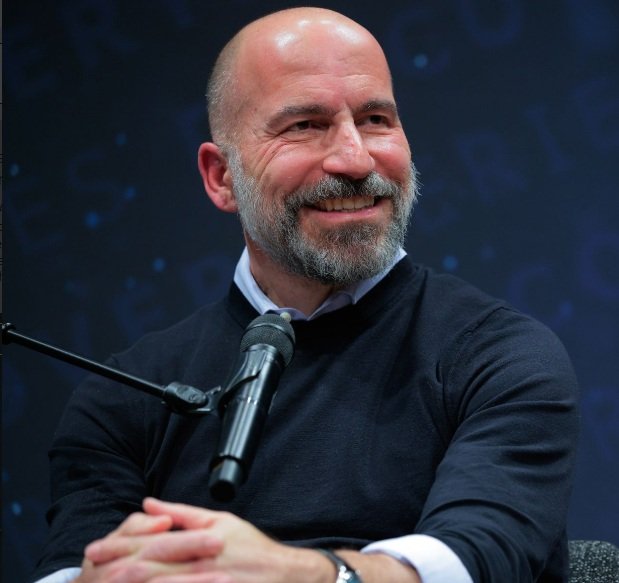
In 2017, Dara Khosrowshahi received a call offering him the top job at Uber. He initially turned it down. The company was in crisis, facing boardroom disputes and internal criticism, and its founder, Travis Kalanick, had just stepped down.
Khosrowshahi had been leading Expedia for more than a decade. Daniel Ek, Spotify’s founder, recommended him for the Uber role and spoke with him until he persuaded him to accept.
Once at Uber, he sat down with employees, users and officials to understand the company’s problems. He reorganized the board and assembled a leadership team combining existing employees with new recruits.
The pandemic arrived during his tenure, trips declined and the company laid off staff. Its delivery business also grew. Today, Uber operates in more than 70 countries, completes over 10 billion trips annually and generates more than US$10 billion in free cash flow.
Khosrowshahi visited Argentina to mark Uber’s tenth anniversary in the country. During the visit, he announced a US$500 million investment and the return of Uber Eats. With its ride-hailing app already established among users, the company wants to gain ground in food delivery.
Leaving Iran and starting again
Khosrowshahi was born in Tehran in 1969. His family had businesses in pharmaceuticals and manufacturing. When the Iranian Revolution began, they left the country thinking their departure would be temporary. They never returned.
He arrived in the United States at nine. An uncle was waiting in New York and welcomed the family after they lost their assets in Iran.
That experience shaped his approach to work. At school, Khosrowshahi felt he had to work harder than everyone else. Years later, he connected that effort to what his family had experienced: arriving in another country and starting over.
His father told him he could pursue any profession he wanted, provided he chose medicine or engineering. Khosrowshahi chose the latter and studied electrical bioengineering at Brown University.
His studies left him with a way of solving problems: break them into parts, work on each one and then put them together. He says running a large company is similar, because many teams must coordinate to make the service work.
Banking and the Expedia years
After graduating, he had a job offer in Kentucky. His girlfriend lived in New York, and he wanted to be near her, so he spoke with his brother and secured a position at the investment bank Allen & Company.
At the bank, he met Barry Diller, a media executive and client of Allen & Company. Diller brought him onto his team, beginning a working relationship that lasted more than twenty years across businesses associated with IAC.
He later became Expedia’s chief financial officer. When the CEO position became vacant, he put himself forward. He now laughs about it: he believes he did not fully understand what he was getting into and that those who selected him urgently needed to fill the role.
He spent thirteen years leading Expedia, the travel group that included brands such as Hotels.com and Hotwire. In 2017, he left to join Uber.
The challenge of leading Uber
When Khosrowshahi took over at Uber, he faced the task of rebuilding trust inside and outside the company. He began by reorganizing the board, with Ron Sugar joining as chairman.
He also listened to regulators and representatives of the public. The company had expanded rapidly across cities but faced disputes and needed to rebuild trust. At the same time, he reviewed the composition of the leadership team.
In his farewell email to Expedia, he admitted he was afraid of starting at Uber. He believes expressing those feelings encourages others to speak honestly, even when something is going wrong. He worries that, as an organization grows, bad news takes longer to reach decision-makers.
To understand what is happening within the company, he also meets with engineers and middle managers he does not work with every day. He wants to hear directly from them about how their departments operate.
He also says he pays attention to people who question established ways of working. In a large company, he acknowledges, those people can make others uncomfortable. He believes listening to them helps identify problems and opportunities for change.
The pandemic and the decline in trips
When COVID-19 arrived, people stopped traveling and Uber lost much of its activity. Khosrowshahi recalls that trip numbers fell by 85% in a short period.
The company was already losing money before the pandemic. With fewer trips, it had to close or sell businesses and lay off more than 5,000 people. For Khosrowshahi, it was one of the hardest periods of his leadership: dismissing people who had devoted years to the company weighed heavily on him.
As trips declined, more people ordered food for delivery. Uber Eats grew to account for nearly half the business, a much larger share than before the pandemic.
According to Khosrowshahi, Eats’ gross bookings were below US$1 billion when he took over; today, they exceed US$100 billion. The crisis also pushed the company to cut costs and concentrate on activities with greater growth potential.
Uber added other services. One is its Uber One membership, which has 50 million members, according to company figures. Advance ride reservations account for around US$5 billion annually. In Europe, the platform also sells train tickets and offers discounted hotels through Expedia.
Why he is investing in Argentina
During his visit to Argentina, Khosrowshahi said more than 20 million people use Uber in the country. He added that more than one million had earned income through the app.
He said Argentina ranks among Uber’s five largest markets by trip volume and its top ten by spending on the platform. Comparing that performance with the size of the population, he turned to soccer, saying the country punches above its weight, much like its national team.
According to the company, the app reaches 90% of Argentina’s territory. Its goal is to expand that coverage. Khosrowshahi also noted that around one-third of trips requested in Buenos Aires are provided by taxis integrated into the platform.
The announced US$500 million investment accompanies the relaunch of Uber Eats. The company wants to use its mobility customer base to expand in a delivery market where competitors are already operating.
Khosrowshahi supported the government’s economic direction and proposed reforms. Although he acknowledged the risks, he believes they could give international companies greater confidence to invest.
He also shared experiences from his visit to Buenos Aires: he ate at Don Julio and tried Rapanui ice cream. Discussing soccer, he recalled watching Argentina play Iran at the 2014 World Cup, when Lionel Messi scored the winning goal near the end.
The work behind every trip
Khosrowshahi says Uber has used artificial intelligence since before it became a mainstream topic. The company’s systems help assign drivers, set prices and recommend restaurants, among other tasks.
What has changed in recent years is the capability of those models and the cost of using them. He says today’s search systems are much larger than their predecessors and can predict a passenger’s destination in three out of four cases.
Growing usage also prompted a spending review: the company used its entire annual AI budget in a single quarter. Against that backdrop, it slowed hiring while introducing tools that allow its engineering teams to produce more.
As an example, Khosrowshahi points to developers in India who generate much more code than before with help from AI agents.
Driverless cars and deliveries by air
Uber’s plans include driverless vehicles. The company works with more than thirty partners in that field, including Waymo, Nuro and other technology and vehicle manufacturing companies.
It also agreed on a US$1 billion financing facility with Santander for electric and autonomous fleets.
The CEO believes that lower costs for driverless rides could encourage more people to use them. He also says robotaxis on Uber’s network spend more time carrying passengers than those operating outside the app.
Delivery drones are another technology he follows closely. He still sees obstacles, including battery capacity, but estimates they could become commonplace within five to ten years.
For Khosrowshahi, the initial surprise surrounding these technologies fades quickly: once people get used to them, they become part of everyday life. He expects the same to happen with autonomous vehicles.
An acquisition he never completed
When discussing mistakes, Khosrowshahi returns to a transaction from his Expedia years. The company had made progress toward acquiring Priceline, which owned a much smaller Booking.com at the time.
The acquisition stalled after a disappointing quarter caused Expedia’s shares to fall. The board raised objections, and Khosrowshahi, who had only recently become CEO, backed down. He later tried to restart negotiations, but it was too late.
He says the experience taught him to listen to advice without abandoning decisions he believes in. In technology, he adds, past experience is not always enough to anticipate what comes next.
He learned another habit from Barry Diller: speak directly with the person who did the work. He remembers his former boss seeking out the analyst who had prepared a report to question them directly, rather than waiting for the information to pass through several layers.
Driving to understand the service
During the pandemic, he bought an electric bicycle and began delivering food in San Francisco. Later, he drove passengers in a Tesla. He wanted to experience the app from the perspective of couriers and drivers and encounter the problems they face every day.
That decision relates to something he learned from his father: for him, leadership also means helping team members do their jobs and grow. To do that, he believes, he first needs to listen to what is happening.