


There were two CEOs on stage, and both were asked the same question. A professor from a German technical university wanted to know which skills young people should learn today if they are going to spend the next forty years working for companies like theirs.
Roland Busch, CEO of Siemens, gave the answer one might expect from the head of an industrial group: mathematics, physics, mechanical engineering and electrical engineering. These were essential foundations, he argued, because without understanding how things connect, a person cannot write a specification or supervise a machine performing the work.
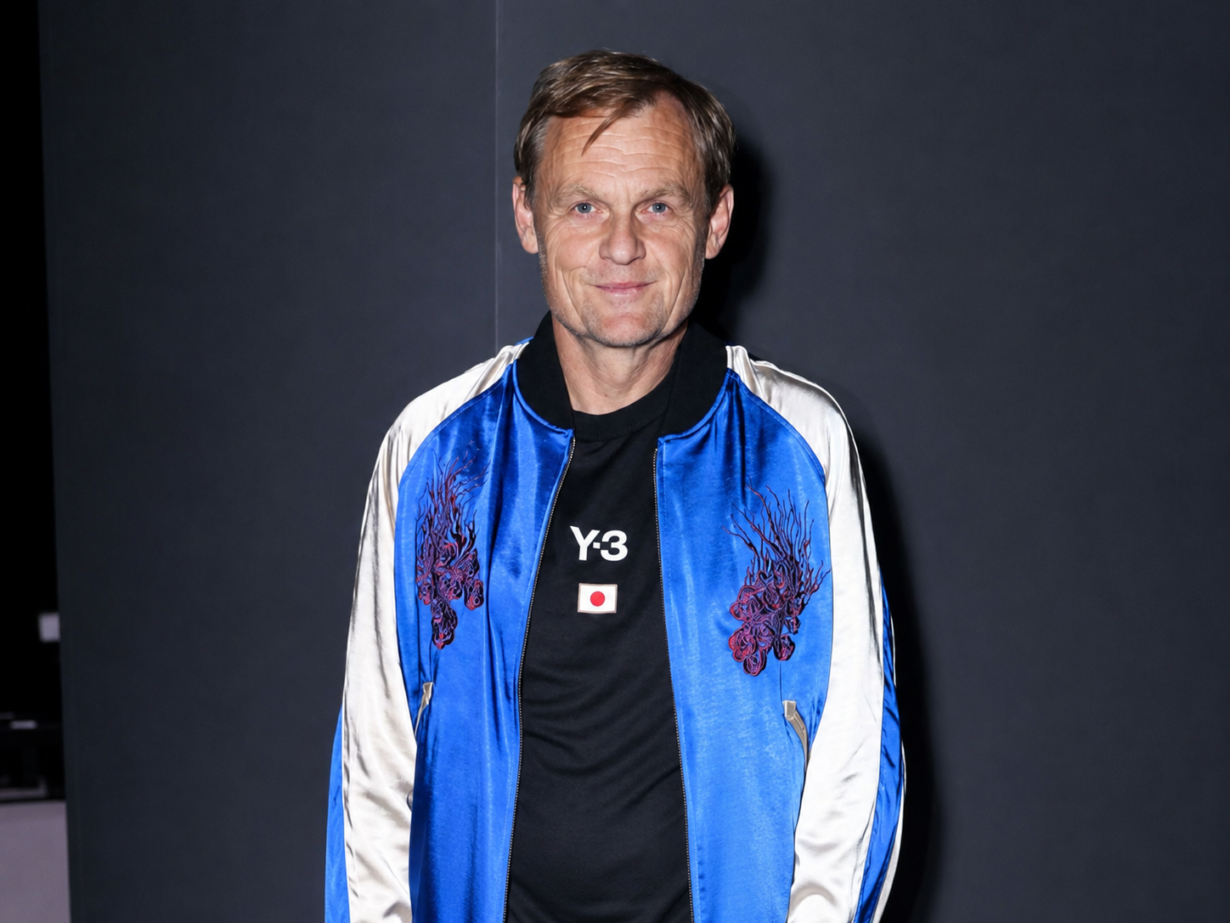
Bjørn Gulden took the microphone and immediately marked the difference. He said that things worked quite differently in his industry.
What he looks for is social intelligence: people capable of communicating with others. He then qualified the point about mathematics, joking that what he had studied bore little resemblance to what was being discussed there. But the central issue was not technical.
A more horizontal structure
Bjørn Gulden’s argument begins with organizational structure. In his sector, the old pyramid, with fixed tasks and a single line of command, has stopped working.
Adidas operates through matrix structures that cross different markets and cultures. In that model, knowing how to communicate is decisive because anyone who cannot do so is left behind, regardless of how strong their technical training may be.
That explains the kind of person he describes. He looks for people who can move within a changing environment and, above all, who are comfortable allowing others to perform better than they do. The star who wants to solve everything alone, he says, is no longer useful in this world.
The composition of the company supports that argument. Adidas employs people from 127 nationalities. The commercial reasoning is even more direct: Germany represents only around 6 percent of the company’s revenue. Adidas is German, but its market is the entire world.
That is why Gulden insists that a customer in India, Malaysia or Mexico must receive exactly the same treatment as a German customer.
He takes the idea straight to the product. He recalled that one of his best colleagues was sitting in the front row wearing a jacket designed in China. That was not a coincidence. A design created in China can be every bit as important as one developed in Germany.
Creativity, he argues, appears everywhere. Companies must abandon the belief that what they produce at headquarters is automatically better than what others create elsewhere.
His own career supports that perspective. Before becoming a business executive, Gulden played professional football in Germany and Norway. He draws a lesson from that period that he often repeats: in a team, a person plays alongside people who are better and worse, people they like and people they do not, and must still find a way to fit in.
Everything else can be studied. That cannot.
Patience as a scarce resource
His second warning was directed at people who are only beginning their careers.
Gulden observes that young professionals feel pressure from those around them to move upward every year or two. He believes that pace is impossible to sustain for an arithmetical reason rather than a moral one: not everyone in an organization can be promoted continuously, because the result would be a structure with an oversized head.
His advice is therefore counterintuitive in an age that rewards constant movement. He recommends patience, joining a company with which a person can identify and finding a place where work can also be enjoyable.
He supports the idea with his own biography. When he joined Adidas during the 1990s, he says, it did not feel like a job. It felt like a dream.
He believes companies need to recover that attitude because people who transmit genuine enthusiasm ultimately create a better environment for everyone around them. Gulden has frequently connected enjoyment at work with stronger performance and leadership.
The 80 percent
When Gulden was asked what was causing Adidas its greatest difficulty in 2026—with geopolitics, supply chains and raw-material prices all on the table—he chose none of those variables.
He replied that regardless of how digital the conversation becomes, people always remain the hardest part.
Adidas directly employs around 65,000 people and supports more than one million additional jobs when its wider production network is included. The permanent challenge, he says, is finding the balance between motivating people and demanding improvement at the same time.
What makes that task difficult is speed. He describes recent years as an uninterrupted sequence of the pandemic, wars and crises. Everything arrives at a pace that makes planning increasingly difficult, forcing people to change with extraordinary speed.
For Gulden, that is the central leadership problem: how to bring people with you when the work they need to perform is becoming fundamentally different.
Artificial intelligence is the most immediate example. Some roles will disappear, and the people currently performing them will have to retrain.
His attitude toward that process is not enthusiastic so much as pragmatic. There is no alternative. A company cannot simply say that it does not want the technology, because refusing to adapt would eventually make it disappear.
He can already see new professions emerging in place of older ones. There used to be programmers, he remarks, and now there are people who write prompts. Prompting, in his view, is becoming a profession in its own right.
The discussion ultimately returns to the same point. Gulden says that the greatest issue is not necessarily a problem, but rather the subject occupying most of his attention.
That subject is always people.
He even assigns it a figure: 80 percent of his thoughts are about them.