


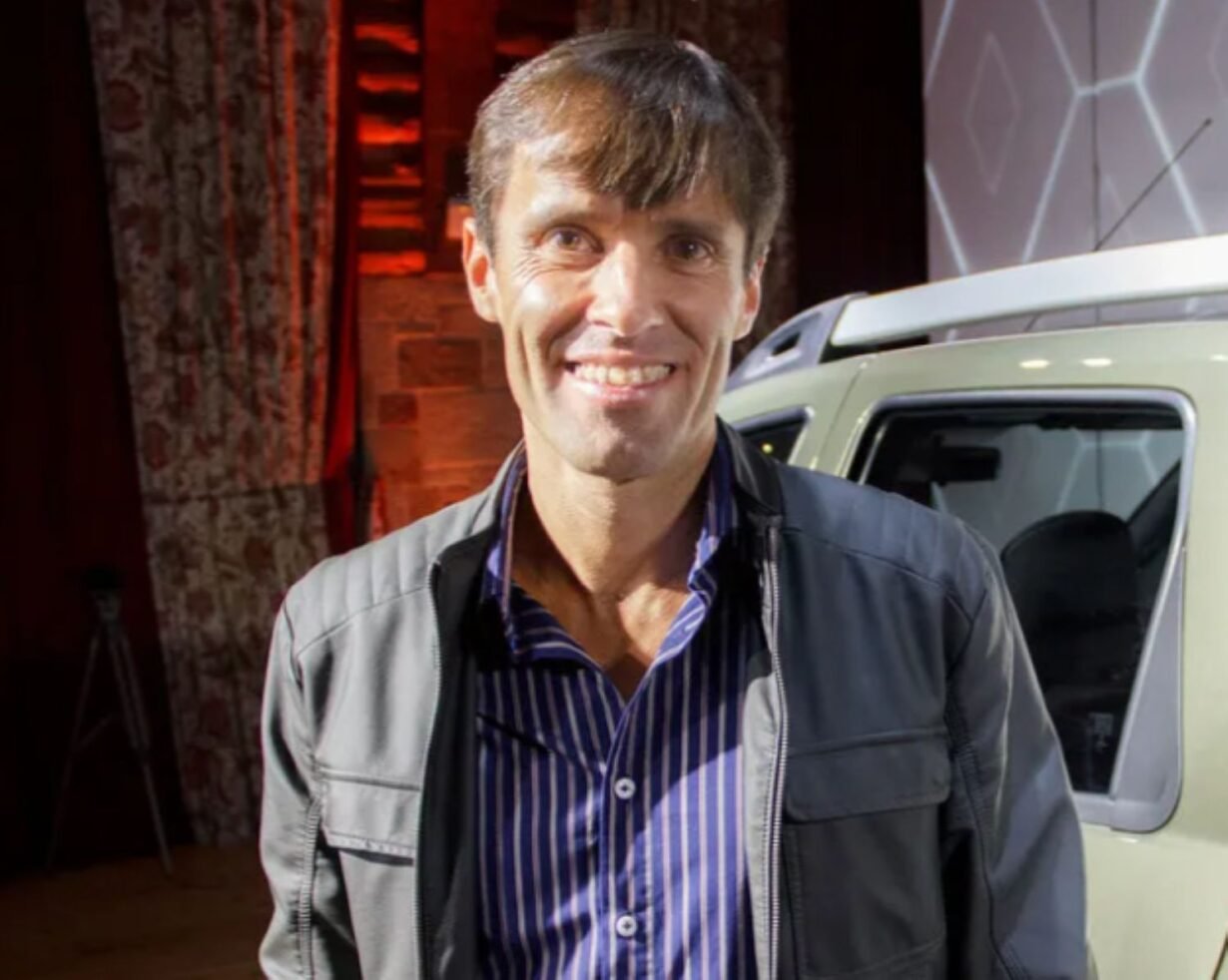
An engineer who developed a pickup truck at Renault and now leads Argentina’s only publicly traded seeder manufacturer, in a year when the company sold more machines but earned less.
A taipa is a ridge of soil built by rice growers to retain water. It is soft by definition and also represents a significant part of their capital. A seeder that places too much pressure on it does not cross it: it breaks it apart.
That was the example Adolfo Felippa chose before an audience of engineers, students and farmers to explain what distinguishes an Agrometal machine. Yet he did not bring a seeder to the conference. He brought a planting unit.
He explains that excessive force cannot be applied on a taipa because it collapses.
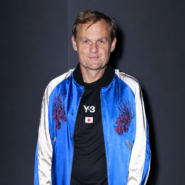
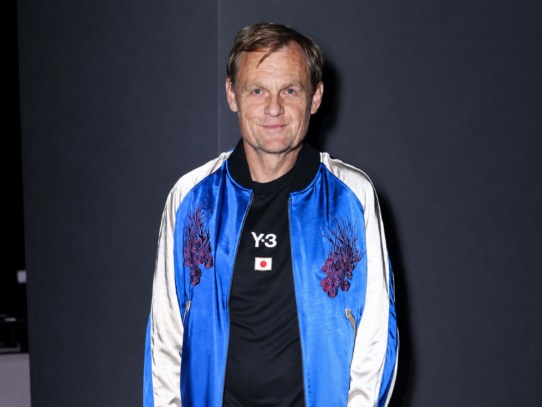
Adolfo Felippa, CEO of Agrometal, is the man telling the story. Until just over a year ago, he had never set foot in a rice field.
Santa Isabel
Felippa is from Córdoba, an industrial engineer who spent most of his career in automobile factories. He joined Renault at a very young age—at 18, according to his own account—and remained there for nearly three decades.
He worked in manufacturing, quality, engineering, purchasing and project management, first at the Santa Isabel plant, then in France and later in Brazil as project director.
His best-known project was the Duster Oroch, an idea he conceived in 2010 that Renault launched six years later for the South American market.
When the conversation turns to why he moved from cars to agriculture, Felippa does not mention the position. He speaks instead about motivation. He says he has the same drive today as when he started and that he wanted a change.
The hardest part was learning a new language: leaving behind automotive terminology and entering the vocabulary of farming, with direct contact with the land.
His argument for joining the industry is based less on sentiment than on its position within the production chain. He points out that this is where the entire food production chain begins and that the company therefore occupies an irreplaceable link.
Everything else, he believes, can be transferred. His international experience and the working methods he learned in the automotive industry can also be applied to agriculture.
He comes from another world
Those were the four words used by Rosana Negrini, president of Agrometal, when Felippa made his first public appearance as CEO in June 2025. He had arrived from Paris four months earlier.
The company he took over was founded in 1950 in Monte Maíz, a town in southeastern Córdoba. It remains controlled by the family of one of its founders. Negrini and her sister hold 54.8% of its capital, while the remaining shares are traded on BYMA.
It is the only Argentine agricultural machinery manufacturer listed on the stock exchange.
Agrometal employs around 400 people and produces approximately 330 seeders per year. In the domestic market, it competes against John Deere, CNH and AGCO, three multinational companies with their own manufacturing plants in Argentina.
Felippa’s appointment was not an isolated decision. The transformation had begun two years before his arrival and had its own name: Agrometal 2030.
He sees his appointment less as a personal choice than as a response to the demands of a new phase. He believes he was brought in because of the changes beginning to take place in Argentina.
The objective guiding his management can be summarized in one verb: to globalize. The aim is to make Agrometal an international company and take Argentine-made products to other markets.
The regions under consideration include Eastern and Western Europe, southern Africa and Brazil.
Unlike much of Argentina’s industrial sector, which views the opening of imports with suspicion, Felippa interprets it through his own professional background. He comes from abroad, where competing against manufacturers from other countries is normal. That competition, he argues, forces companies to improve.
Needed yesterday
The only limit he imposes is time.
He says the company has no time to lose and must move quickly. He defines the deadline with a phrase he often repeats: this new Argentina needed it yesterday.
From row 1 to row 36
The strategy is supported by concrete machinery. When he presented the new APX L, Felippa explained where its design came from: not from the engineering department, but from information provided by customers.
The key issue identified by farmers was uniformity. Planting quality must remain consistent from the central row to the outermost one, row 36, with the load distributed equally across the entire machine.
A seeder is not judged by what it does in the middle, but by what it does at the edge.
The same principle is applied throughout the product line. Development focuses on three variables that have historically competed against one another: machine operability, planting quality and soil protection.
Improving one at the expense of the other two is the easy part. Aligning all three is the real challenge.
That is why the company changed the way it presents itself at industry conferences. According to Felippa, the expectation is no longer to display an entire machine, but to demonstrate its evolution.
The planting system is now the easiest component to discuss from a technical perspective. The company presented two units: the rice planting unit, which can also be used for small grains, and the CPR unit for coarse grains.
The roadmap he draws from that point can be summarized in three priorities: more technology, a stronger focus on the planting system and listening to customers to understand what they need.
Selling more but earning less
The figures from the first fiscal year under his leadership tell a story that contrasts with the enthusiasm.
In 2025, Agrometal delivered 332 seeders, 4% more than in the previous year. However, its net comprehensive income fell by 48%, from 3.162 billion to 1.640 billion pesos in constant currency.
The company sold more machines but earned almost half as much.
The problem was pricing. The average value per machine declined because of the overvalued exchange rate and the arrival of used imported seeders.
That is where the contradiction lies. Felippa sees economic openness as an opportunity to export, yet that same openness is reducing margins in the domestic market. Competition first arrived through imported second-hand machinery.
His demand, therefore, is directed elsewhere: toward credit.
He describes Argentina as a difficult environment, shaped by movements in the exchange rate and bank lending rates. Farmers, he argues, need support from banks, and for the agricultural sector that support is essential. He makes the point twice in succession.
He considers the reduction in export duties a first step forward, but says the problem of interest rates still needs to be resolved.
The combination
One of the arguments Felippa uses most often to explain the current moment is that companies can finally plan and look to the future with optimism.
The other, expressed almost immediately afterward, is that there is no time to lose, that they must move quickly and that everything was needed yesterday.
Both ideas coexist in the same conversation. A man from an industry where planning is central has arrived in a country where long-term planning has only recently become possible, yet where companies must still act with urgency.
For Felippa, the convergence of his arrival, the company’s 75th anniversary and Argentina’s new economic climate is not a coincidence but a synthesis.
He describes it as a combination: his arrival, the anniversary and a different Argentina. The result, in his view, is also a different Agrometal.
He comes from an industry where products are conceived six years before they reach the market—the same period that passed between the original idea for the Oroch and its commercial launch.