

On June 16, 2026, Equinor presented its strategy through 2030, and the message left little room for interpretation.
More oil. More gas. Production increasing by 150,000 barrels of oil equivalent per day to reach 2.3 million daily. Share buybacks doubled to $3 billion. Dividends rising by more than 5% a year.
The market responded well. The company has been publicly traded for 25 years and has accumulated a total shareholder return of close to 1,800%.
For those who had been following Equinor from another angle, the announcement said something else.
Five years earlier, the company had set a target of reaching between 10 and 12 gigawatts of renewables by 2030. Today, it has six under development and around 90% of its own capital investment goes to oil and gas.
The same document could be read as financial discipline or as a retreat.
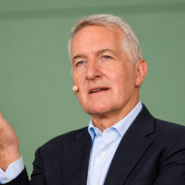
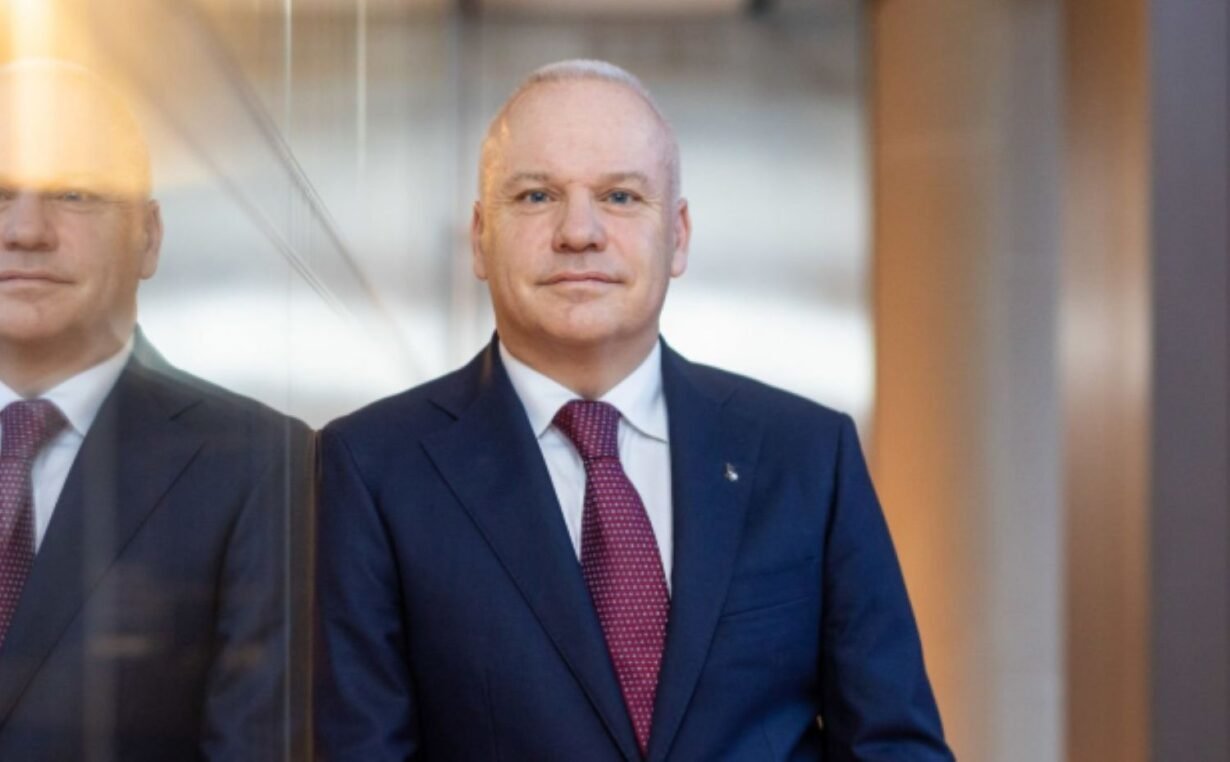
At the center of it is Anders Opedal.
He has held the job since November 2020, has spent 29 years inside the company and did not study petroleum engineering.
He studied acoustics.
The engineer who wanted to work with ultrasound
Opedal lives in Stavanger, Norway’s oil capital, and joined Equinor in 1997 as an engineer.
His background was in acoustics and signal processing. Hydroacoustics, geoacoustics. For a time, he thought he would work in medical acoustics, ultrasound, that kind of thing.
He ended up in oil because geoacoustics took him there.
The company he now runs is 67% owned by the Norwegian state, is listed in Oslo and New York, employs around 24,000 people —18,000 of them in Norway— and produces about 2.1 million barrels of oil equivalent per day, half oil and half gas.
Norway produces around 120 billion cubic meters of gas per year, close to one-third of European demand. Equinor contributes 40 billion of those. And between 90% and 95% of the crude oil it produces also goes to Europe.
That makes it the continent’s largest energy supplier.
It was not always the main headline.
The calls in the autumn of 2021
Before Russia’s invasion of Ukraine, Europe sourced around 40% of its gas from Russia.
In the autumn of 2021, Russia began gradually restricting that supply. Opedal says that at first it was a puzzle: from Equinor, they could only see production and import figures, while European storage facilities were not filling as they normally should at that time of year.
They could not determine whether it was an operational problem or a deliberate decision.
Only in February 2022, once the war had begun, did it become clear.
By then, the phone was already ringing. Calls were coming from Europe and the United Kingdom asking for more Norwegian gas.
The problem is that there is no dial to turn.
Opedal explains it with a comparison he often uses: Equinor is not Saudi Arabia; there is no large valve in the desert that can simply be opened to produce more. The fields were already producing at maximum capacity.
What they did was put hundreds of engineers and operators to work looking for small improvements everywhere. Many minor adjustments that, added together, eventually amount to considerable volumes.
One conclusion from that period is something Opedal repeats often. In 2020 and 2021, the entire energy conversation revolved around sustainability, while almost nobody mentioned security of supply or affordability.
When Russian gas disappeared, those two words suddenly returned to the center of the discussion.
His view is that nobody wins from that situation. Equinor made more money and paid much more tax, but high prices became a cost-of-living problem. The conclusion he drew was that the three variables —sustainability, security and price— had to be balanced.
The experts who were wrong for twenty years
There is one fact Opedal uses when asked about the future of the North Sea.
For decades, the industry’s leading consultancies have projected a sharp decline in Norwegian production. They projected it again and again.
Production remained roughly stable.
His explanation is that those models include a decline rate, but they do not include geologists, geophysicists, technological development or new ideas about where to look.
The method has two parts.
The first is to extract more from existing fields. Drill more wells, inject gas alternating with water, sweep the reservoir again and again. Each sweep brings out a little more.
The second is to look around. The oil migrated toward a large trap, which became the known field, but it also migrated toward smaller traps nearby.
Over the past three and a half years, they have found 45 new deposits around existing fields. Today, they have 65 projects approved or moving toward approval that emerged from that logic.
New seismic data, better drilling technology, lower costs.
When asked whether the United Kingdom could do the same on its side of the North Sea, the answer is direct: geology does not change at a border. Several historic fields cross it.
What changes is something else.
The 78%
Norway charges Equinor a total tax rate of 78% on profits from hydrocarbon extraction: the standard corporate tax plus a special tax on a resource considered to belong to Norwegian society as a whole.
It is not a low figure, and Opedal does not complain about it.
What he defends is something else: predictability. That 78% has remained the same for decades, expenses are deducted in the same year they are incurred, and that creates an incentive to keep investing.
His argument for why this matters has to do with the time horizons of the business, and he explains it using an unusual unit of measurement: electoral cycles.
Preparing a project takes roughly one electoral cycle. Executing it takes another. Then the money has to be recovered over another three to five cycles.
If the tax regime changes in the middle, the decision made at the beginning no longer rests on the same foundations.
That is the difference he sees between the Norwegian and British sides, where conditions changed with each government through exemptions, accelerations and windfall taxes.
Equinor has invested in the United Kingdom for decades. It bought the Rosebank field from Chevron, developed Mariner and created a joint venture with Shell that brings together both companies’ assets.
When asked whether he was waiting for a change of government that might make things easier, he replied that he never comments on which government should win in any country.
What he asked for was less polarization. His problem is not a particular policy. It is having it change every four years.
From twelve gigawatts to six
The uncomfortable part of the conversation comes when renewables are discussed.
In 2020, Equinor set a target of 10 to 12 gigawatts by 2030, concentrated in offshore wind. It was a figure built around a market in which the cost of wind energy was falling year after year.
Then the opposite happened.
Competition for licenses became fierce. In the UK’s fourth round, a German auction and another in the United States, access prices rose so much that Equinor could not find sufficient value and stayed out.
Opedal points to something about that decision that sounds like delayed vindication: much of what they lost in those rounds was never built. The winners bid £37 per megawatt-hour and later could not deliver at that price.
Meanwhile, the total cost of the projects they did have rose by almost 50%, largely because of turbine prices.
Today, they have three megaprojects: Dogger Bank in the United Kingdom with SSE, Empire Wind off New York and Bałtyk 2 and 3 in Poland. Six gigawatts under development.
Empire Wind was halted by the Trump administration shortly after it took office and was only able to continue after going through the courts.
Opedal uses it as an example of his central concern. When the energy debate becomes polarized, companies investing over twenty-year horizons are the ones that pay the price.
At the June 2026 Capital Markets Day, the company confirmed that around 10% of its investment goes to an integrated power business, with production expected to quadruple to more than 20 terawatt-hours by 2030.
The rest goes to oil, gas, trading and digital capabilities.
Stop the Clock
The most tense moment in his recent public appearances was not about the numbers.
It was about methane.
Equinor’s methane emissions are equivalent to one-tenth of the industry average. Opedal explains why without any grand rhetoric: a methane leak is a safety risk before it is a climate problem, methane belongs inside the pipes, and Norwegian regulation has required them for years to measure even the smallest losses.
Some platforms, such as Johan Sverdrup, run on hydropower supplied from shore, reducing emissions from the extraction process to almost zero. Some European customers pay a premium for that gas and verify the information using distributed-ledger technology.
The problem is not Equinor.
The European Union is preparing methane-emissions regulations, and the oil industry’s lobby is asking for them to be delayed. The campaign has its own name: Stop the Clock.
When confronted with that, Opedal did not hide behind the industry. He said they fully support reducing methane and that their objection concerns how it is measured.
His example: the first version of the proposal would, in practice, have