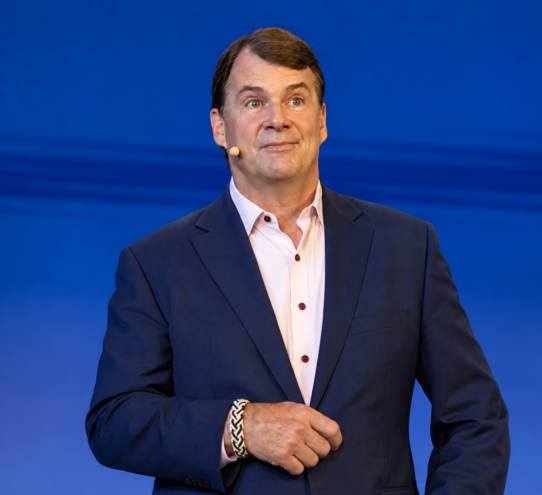

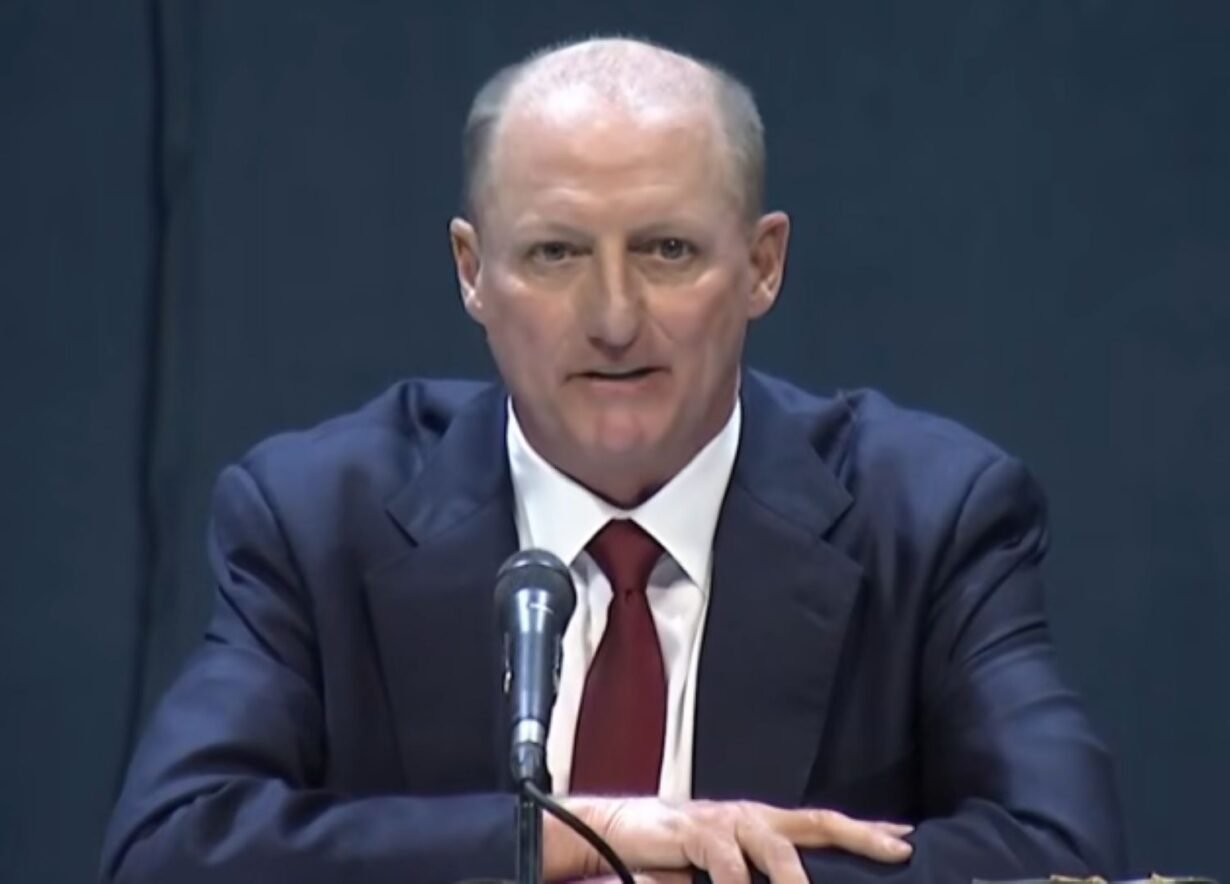
The Canadian accountant who arrived at Berkshire through the energy business now leads the conglomerate with nearly US$400 billion in cash, with Warren Buffett no longer at the helm.
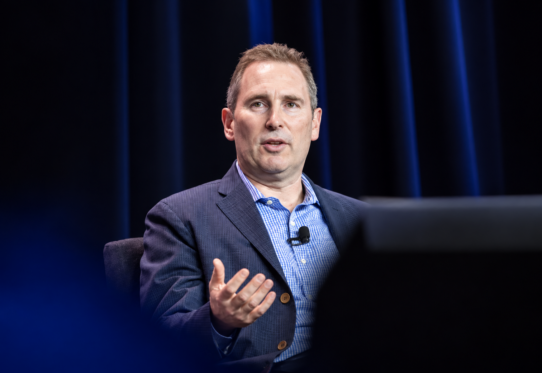
On May 2, 2026, inside an Omaha arena filled with shareholders who had travelled there to hear stories, Berkshire Hathaway’s new CEO began explaining the meaning of the combined ratio in the insurance business.
An analyst in the room said he could feel the air leaving. He described what was happening onstage as something very similar to an earnings conference call. For a specialist, it was excellent; for a Saturday in Omaha, which had been a celebration for decades, it was something else.
Warren Buffett watched him from a seat on the arena floor.
Edmonton
Gregory Edward Abel was born in Edmonton, Alberta, in June 1962, in a working-class neighbourhood and a family with no connection to finance. He earned an accounting degree from the University of Alberta in 1984 and joined PricewaterhouseCoopers, first there and later in its San Francisco office, where one of his clients was CalEnergy, a small geothermal power producer.
CalEnergy hired him in 1992, and in 1996 he was sent to England to run the electricity distributor the company had recently acquired. Three years later, the company purchased MidAmerican Energy, adopted its name and came under Buffett’s control. Abel returned to the United States as president and was appointed CEO in 2008. In 2014, the company was renamed Berkshire Hathaway Energy.
In 2018, he took charge of all the group’s non-insurance businesses. In May 2025, Buffett announced that he was stepping down. Abel assumed the role on January 1, 2026.
The English lesson
It happened in England in 1996. Abel arrived at a utility with 1.3 million customers and expanded it to two million. But growth is not the point he emphasizes.
The business was moving from a heavily regulated service to a deregulated one, and he took too long to realise that the change required capabilities the company did not have. When changes had to be made, he says, they had to be made.
The craft of seeing around the curve
In his first annual letter, Abel wrote that his job is, above all, to manage risks and see around the corner.
It is an unusual definition for a conglomerate that buys companies and allows them to operate independently. He explains it through his method: in conversations with the people responsible for each business, the question is not what today’s risk is, but what the risk will be in five or ten years, what concerns them and how their customer is changing.
He has an example of his own, and it was the strongest moment of everything he said in Omaha. When Berkshire was considering the purchase of NV Energy, Abel waited in Seattle for a plane carrying Buffett, who was returning from China, to land. He had a one-page presentation and did not intend to discuss the price or the return. He had written down three risks.
Buffett stepped off the plane, treated the economics of the business as understood and went directly to the largest of the three: rooftop solar power and what it could do to an electricity distributor.
The rule Abel draws from that episode is simple, and he repeats it: when they cannot imagine what a business will look like in ten years, there is no margin of safety and they do not buy it.
The mistake that will not be repeated
He also spoke about a mistake and used that exact word.
Berkshire invested in Pilot, the chain of travel centres, in 2017, but did not take full control until 2023. In between came six years of partnership with objectives that were not aligned. It was not Pilot’s fault, Abel clarifies. Berkshire failed to ensure that its short- and long-term objectives pointed in the same direction before signing a transaction that would be completed in stages.
It was an expensive mistake and, above all, an accountant’s mistake. He describes it not as a bad acquisition, but as a missing clause.
No single Charlie
The obvious question for someone replacing a man who had Charlie Munger beside him for forty-five years is whom he now speaks with.
Abel’s answer is that Buffett still goes to the office every day and that he spends several days a week in Omaha. When he is there, they discuss what they see, what they think is happening and where opportunities may exist.
But he adds something more interesting. He also speaks constantly with the heads of Berkshire’s largest businesses, and not only about their own companies. He asks what they are hearing from suppliers and customers.
He describes it as gathering knowledge from a broader range of sources than, in his words, a single Charlie could provide.
What does concern him
He was asked about the war in the Middle East and rising energy prices. He answered in terms of costs.
The chemicals group—Lubrizol, the OxyChem operation completed on January 2 and Liquid Power Specialty Products, which manufactures friction reducers for pipelines—experienced an immediate increase in input costs.
The emptier arena
Not every aspect of his debut was favourable, and that deserves to be said.
The organisation reported that credential requests fell by around 10%, and the decline was even more visible inside the arena. The upper level was sparsely occupied, while in previous years people had stood pressed against the walls with barely enough room to move. What remained, essentially, were the devoted followers.
Then there is the most uncomfortable figure. Berkshire ended the first quarter with around US$397 billion in cash and Treasury bills, but in March the company reported that it had begun repurchasing its own shares.
A Bloomberg Intelligence analyst who had expected several billion dollars found a figure only slightly above US$200 million—clearly a great deal of money for almost anyone and almost nothing for Berkshire.
Twenty years
In an interview with CNBC on the eve of the annual meeting, Abel was asked how long he expected to remain in the position. In his annual letter, he had written one figure: twenty years.
He replied that it would not surprise him, that the decision belonged to the board and that he loved Berkshire.