
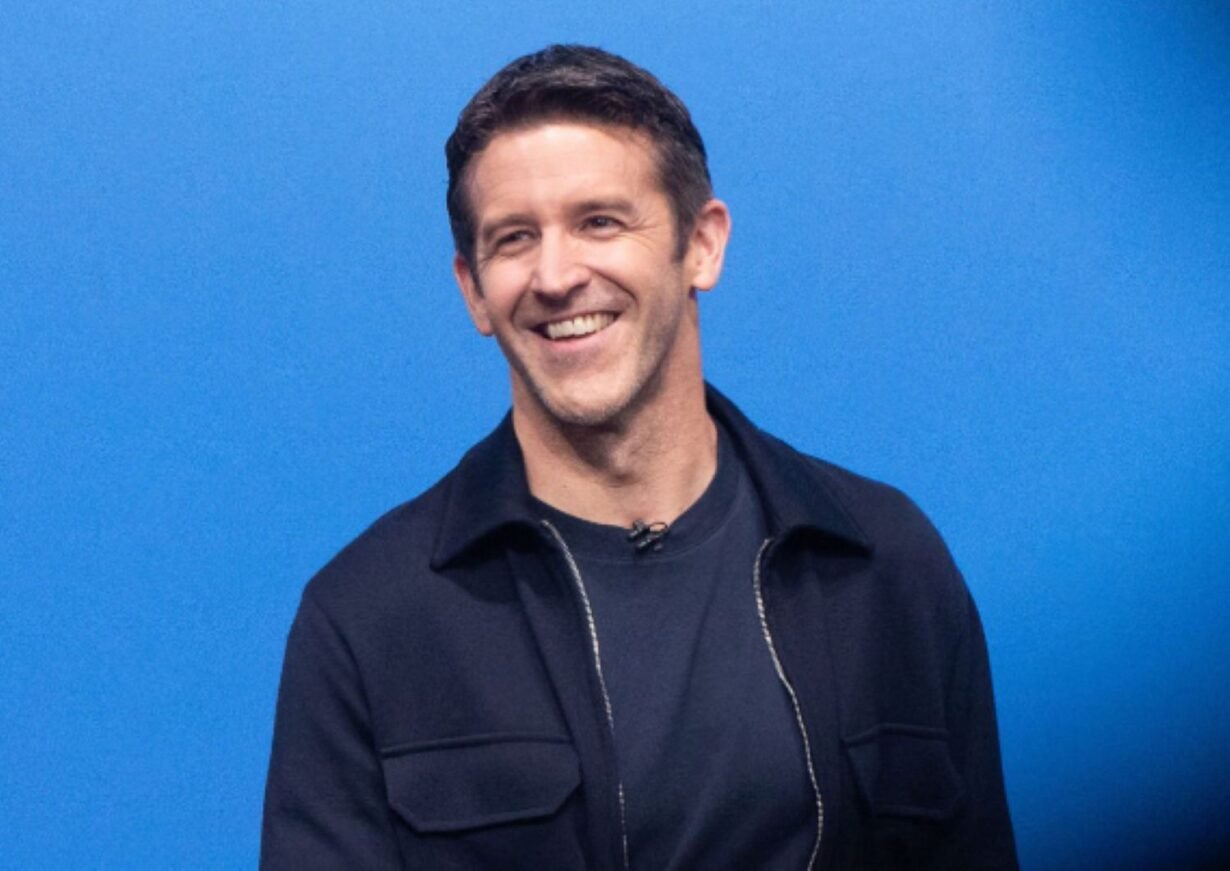
Apple changed CEOs for the first time in fifteen years. And it was not only the person who changed: the profile changed as well.
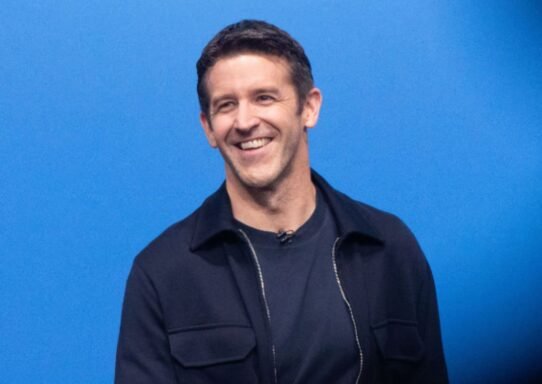
On September 1, 2026, John Ternus, a mechanical engineer and 25-year Apple veteran, succeeded Tim Cook. Cook came from operations and eventually turned Apple into one of the world’s most valuable companies. Ternus comes from somewhere else: he spent practically his entire Apple career working on products and hardware engineering.
He is the eighth CEO in Apple’s history and inherits a company posting record numbers, but also facing a challenge it has spent years trying to solve: integrating artificial intelligence at the level expected from the rest of its ecosystem.
A Transition Prepared Well in Advance
Cook became CEO in 2011, just weeks before Steve Jobs died. Jobs had hired him in 1998 and put him in charge of operations in 2005.
His departure was announced in April 2026 together with Ternus’s appointment. But Cook is not disappearing from Apple. He became executive chairman of the board and will continue assisting with certain areas of the company, including engagement with policymakers around the world.
Ternus’s selection followed a long-term succession process unanimously approved by the board. He also joined Apple’s board of directors on the same day he became CEO.
According to a filing with the SEC, Ternus will receive a $3 million annual salary in fiscal 2027 and an equity award with a target value of $55 million. Cook, in his new role, will receive a $2 million salary and a $45 million equity award.
An Apple That Keeps Growing
Ternus is not inheriting a company in crisis.
When he took over, Apple was valued at around $4.5 trillion. In the third quarter of fiscal 2026, it reported $109.4 billion in revenue, up 16% year over year, setting June-quarter records for both revenue and earnings per share.
Far from showing signs of exhaustion, the iPhone generated $54.25 billion during the quarter, up nearly 22% from the previous year.
Apple reported 166,000 full-time-equivalent employees at the end of fiscal 2025 and today is far more than a manufacturer of phones and computers. It sells headphones, watches and services, and even operates a streaming platform competing in the global entertainment market.
The business works.
The debate lies elsewhere.
Twenty-Five Years Building Hardware
Before joining Apple, Ternus worked as a mechanical engineer at Virtual Research Systems, a company involved in virtual-reality systems.
He joined Apple in 2001. In 2013, he became vice president of Hardware Engineering, and in 2021 he joined the executive team as senior vice president of the division. Over the years, he oversaw engineering work across iPhone, iPad, Mac, Apple Watch and AirPods.
He also played a key role in one of Apple’s most important technical transformations: moving the Mac away from Intel processors and toward chips designed by Apple itself.
Apple Silicon’s unified-memory architecture eventually made machines such as Mac mini and Mac Studio particularly attractive for running artificial intelligence models locally. In September 2026, Apple reinforced that argument with new Macs aimed at advanced AI workloads.
Ternus was also involved with products including iPhone Air and MacBook Neo, a more affordable laptop introduced in March 2026.
The Problem Lies Elsewhere
That is also why his appointment raised questions.
Apple’s hardware business remains remarkably strong. The problem is that the company entered the leadership transition trying to regain ground in artificial intelligence against some of its competitors.
The new generation of Siri took longer than expected to materialize. Apple eventually introduced Siri AI in 2026 and rebuilt part of its architecture around new Apple Foundation Models developed in collaboration with Google and its Gemini models.
Choosing a hardware specialist for that stage was interpreted in different ways. For some analysts, the strength of the physical product remains the foundation on which any useful AI capability must be built. For others, Ternus will need to prove quickly that Apple can turn intelligence into a tangible advantage for its devices.
Then there is price. Apple increasingly competes against Chinese manufacturers offering cheaper devices, long battery life and faster innovation cycles, just as the cost of certain components is also rising.
The First Changes
Ternus’s main challenge is to make artificial intelligence stop feeling like an added layer and become deeply integrated into Apple’s products.
The transition also coincides with a significant leadership reshuffle. Johny Srouji moved into the newly created role of Chief Hardware Officer as Ternus left direct control of hardware engineering to take over Apple as a whole.
Ternus is not simply inheriting Cook’s company. He will also have to build the leadership structure that accompanies his own era.
The First Event
His first major product presentation as CEO arrived on September 9.
The headline announcement was iPhone Duo, Apple’s first foldable iPhone. It features a 5.4-inch outer display and a 7.6-inch inner screen, marking Apple’s entry into a category in which Samsung and other manufacturers had already been competing for years.
Apple also introduced iPhone 18 Pro and Pro Max, Apple Watch Series 12, Apple Watch Ultra 4 and AirPods 5. The new iPhones integrate Siri AI and the A20 Pro chip, while artificial intelligence is beginning to occupy a far more visible place in the overall device experience.
The product portfolio Ternus inherits, however, extends far beyond one generation of phones.
For 25 years, he helped build much of Apple’s hardware.
Now he has to solve the other half: making the intelligence inside those devices live up to what Apple knows how to build.