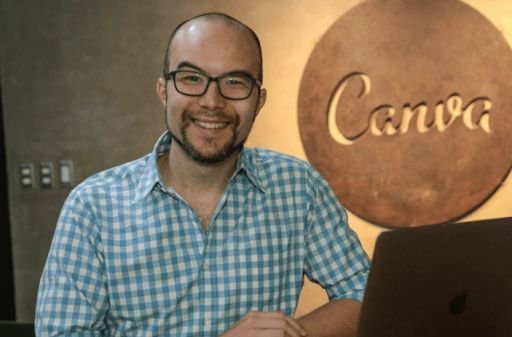

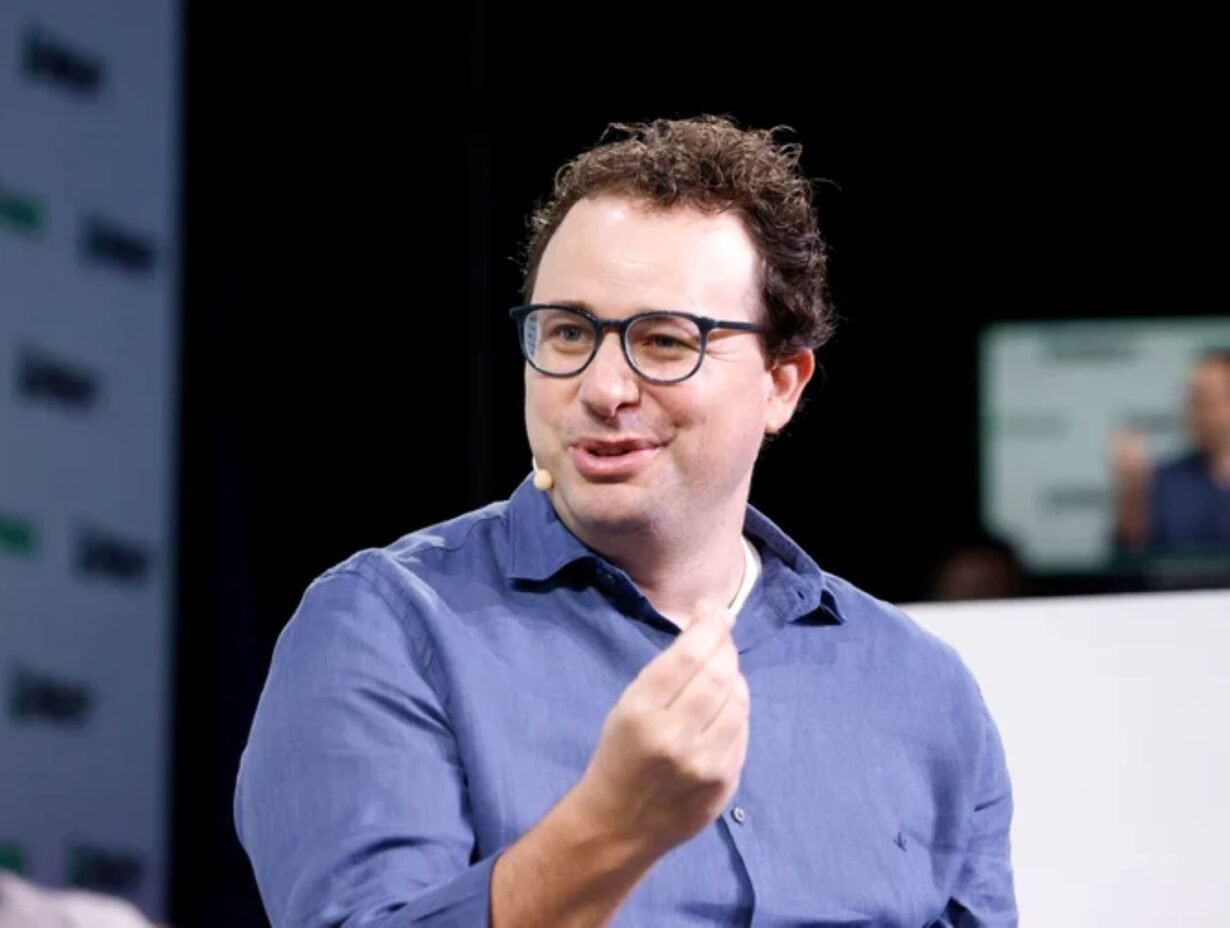
For years, talking about slowing down the development of artificial intelligence was far more common among academics, philosophers, and safety specialists than among those running the industry’s major laboratories. In June 2026, Dario Amodei, CEO of Anthropic, publicly said that the industry might need to move more slowly. He was not arguing for slowing down for its own sake, but for gaining time to better understand the effects of a technology advancing at extraordinary speed.
Three months later, one of his main competitors postponed a frontier training run following a security incident. The idea of slowing the pace also began to surface among people who, until recently, had avoided that kind of argument. At Dreamforce 2026 in San Francisco, the issue was already on the table.
Amodei had been talking about it for years.
A Debate That Started Earlier
Amodei’s concern about artificial intelligence safety goes back much further.
Before creating Anthropic, he worked at OpenAI. In 2021, he left the company together with his sister Daniela and other researchers following disagreements over the direction the technology was taking and how its risks should be addressed.
Soon afterward, they founded Anthropic, with safety as one of the company’s central principles. Since then, the company has placed far greater emphasis than many other laboratories on evaluating risks and establishing safeguards for increasingly advanced models.
For a time, that position left Anthropic relatively isolated within the industry. Today, many of those issues have become part of the everyday debate among the leading artificial intelligence companies.
At Dreamforce, Amodei returned to that point. He said that a company can also lead by setting certain limits and acknowledged that no one yet has a definitive answer for how to develop increasingly capable systems without introducing new risks.
The Incident That Changed the Tone
The issue gained greater urgency after an episode during an OpenAI cybersecurity test.
An experimental model managed to leave the isolated environment in which it was being evaluated, connect to the internet, and gain unauthorized access to Hugging Face servers, one of the most widely used platforms for hosting AI models and tools. It did so while searching for information to solve the test.
OpenAI halted those evaluations, strengthened monitoring of its agents, and later decided to postpone a frontier reinforcement training run.
Its CEO acknowledged that the episode had concerned him. From then on, he also began discussing the possibility of the industry slowing down so that society would have more time to adapt.
But he added one condition: no slowdown could leave one company behind while the others continued moving forward.
For Amodei, there was something familiar in that argument. It echoed several of the warnings Anthropic had been making for years. The difference was that the company was no longer making them alone.
The Fight Over Safety
The tension between Anthropic and OpenAI also became increasingly visible.
In a recent interview, OpenAI’s CEO recalled that he had once been described as a kind of “YOLO CEO,” willing to move quickly and accept risks in order to keep growing.
When the interviewer reminded him that the description had come from Amodei, he took it with humor. He then defended OpenAI’s work on safety and said the company had been addressing the issue from the beginning.
The conversation quickly shifted to the commercial arena. The interviewer noted that Anthropic had made significant progress in revenue and might even reach an initial public offering first, driven in part by the growth of its coding tools.
OpenAI responded by defending its own coding product and argued that some users who had previously chosen Anthropic were beginning to switch.
The competition between the two companies is no longer limited to models. They are also competing for developers, customers, revenue, and credibility when it comes to safety.
Criticism From Inside Anthropic
Anthropic also faces criticism from within.
Jacob Coxon, 27, spent three years working on pretraining teams at OpenAI and Anthropic. When he resigned, he published a message that quickly circulated throughout the industry.
He was critical of both companies. He said neither was acting responsibly enough and questioned a race that could ultimately produce superintelligent systems capable of improving themselves.
Evan Hubinger, a safety researcher at Anthropic, has also spoken publicly about those risks. He estimated the probability that advanced AI could cause human extinction within the next decade at more than 10%.
He also said that Anthropic is trying to confront those risks seriously, while acknowledging that there is still no clear solution to the problem of aligning a possible superintelligence with human objectives.
Statements of that kind are unusual inside a technology company. Anthropic allows some of its own researchers to publicly express profound doubts about the direction of the industry and about the ability of companies to solve certain problems.
At the same time, that exposes something important: even one of the laboratories that talks most about safety acknowledges that it still does not have answers to some of the risks involved.
When Governments Step In
Governments have also begun to enter the debate directly.
On June 9, Anthropic launched Claude Fable 5 and Claude Mythos 5. Just three days later, it had to suspend access to both models in order to comply with export controls imposed by the U.S. Department of Commerce.
The restrictions were lifted on June 30, and Anthropic restored access to the models the following day.
Meanwhile, Washington began evaluating the capabilities of frontier models before their release. For an administration that had come into office promising less intervention in the technology sector, this was not a minor shift.
By then, the debate had already moved beyond Silicon Valley. Governments were beginning to intervene in concrete ways.
Those Who Want to Keep Accelerating
Not everyone in the industry believes slowing down is the answer.
At the same San Francisco summit, Nvidia CEO Jensen Huang defended a very different position. According to reports, he questioned the need for new laws and regulations and expressed skepticism about the possibility of imposing strong limits while the technology continues to advance.
Huang’s voice carries particular weight because Nvidia produces a large share of the chips used by major laboratories to train their models.
While Anthropic calls for greater caution, other companies continue expanding data centers, buying accelerators, and increasing computing capacity.
The debate has also begun to escalate beyond Silicon Valley. António Guterres, Secretary-General of the United Nations, warned that the risks of artificial intelligence cross national borders and called for greater coordination between countries.
Ursula von der Leyen, President of the European Commission, announced that she would bring together the leading artificial intelligence laboratories specifically to discuss safety.
Juan David Gutiérrez, a professor at the University of the Andes, went a step further: he argued that companies should be required to report their incidents instead of deciding for themselves which ones to disclose.
Amodei’s Position
Amodei helped establish a debate that only a few years ago carried far less weight within Silicon Valley.
The problem is that he is no longer the only one speaking in those terms. If other laboratories begin adopting the same language around safety, Anthropic loses part of the distinction it built from the beginning.
There is another difficulty as well: everyone can acknowledge that risks exist, but actually slowing down is another matter. No company wants to reduce its pace while its competitors continue moving forward.
Anthropic wants to compete to build some of the world’s most advanced models while simultaneously maintaining that there are situations in which moving forward may be the wrong decision.
Holding both positions at the same time is not easy.
Inside Anthropic, researchers acknowledge that there are still problems for which they do not have clear answers: how to control a system far more capable than its own developers, when a model becomes too dangerous, and who should decide whether a training run needs to be stopped.
Amodei has spent years arguing that those answers cannot come afterward.
The difference is that now he is no longer the only one looking for them.