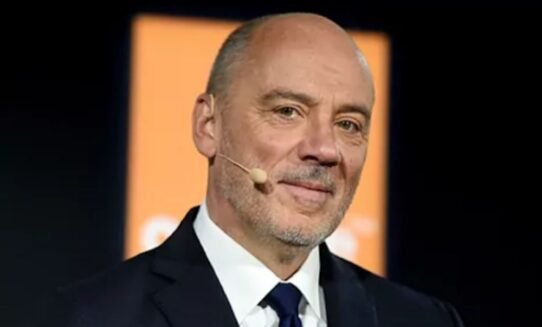


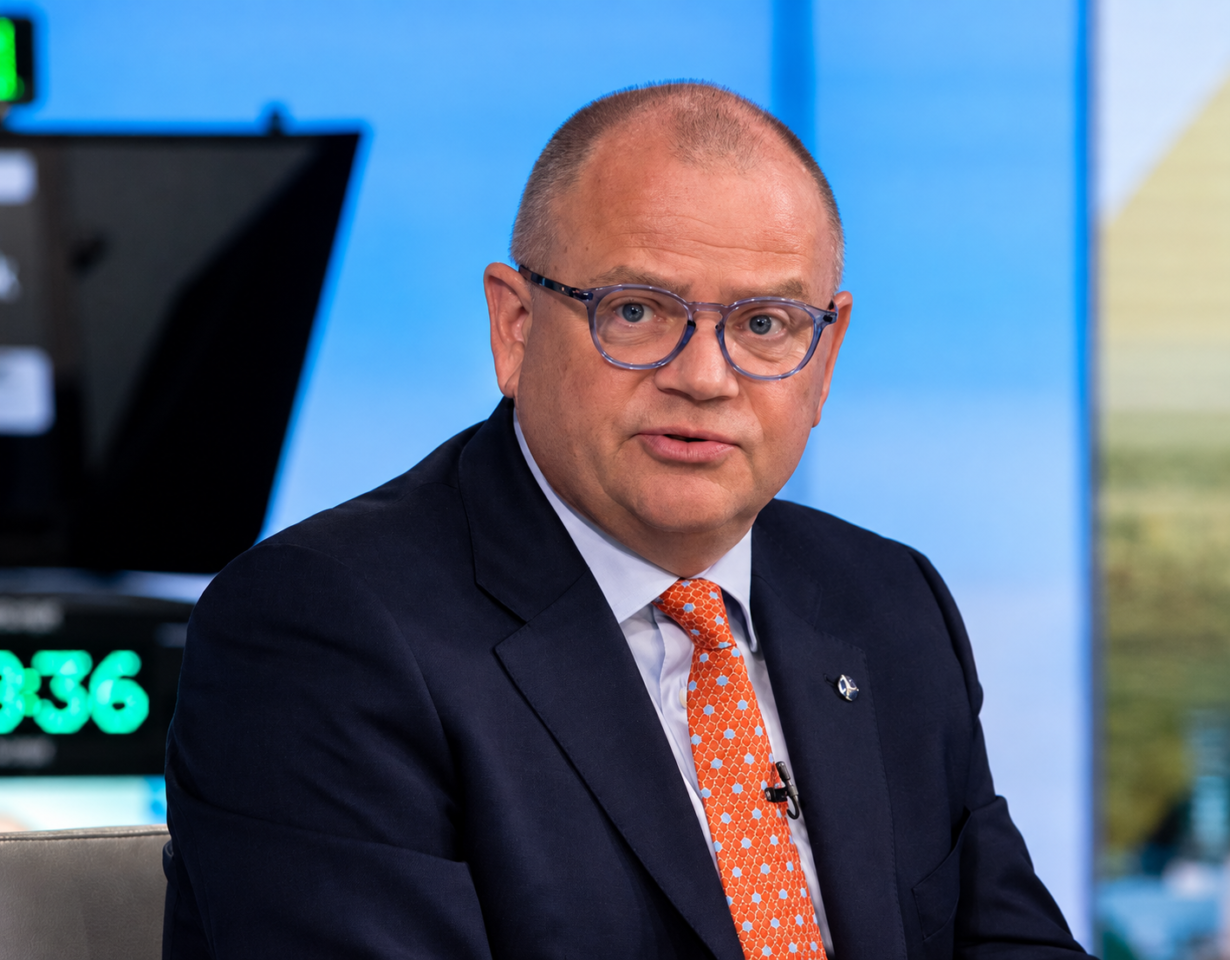
Henrik Andersen grew up in Jutland, Denmark, with wind turbines visible from his home. As a young man, he bought shares in Vestas, the company that made them. Three decades later, he found himself leading the business.
He has been president and CEO since 2019. Vestas has more than 201 gigawatts of installed wind power capacity across eighty-eight countries and is the largest turbine manufacturer outside China. During his tenure, Andersen has faced the pandemic, rising costs caused by the war in Ukraine and the largest loss in the company’s history. More recently, Donald Trump’s attacks on wind power have added another challenge.
On February 5, 2026, Andersen presented the company’s 2025 results. Vestas had generated revenue of €18.822 billion and had outstanding equipment and service orders worth €71.9 billion. Both figures set company records.
A lawyer among engineers
Before leading industrial companies, Andersen worked in banking. Born on December 31, 1967, he studied Law at Aarhus University and began his career at Denmark’s Jyske Bank.
He spent fifteen years at ISS, a company providing services to businesses. He served as chief financial officer and later led operations across Europe, the Middle East and Africa. In 2016, he became CEO of industrial coatings manufacturer Hempel. He led the company until 2019.
By then, he already knew Vestas from the inside. He joined its board in 2013. The company had lost €963 million in 2012, its worst result up to that point. Six years later, his fellow board members chose him as CEO.
Vestas had begun much earlier, in a different line of business: its origins lie in a blacksmith’s workshop that opened in Lem in 1898. Over the years, it manufactured household appliances, agricultural machinery and hydraulic cranes. It began producing wind power equipment in 1979 and, from 1989 onward, focused exclusively on turbines. When Andersen took over, the company was one of the leading manufacturers in Europe’s wind industry.
A funeral for a motto
In 2022, Vestas found itself in difficulty again. Russia’s invasion of Ukraine worsened the supply problems left by the pandemic. Materials cost between 30% and 40% more than in 2020, but the company still had to fulfill contracts signed before those increases.
The year ended with a net loss of €1.57 billion, the largest in its history.
Andersen started by changing how the company confronted problems. At a meeting with senior executives, he organized a symbolic funeral for the motto “failure is not an option.” He wanted teams to accept that things could go wrong and feel able to say so in time.
He wanted quality failures or higher-than-expected costs to be reported as soon as they appeared. If someone had made a mistake, the priority was to acknowledge and correct it before the problem grew.
Vestas also decided to concentrate on offshore turbines of around fifteen megawatts, while its competitors continued developing more powerful models. Working with the same designs allowed it to improve manufacturing and reduce defects. This was intended to lower repair and warranty expenses, which had been weighing on the sector’s finances.
In 2024, it returned to profitability, recording net income of €494 million on revenue of €17.295 billion.
Against the political headwinds
The recovery continued in 2025. Vestas received orders totaling 16.3 gigawatts and achieved an operating margin of 5.7%. Its offshore turbine order backlog reached €10.1 billion, its highest level to that point.
Following those results, it proposed resuming dividend payments at 0.74 Danish kroner per share and announced a €150 million share buyback. For 2026, it projected revenue of between €20 billion and €22 billion and an operating margin of 6% to 8%.
The first quarter delivered operating profit of €446 million, compared with €57 million in the same period a year earlier. The offshore business, however, still needs time: Andersen expects it to become profitable in 2027.
In the United States, the political environment remains a concern. In January 2026, Trump again criticized wind turbines at the Davos forum. Andersen responded at the same gathering, defending their performance and their role in meeting future electricity demand.
He also warned about tariffs. In his view, they increase component and transportation costs, which ultimately reach consumers. Even so, he avoids writing off the US market: electricity demand is increasing, and wind power can add capacity quickly and at competitive costs. He also points out that forty gigawatts were installed in the country during Trump’s first term.
Chinese competition presents another challenge. The five manufacturers that installed the most capacity in 2025 are Chinese. Goldwind reached nearly thirty gigawatts, approximately twice Vestas’s figure.
Andersen is calling on Europe to pay closer attention to its energy security. He questions Chinese software’s access to electricity networks and argues that the continent should protect that infrastructure as seriously as it protects its borders. Europe imports more than half the energy it consumes, a figure he acknowledges is a particular concern.
Today, he leads around 37,000 people. Restoring profitability puts Vestas in a stronger position to compete, but Andersen still has to determine how to sustain that growth against Chinese manufacturers and decisions made in Washington. The accumulated orders provide work for the coming years; turning them into profits will remain the test.