



The engineer who runs Pampa Energía’s oil and gas business, and who staked everything on a block that produced nothing two years ago.
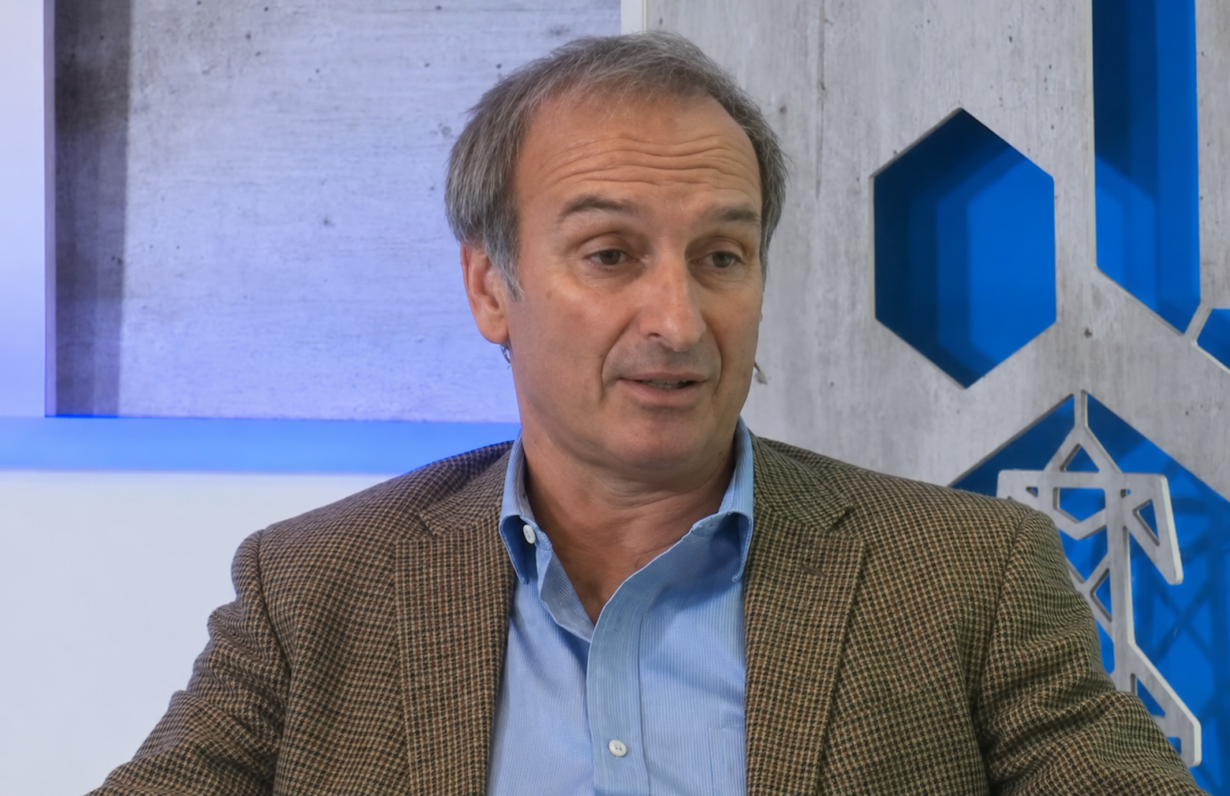
Horacio Jorge Tomás Turri took the long road into the oil industry.
He is an industrial engineer from ITBA, is 65 years old and holds a master’s degree in Economics and Finance from the University of Buenos Aires. For almost a decade, he has led Pampa Energía’s oil and gas business. But a continuous reading of his résumé reveals something unusual: fifteen years in the middle of his career devoted to electricity.
His career did begin in the industry. He joined Schlumberger Wireline in the 1980s and was sent to Scotland, Brazil, Bolivia and then back to Argentina. Arthur Andersen came next. Between 1990 and 1992, he worked at SACEIF Louis Dreyfus, analysing investment projects in oil, gas and electricity. That was where he learned to examine an oilfield as one examines a number.
Fifteen Years on the Other Side
Then he changed direction.
He became deputy development director at Central Puerto, chief executive of Gener Argentina between 1994 and 1997, and worked at Hidroeléctrica Piedra del Águila until 2000. He then returned to Central Puerto, this time at the helm, for eight consecutive years. He faced the worst possible decade: the collapse of convertibility, the forced conversion of dollar-denominated contracts into pesos and frozen tariffs.
Throughout that period, Turri was a gas buyer. A customer. The person sitting on the other side of the table negotiating the price.
He joined Pampa only in 2008, as business development director. He was later placed in charge of Petrolera Pampa. In July 2016, when the company acquired Petrobras Argentina’s operations and ceased to be merely an electricity company, he was appointed head of oil and gas. Thirty years later, he had returned to where he began.
Today, his signature appears in more places than those listed on his business card. He is an alternate director on Pampa’s board, vice-chairman of Transportadora de Gas del Sur—with more than 9,000 kilometres of pipelines and around 60% of Argentina’s midstream infrastructure—chairman of CIESA and vice-chairman of Compañía de Inversiones de Energía. He produces the gas and also sits on the board of the company that transports it.
Rincón de Aranda
In 2024, that block barely existed. Production was practically zero.
Today, it pumps around 22,000 barrels per day, still using temporary facilities while the permanent plant is completed. The new facility will be able to process 45,000 barrels. Turri is targeting 28,000 barrels per day by the end of this year and 45,000 by mid-2027. The full development plan envisages around 320 wells.
It is the largest capital commitment Pampa has ever made to a single asset.
The battle there was over costs. At first, the crude oil was transported by truck, at a cost of 24 dollars per barrel, a figure that made any projection unviable. The pipeline brought that cost down sharply. Interconnection with Vaca Muerta’s main pipeline network should reduce it even further. “We are building a robust, scalable development with highly competitive costs,” Turri told investors.
In March, Pampa applied to include the field’s upstream development under the RIGI investment incentive regime: a plan worth more than 4.5 billion dollars, including treatment plants and pipelines. Turri was direct: the regime would improve the project’s overall economics, allow the northern section of the block to be developed and bring forward and extend its production plateau.
Winter
The first-quarter figures proved him right. Pampa produced 100,600 barrels of oil equivalent per day, 38% more than a year earlier, driven by shale oil. Revenue rose by another 38%, reaching 573 million dollars.
Gas, however, which Turri has known for thirty years, remains the larger part of the equation. He announced that Pampa would add 10 million cubic metres per day over three years. To achieve this, the company is negotiating an advance payment of around 240 million dollars for the expansion of the Perito Moreno Gas Pipeline—essentially to increase winter capacity—and is participating in LNG projects.
His argument has never changed: Argentina’s gas demand is seasonal, rises sharply in July and, unless the price provides the correct signal, no one will invest to cover that peak. He has been saying this since he was buying gas, rather than selling it.
At Pampa, he shares the company’s leadership with founder Marcelo Mindlin, CEO Gustavo Mariani and Ricardo Torres. Turri speaks little. When he does, he almost always has a spreadsheet beside him.