


The Colorado engineer who joined Chevron at 21 and has never worked anywhere else; today he runs the oil major in a year of record production, a forced withdrawal from Venezuela, and a new bet on selling electricity to data centers.
Sitting on the tailgate of a pickup truck at a gas station in Houston, Chevron’s top executive was asked when he first understood that energy mattered.
He did not answer with a number, but with a storm.
When he was a child in Colorado, a winter storm brought down power lines and left his family without electricity for several days. School closed, food in the refrigerator began to spoil and, once darkness fell, the day was practically over. They burned wood and spent hours around the fire, wrapped in blankets.
He recalls it almost in passing. The first day may have seemed like an adventure, but the novelty wore off quickly. After that, he says, it stopped being fun.
Denver
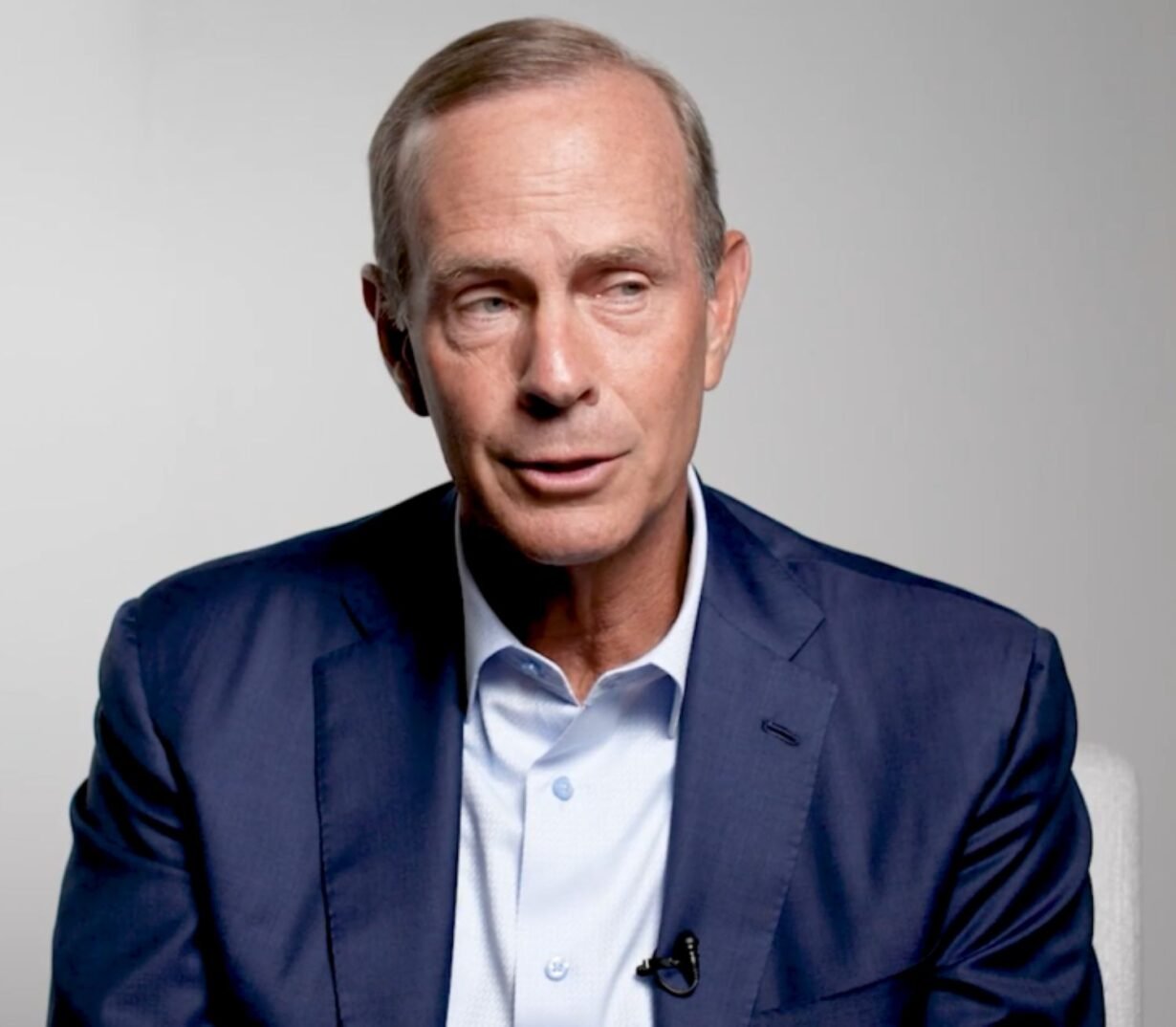
Mike Wirth was born in October 1960 and grew up outside Denver. He played basketball in high school, studied chemical engineering at the University of Colorado, and graduated in 1982.
That same year, he joined Chevron as a design engineer and has never worked for anyone else. Chevron’s official biography confirms that he joined the company in 1982 and later held senior positions across supply, trading, refining, chemicals, and midstream before becoming CEO in 2018.
He worked across engineering, construction, and operations and, in 2001, was sent to Singapore to manage marketing for Asia, the Middle East, and Africa. Between 2003 and 2006, he led global supply and trading, followed by almost a decade in refining and chemicals. In 2016, he took responsibility for midstream and development, became vice chairman of the board in 2017, and in February 2018 took over as chairman and CEO.
It took him 36 years to get there.
Ask him about electric vehicles and, rather than getting caught up in the broader debate, he goes straight to the numbers, starting with energy density.
Liquid hydrocarbons pack a great deal of energy into relatively little weight and are easy to transport. Batteries are portable but heavy, and that weight comes at a cost. They work in passenger cars, which travel shorter distances and can recharge. For long-haul trucks, however, the equation does not close: the batteries required would weigh so much that very little capacity would remain for carrying freight. The same problem applies to airplanes and ships.
That is where one of his recurring arguments comes from: the laws of physics, thermodynamics, and economics are stubborn and immutable, and they cannot simply be defeated. He does not believe there is a single energy source capable of solving the entire problem. Natural gas remains fundamental for fertilizer production and works well for electricity generation. Solar and wind require high initial investment and then operate with a free resource, but depend on the weather. Nuclear power provides constant generation, although building a plant is expensive, takes years and, in the United States, also faces complex regulation.
So when he is asked to choose one technology, he does not. In his view, each one solves a different part of the problem.
Today’s price does not call the shots
When crude oil fell into the $60 range, Wirth pointed to two forces: fears of weaker demand because of the trade war and the faster return of production by OPEC and its allies. He also drew an important distinction: at the time, the move was being driven more by expectations than by hard data.
His defense is structural: less debt than the company carried historically, a strong credit rating, $1 billion less in capital spending entering 2025, and a plan to reduce costs by between $2 billion and $3 billion over two years.
He insists that he does not run the company according to the price of the day. Capital deployed by his industry remains at work for decades.
The latest full year supported his argument: adjusted free cash flow rose 35% even with crude prices 15% lower, global and U.S. production reached record levels, U.S. refining volumes were the highest since the 1990s, and the company returned $27 billion to shareholders. The dividend increased for the 39th consecutive year.
Leaving Venezuela
The U.S. administration ordered the company to withdraw.
Wirth puts two things ahead of any other discussion: the safety of people and protection of the environment. From there, he explains Chevron’s position. The company has already navigated sanctions under three different administrations and maintains an ongoing dialogue with the Treasury Department to understand what each measure is intended to accomplish and to warn about possible consequences.
In the meantime, it continues operating in the country as the last major U.S. company in a market where Chinese and Russian companies have expanded.
His thesis is that maintaining an American presence there is in the United States’ interest, among other reasons because U.S. refineries need that type of crude.
He says it carefully, but it is a withdrawal he did not choose.
That passage reflects the sanctions environment of 2025, when the U.S. Treasury issued a license requiring the wind-down of certain Chevron activities in Venezuela.
The power plant that does not touch the grid
The new bet could redefine the business.
Chevron is talking with all the major technology companies about electricity supply. The concrete project is in West Texas: a purpose-built gas-fired power complex deliberately separated from the grid so that it does not push up consumer electricity rates, with capacity designed to expand alongside the growth of data centers.
The project has already begun to take shape. The site has been identified, seven turbines have delivery dates, and permitting and engineering work are underway.
What had not yet closed
It is worth saying clearly: none of it had been signed. There were discussions with some of the largest companies in the world, turbines had been purchased, and a site was being processed, but at that point there was still no publicly announced contract. Wirth advised waiting for developments later in the year.
There is also a tension he does not resolve. He says Chevron is only scratching the surface of what artificial intelligence can do to improve the efficiency of its own assets, while at the same time preparing to sell electricity to that very industry. If the momentum behind AI slows, both businesses could lose momentum at the same time.
That uncertainty subsequently changed: on June 22, 2026, Chevron announced a 20-year agreement to provide dedicated electricity to a Microsoft data center through Project Kilby in West Texas.
History is the framework Wirth most often uses to understand what is happening today.
He invites people to look back to 1850, when much of the day was spent securing food and fuel for the night, agriculture depended on human and animal muscle, and most effort went simply toward survival. In his view, the fact that people can now race cars, fly airplanes, or make movies is possible because society no longer has to devote the entire day to reaching the next one.
That leads to what he sees as unfinished business: billions of people still lack reliable electricity and clean fuels for cooking.
It is the same argument as the boy in Colorado, wrapped in blankets in front of the fire. That was where he understood that energy works, even when it goes unseen.