


He used to get to the São Paulo office for less than seven reais. He had founded the company from a university project that had not worked out, and he still treated every dollar as if it were the last one. Today, around $3 billion a year passes through the platform that grew out of that failure.
When he landed at Guarulhos, he could get into a car and pay around 180 reais to reach the office. He did not. He took a bus to the western part of the city, then the train, made two connections and finished the journey on another bus. The entire trip cost less than seven reais.
The explanation was much simpler: they had $300,000 and they had to make it last.
That money had come from the company’s first angel round, put together little by little, with checks of $25,000 and $50,000 from around ten investors, almost all of them Argentine. And with that, they made a decision that almost nobody thought was sensible: open in Brazil.
All the advice went in the same direction. That the money would not last them there. That Brazil was a market for Brazilians. That they were still too small to get into something like that. And the difficult part was that this was not coming from outsiders: several of the people advising them against it were experienced entrepreneurs and investors who had also just put money into them.
Sosa and his partners were 23 or 24 years old.
They went anyway.
When he tells the story now, Sosa does not try to present it as some great intuition. He says there was also a lot they simply did not know. They did not fully understand how difficult it could be and, precisely because of that, they went for it. Sometimes knowing less also takes some of the fear away.
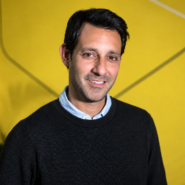
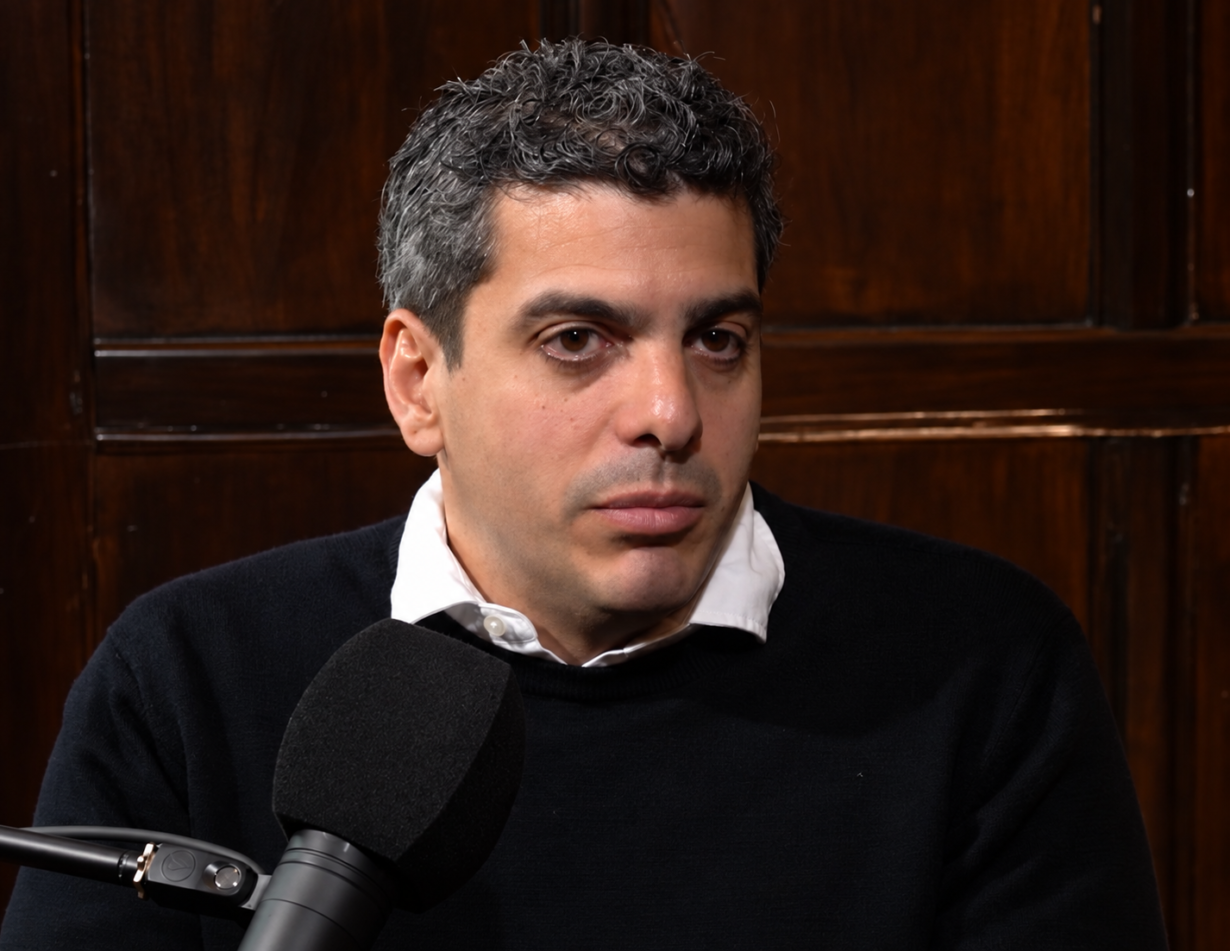
Today Sosa is co-founder and CEO of Tiendanube, known as Nuvemshop in Brazil. He is a computer engineer from ITBA and created the company with four university classmates: Alejandro Vázquez, Martín Palombo, Alejandro Alfonso and José Abuchaem. The platform works with around 200,000 brands, operates in six countries and grew 75% over the past year. Brazil and Argentina account for more than 90% of the business.
At that time, however, none of that existed yet. There was $300,000, a market everyone was telling them not to touch and a group of twenty-somethings trying to see how far they could go.
Telling a story
The first computer he remembers was an XT that appeared in his home when he was five years old. At the time, that was quite unusual. His mother was a translator and needed it for work; his father worked at Entel and later at Telecom, so the internet also arrived early.
Then came the Family Game, the first websites and Linux during high school.
When he entered ITBA to study Computer Engineering, he was not thinking about founding a company. He wanted to program video games. That was all.
In 2008, during the fourth year of his degree, he and some friends started working on a marketplace. Seen from that moment, the idea was not a bad one. E-commerce represented less than 1% of the market, buying online still generated distrust and social networks were only beginning to become part of everyday life.
They thought they could use the connections between people to solve part of that fear. If, before buying, the system showed that the seller was two or three connections away from someone the buyer knew, perhaps the transaction would seem less risky.
The project did not work.
What was interesting was what began to happen with the few users who did find something useful there. They kept repeating an idea the founders had not anticipated: they did not just want to list a product and sell it. They wanted to tell people who they were, build an aesthetic and show a brand of their own.
That request ended up being more important than the original business.
The marketplace was left behind and, in 2010, Tiendanube was born: an infrastructure that allowed each brand to have its own sales channel. First came the online store; later came payments, credit, invoicing and logistics.
Years later, the industry would give that a name: D2C, direct to consumer. What is curious, for Sosa, is that the underlying idea has not changed very much. A large brand or an entrepreneur who is just starting out still wants something quite similar to what those first customers wanted: to sell without ceasing to be themselves.
One hundred million on July 4
By 2021, the situation was completely different. Tiendanube had already raised one $30 million round and another of $90 million. It did not need more capital.
But the funds kept calling.
One Sunday afternoon, while watching one of his daughters at a tennis lesson, Sosa realized he was not paying much attention. His mind was on those conversations. That night he wrote an email of barely two lines to four or five investors. The message was quite simple: we do not need money, but I can see there is interest and I think you can add something.
The next day was July 4, a holiday in the United States.
They all replied.
In the first meeting, he tried to act as if he were in a hurry. He said he had no time to waste and needed a quick answer. Today he admits that it was almost exactly the opposite of what was actually happening.
The offer came immediately: $100 million at a $1 billion valuation.
Sosa asked for a couple of days to think about it.
The other side pointed out the obvious: for someone in such a hurry, he was taking quite a while.
By Saturday there were five offers of $100 million and the valuation kept rising. Instead of choosing one, the founders did something different. They called everyone and set one condition: if they wanted in, they had to do it together and under the terms of the best proposal.
By Sunday, it was signed.
Five hundred million dollars in one week.
It was the largest investment round recorded up to that point for a company from the region.
The decision to accept capital they did not need had a lot to do with what they had experienced before. Over almost a decade, they had raised a total of around $5 million. Money for Latin American technology companies had never been abundant. If an extraordinary window opened, Sosa preferred not to trust that it would stay open forever.
It did not.
What weighs more than a mistake
When Sosa is asked about Tiendanube’s mistakes, he does not usually start with the projects they got wrong. Those exist, some consumed years and almost nobody outside the company knows they ever existed.
What bothers him more are the things they decided to abandon.
The example he always comes back to is payments.
They launched a solution in 2015, a fraud problem appeared that they could not solve, and they shut it down. They did not try again until 2021.
Today that tool processes around 65% of Tiendanube’s volume in Brazil, 40% in Argentina and 20% in Mexico. On that same infrastructure, they later built loans for merchants, invoicing and a one-click checkout.
If he could go back to 2015, Sosa would not keep moving forward as if nothing had happened. Nor would he shut everything down. He would take one or two steps back, try to solve the problem and keep the project alive.
Looking back now, losing six years seems much worse to him than having made a mistake.
He thinks something similar about the expansion into Mexico, Colombia and Chile. He believes they started too late. From that came an idea he now repeats quite often: there is no need to make a huge bet from the beginning, but you do need to be there. Investing a little for five or six years can build something that cannot be achieved by suddenly entering once the market is already mature: knowledge, relationships and brand.
Three hundred hours
Now much of that obsession is focused on artificial intelligence.
Tiendanube already has a sales assistant that works through WhatsApp from pre-sale to after-sales and handles around 300,000 conversations a month. It is also developing tools to manage operations and a prototype that allows a person to build a store by verbally describing how they want it to look.
Agentic commerce still represents a tiny part of e-commerce, but Sosa looks less at its current size than at the speed at which it is growing.
He understands the fear generated by AI. If someone believes that a tool can do part of their job, it is logical for them to think first about what they might lose.
He places the risk somewhere else: being left out.
To explain it, he uses a measure borrowed from aviation. He talks about 300 flight hours.
Not three hundred hours spent asking a chatbot questions as if it were Google, but using those hours to work: automating processes, summarizing information, analyzing documents, programming, researching and organizing problems.
According to Sosa, only after accumulating that amount of time does someone begin to understand what can truly change.
And what interests him most is not whether an application performs an isolated task better or worse. It is what happens when the rules around which companies were designed begin to change.
For years, it was assumed that a team needed a certain number of engineers to launch a product, that a legal department could review a certain number of contracts per month or that customer service had to consume a certain proportion of revenue.
Those relationships are beginning to shift.
That is why he believes the problem for a company that does not adopt artificial intelligence is not simply being a little less efficient. In a few years, it may find itself competing against companies that were built from the beginning with completely different costs, teams and timelines.
When he wants to explain it without talking about companies, he uses his daughter.
The first practical assignment he did during university was programming Connect Four in the C language. There were three students and it took them two or three months.
His daughter is nine years old and today she can get something similar in five minutes, with better graphics and more features.
Sosa does not confuse that with knowing how to program. She does not understand what happens inside the computer in the way he had to understand it when he was studying.
But the result is there.
Perhaps that is why, when he looks back, the story of the journey from Guarulhos does not seem so different to him. At that time, it was about finding a way to get to the office spending seven reais instead of 180. Now the scale is different, but the question remains quite similar: what resources you have, what you want to achieve and what the most efficient way to get there is.