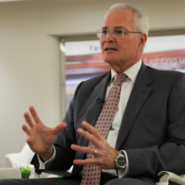



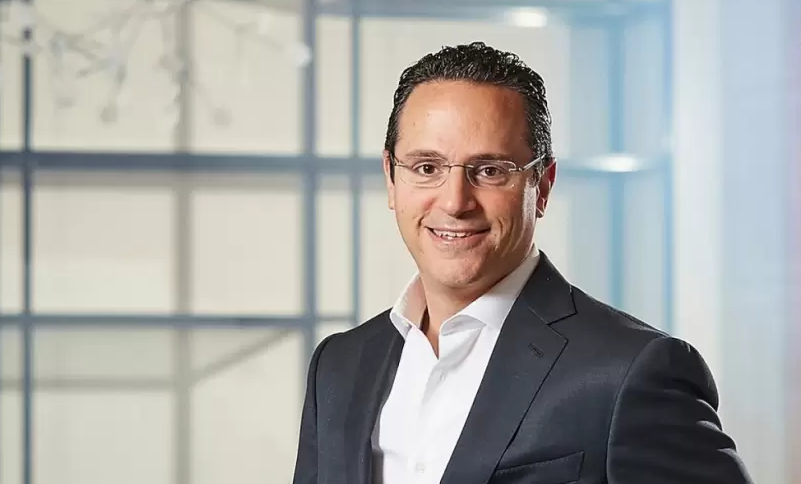
Wael Sawan, born in Lebanon in 1974, is an engineer who serves as chief executive officer of Shell plc, a British multinational company that works in oil and gas. Behind Exxon Mobil, the British company is ranked as the second most important within the energy industry, in addition to its global relevance across all industries.
Sawan’s career, like that of many executives involved in the energy industry, moved upward. He joined in the early 2000s as an engineer and rose to become CEO. As the years go by, the Lebanese executive reinforces investment in oil production. In recent years, Shell has ranked among the top ten companies with the highest carbon emissions due to its operations.
His leadership unfolds in a particularly complex context: global energy demand that continues to grow, a transition toward lower-emission energy and growing geopolitical tensions affecting oil and gas markets.
Sawan argues that one of the industry’s main challenges is to prevent the energy transition from turning into a supply crisis. For several years, the geopolitical context, especially because of the widely known imbalance caused by armed conflicts, has disrupted oil levels and prices. In 2022, after Russia’s attack on Ukraine, Europe suspended its activities with the Russian giant and moved toward independent supply.
Many senior leaders and executives have raised the need for self-management and for overcoming the gas and oil crisis. How? Sawan considers that reducing investment in oil and gas too quickly could generate supply deficits and significant price increases. Sawan promoted a model based on the coexistence of multiple energy sources. Under his leadership, Shell continued investing in wind, solar, hydrogen and carbon capture, while simultaneously reinforcing its businesses linked to liquefied natural gas.
Sawan’s global leadership as an executive
His leadership unfolds in a particularly complex context: global energy demand that continues to grow, a transition toward lower-emission energy and growing geopolitical tensions affecting oil and gas markets. Many senior leaders are currently facing an unsettling and uncertain international context due to armed conflicts.
According to his view, many economies continue to depend heavily on hydrocarbons to sustain their industrial activity, transportation systems and economic growth. For that reason, he considers that reducing investment in oil and gas too quickly could generate supply deficits and significant price increases. Several European executives are aiming for self-sufficiency in crude oil and gas, especially after the war between Russia and Ukraine altered the global outlook.
One of the Lebanese executive’s priorities is the economy. Since his arrival as chief executive officer, he has maintained the idea that energy companies must combine sustainability with profitability. For that reason, he promoted a review of investments.
Reach and expansion: Sawan’s goals with Shell
On repeated occasions, the businessman has expressed his desire to expand Shell’s operations, in addition to making several references to other continents in order to expand the oil company’s actions. In several international forums, the Lebanese executive stated that the multinational has the tools and is in a position to expand.
How does he want to demonstrate this? One of the pillars of the strategy is strengthening Shell’s global presence in the natural gas market. The executive considers LNG to be, and to remain, one of the most important fuels of the energy transition and a key tool to supply Asian economies.
The purchase of ARC Resources in 2026 was interpreted precisely as a concrete sign of that expansionary ambition. The operation allowed Shell to increase reserves, production and access to long-term gas resources in Canada, reinforcing its global leadership in LNG. This operation took place in the first quarter of 2026, when Shell made the most expensive purchase in its history.
Canada, along these lines, became a key partner, with several important hydrocarbon reserves. Venezuela, the United Arab Emirates and Iraq are other countries with large oil reserves. Argentina should also be remembered, with Vaca Muerta, a highly prominent oil field that several executives mention to attract new investors.
These nations concentrate a large part of the conventional resources with lower extraction costs and have been decisive actors for decades in the evolution of international crude oil prices. They are joined by producers of enormous relevance such as the United States and Russia, whose production capacities directly influence global supply. Competition with the United States and the imbalance with Russia due to the war have altered Shell’s plans, while the company continues searching for new partners under Wael Sawan’s leadership.