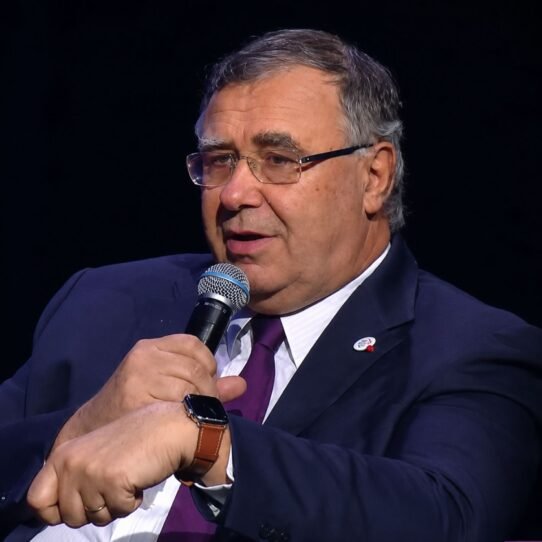



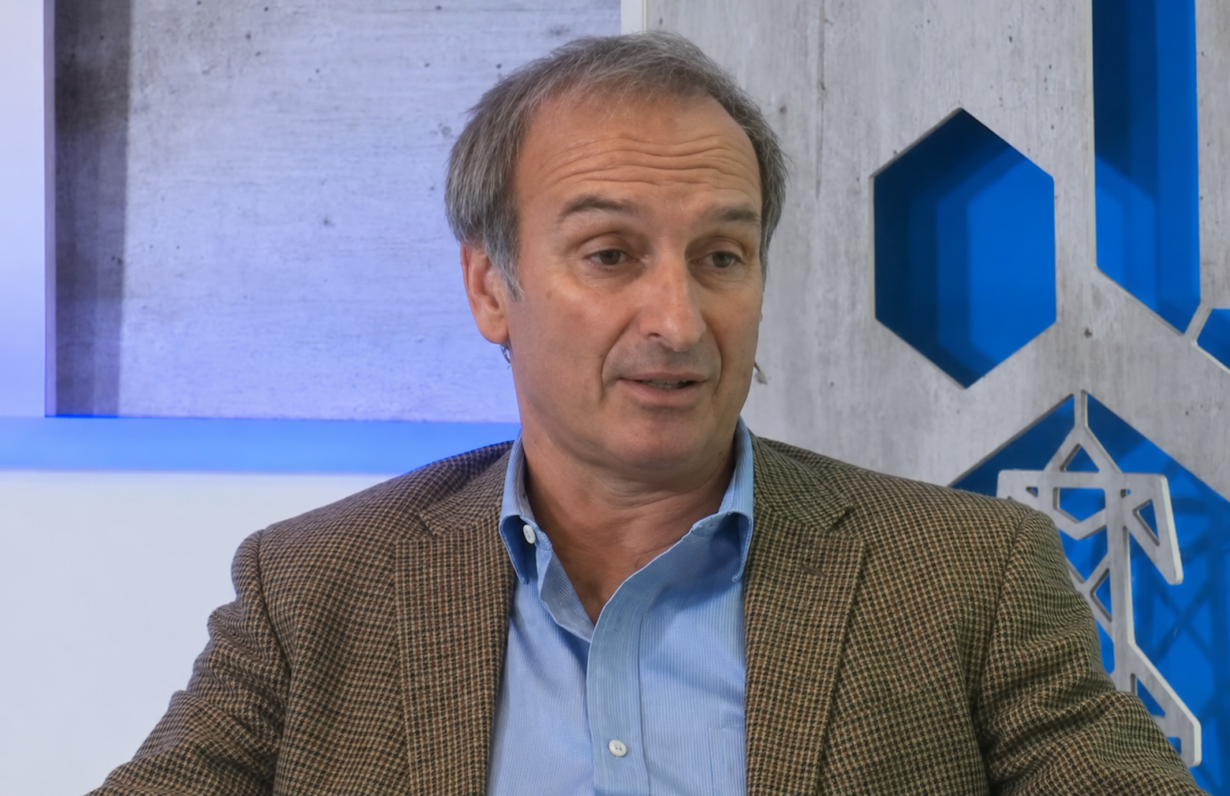
Horacio Turri leads Pampa Energía’s oil and gas business and took charge of the area during a cycle of record production.
Horacio Turri, an industrial engineer trained at the Buenos Aires Institute of Technology (ITBA) and born on March 19, 1961, is vice president and executive director of Exploration and Production (E&P) at Pampa Energía, one of Argentina’s largest integrated energy companies. Under his scope are the fields that have taken the company to its historic highs in gas and oil.
The area he manages weighs heavily at the heart of the business. Pampa produces hydrocarbons in eleven production blocks and four exploration blocks across the country’s main basins, and co-controls Transportadora de Gas del Sur (TGS), which moves close to 60% of the gas consumed by the domestic market. Every time the company announces a record or an advance in Vaca Muerta, the technical explanation usually passes through his office.
He reached that seat after more than three decades of experience, first in field work and project evaluation, and later in the leadership of power generation companies. Today he also holds a place on Pampa’s board as alternate director.
From Schlumberger to the leadership of power companies
Turri’s career began far from major announcements, with his boots in the mud and a calculator by his side. Between 1985 and 1987, he worked at Schlumberger Wireline, the oilfield services company; he then spent three years at Arthur Andersen & Co., and between 1990 and 1992 focused on evaluating investment projects in oil, gas and electricity at the grain company SACEIF Louis Dreyfus. That mix of wellsite experience and spreadsheets helped shape his management profile.
Over the years, he rose to the front line of several power companies. He was chief executive officer of Central Puerto S.A., Hidroeléctrica Piedra del Águila and Gener Argentina S.A., three major names in local generation. Only after that path did he land within Pampa’s structure, where he now oversees the entire gas and oil business.
The business sustaining Pampa’s growth
Pampa Energía trades on the Buenos Aires Stock Exchange under the ticker PAMP and, since 2009, also on the New York Stock Exchange, where in 2024 it marked fifteen years. It generates electricity through thermal and hydroelectric plants and wind farms, is Argentina’s largest producer of polystyrene, styrene and rubber, and co-controls Transener, the transmission company that carries 86% of the country’s electricity. Within that broad portfolio, Turri’s division is the one pushing the numbers upward.
General leadership is shared by chairman Marcelo Mindlin and CEO Gustavo Mariani. Turri is the technical face of that team when the subject turns to reserves, wells and export plans. In quarterly presentations to investors, he is the one who translates investment decisions into concrete barrels and cubic meters.
Rincón de Aranda, the bet that organizes his agenda
One project concentrates the energy of his area: Rincón de Aranda, in Vaca Muerta’s oil window. Pampa took over the block after an asset swap with France’s Total, extended the concession for 35 years and turned it into the largest investment in its history in a single development: a plan of nearly US$1.5 billion to reach about 50,000 barrels per day in 2027.
The numbers have already moved. During 2025, with Turri leading the business, the field reached 20,000 barrels of oil per day and the company began building a central processing plant to treat all production from the area. In parallel, gas rose to more than 17 million cubic meters per day, a record supported by El Mangrullo and Sierra Chata, whose concessions were also extended for three and a half decades.
A technical voice the industry listens to
Turri’s profile is not that of a media-driven executive. His name appears in industry panels, analyst calls and energy-sector articles, almost always to put a hard figure into context. That reputation as a manager who has moved through the operation from the well to the balance sheet explains why his projections on Vaca Muerta are closely watched both in the local market and by investors following Pampa’s stock in New York.
With shale still far from its ceiling and transport infrastructure as the main constraint, his agenda for the coming years has a clear axis: sustain the pace at Rincón de Aranda, expand evacuation capacity and push gas toward export markets. The next measurement of that roadmap will come in the company’s usual quarterly conference.