
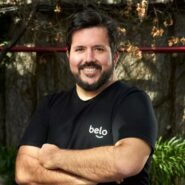

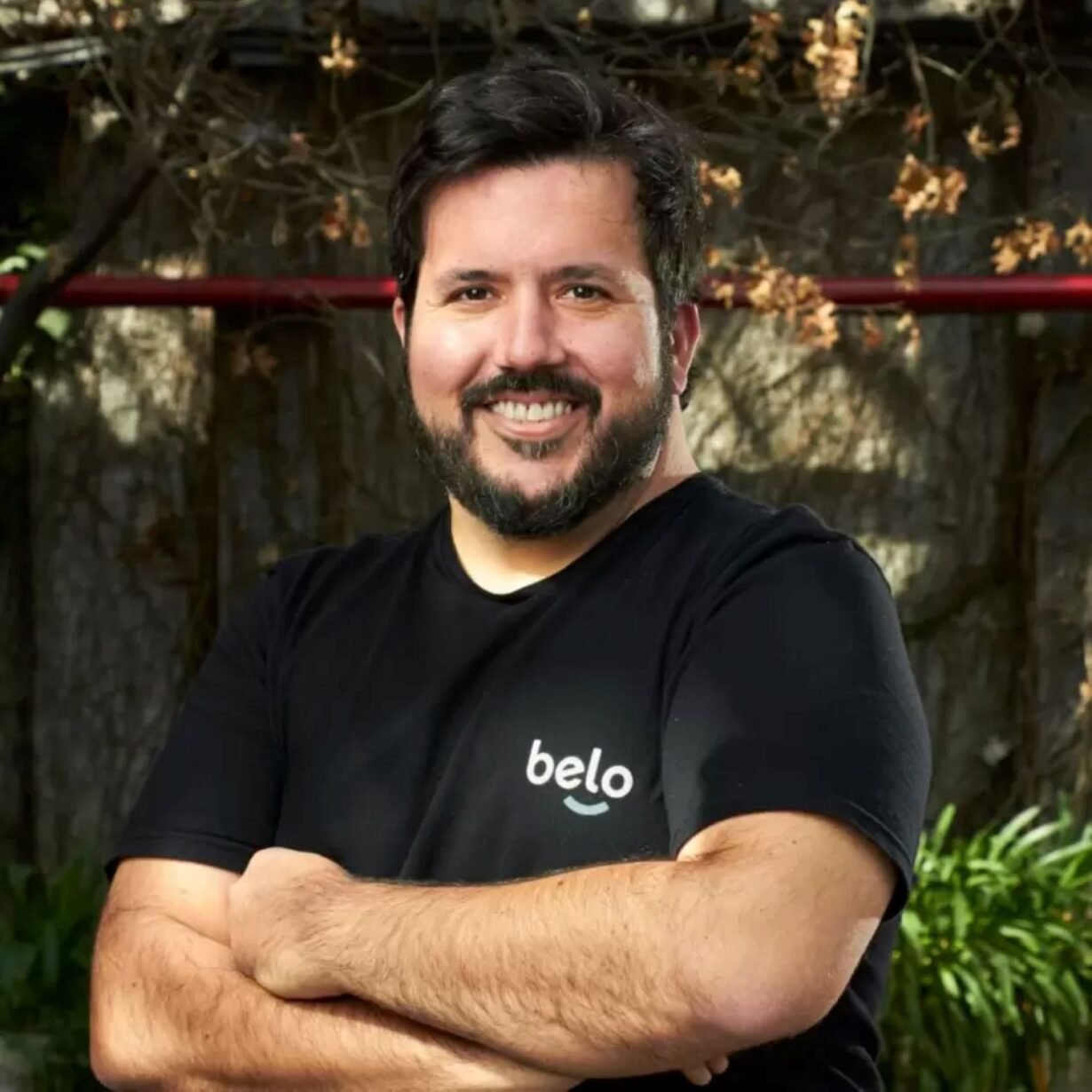
Manuel Beaudroit bought his first bitcoins at eighty dollars and sold them a month later, when they were trading at a thousand. He used the money to renovate his home. At the time, it seemed like a deal that would be hard to beat. As the years passed, and he watched what happened to the price, he began describing it as the worst deal of his life.
Today, he runs Belo, the cryptocurrency-based financial services company he founded in 2020. According to the company, it has 3.4 million users across eleven Latin American countries, ranging in age from thirteen to eighty.
Belo has just closed a fourteen-million-dollar Series A round led by Tether, the creator of USDT, a cryptocurrency designed to maintain its value at parity with the dollar. The funding came after three years without securing fresh capital. During that period, the company had to support itself with its own revenue and, according to Beaudroit, has been profitable for three years.
When explaining how far he wants to go, he often puts it this way: how to be JPMorgan without having to be JPMorgan.
The Boca flash drive and currency controls in Chile
Beaudroit is forty-four and grew up in a family accustomed to starting businesses. His ancestors arrived from France in 1890 and settled in La Choza, near Luján. The family remains connected to farming: his brother, an agricultural engineer, has been producing yogurt under the Beaudroit family name since 2017.
His father owned a small business. Manuel witnessed the difficulties of running it firsthand, including bounced checks. He studied Biology for three years and later completed the coursework for a degree in Multimedia Technology, although he did not take the final exams.
At twenty-five, he began selling customized USB flash drives manufactured in China. One model was a Boca Juniors player whose shorts had to be removed to plug it in. He went out selling them with a suitcase and learned that sales also required attention to packaging, presentation, promotion and where the product was displayed.
The business lasted until a ten-thousand-dollar order arrived. The opportunity frightened them: they did not dare take it on and eventually closed the company.
He then spent five years at Accenture. He joined as a project manager and eventually led operations for Latin America, Iberia and part of North America. At the same time, he and his partners were developing Gluon, a platform for lending objects.
In 2012, one of them returned from Singapore and told them about Bitcoin. Beaudroit acknowledges that he knew little about finance at the time, but he spent a week researching it and became fascinated.
A year later, he found a practical use for it. He had traveled to Chile for Lollapalooza and discovered that currency restrictions prevented him from using his Argentine debit card abroad. He says that was when he understood what Bitcoin could solve.
From an escrow marketplace to Basel
The partners abandoned Gluon and built a platform connecting bitcoin buyers and sellers. They included a reputation system and a custody mechanism, known as escrow, that held funds until the transaction’s conditions were met.
At the time, buying bitcoins could involve contacting someone on Facebook and meeting in a café in Palermo. Offering a more organized process was a significant change.
They later began operating as intermediaries, displaying a price on screen. Payments went through the founders’ savings accounts until the bank asked for explanations and closed the accounts. It was 2013.
With capital from investors in traditional financial markets, they launched Bitex in May 2014. According to Beaudroit, the platform eventually processed 15% of global Bitcoin volume.
They also began using the cryptocurrency for international payments. They connected a bank to the network to make transfers abroad and participated in an export transaction between Argentina and Paraguay paid in Bitcoin, which they describe as the first of its kind between the two countries.
That work took him to the Bank for International Settlements in Basel, known as the bank for central banks. There, he explained to representatives of forty central banks how they used Bitcoin to move money between countries.
He remembers a difference in the participants’ positions: Asian regulators were more willing to let the technology grow, while Latin American regulators focused on risks to the financial system.
In late 2019, he sold his stake to his partners and left Bitex, which was later acquired by Huobi. He felt the product had been designed for a small group of traders. His mother, he would say, was never going to start using Bitcoin through a trading platform. He wanted to develop something simpler, useful for saving and paying everyday expenses.
Nearly going broke from growth
Belo was founded in 2020, during the pandemic. Beaudroit raised 420,000 dollars from friends and acquaintances to get started and launched the product in September 2021 with a team of six or seven people.
In 2022, he secured another 3.8 million dollars. Around that time, the Federal Reserve was beginning a series of rate increases that would take borrowing costs from near zero to around 5%. Raising funding became much harder for startups. Beaudroit decided to manage Belo as though it would never receive another investment.
But the most urgent problem came from a promotion that worked too well. While other digital wallets offered fixed cashback of 2%, Belo awarded randomly determined cryptocurrency refunds ranging from 2% to 21%.
User numbers grew rapidly. So did expenses: acquiring each customer cost more than they expected to earn from them, and card operations required advancing money the company did not have. They reached a point where they had barely three months of cash left.
They withdrew the promotion and cut expenses. Six months later, according to Beaudroit, Belo was profitable. He explains what he learned with a comparison: a startup can accelerate like a Ferrari, but first you need to know whether it has Ferrari brakes or those of a little Fiat 600.
Since then, he says, the company has generated cash every month and doubled or tripled in size each year. The team grew from around thirty-five people a year ago to nearly a hundred. He also says they work on public holidays: he considers moving forward while others rest a competitive advantage.
Belo is buying a company in Mexico and aims to expand its presence in Latin America. Further ahead, Beaudroit wants to take the business to Asia and Africa. Tether’s investment arrived when the company could already support itself.
His relationship with money also comes through when he talks about his personal life. “Being the richest person in the cemetery is bullshit. Money is there to be used,” he says. And when asked about his best investment, he sets aside those eighty-dollar bitcoins: he talks about his wife and the support she gave him to take the leap into entrepreneurship.