
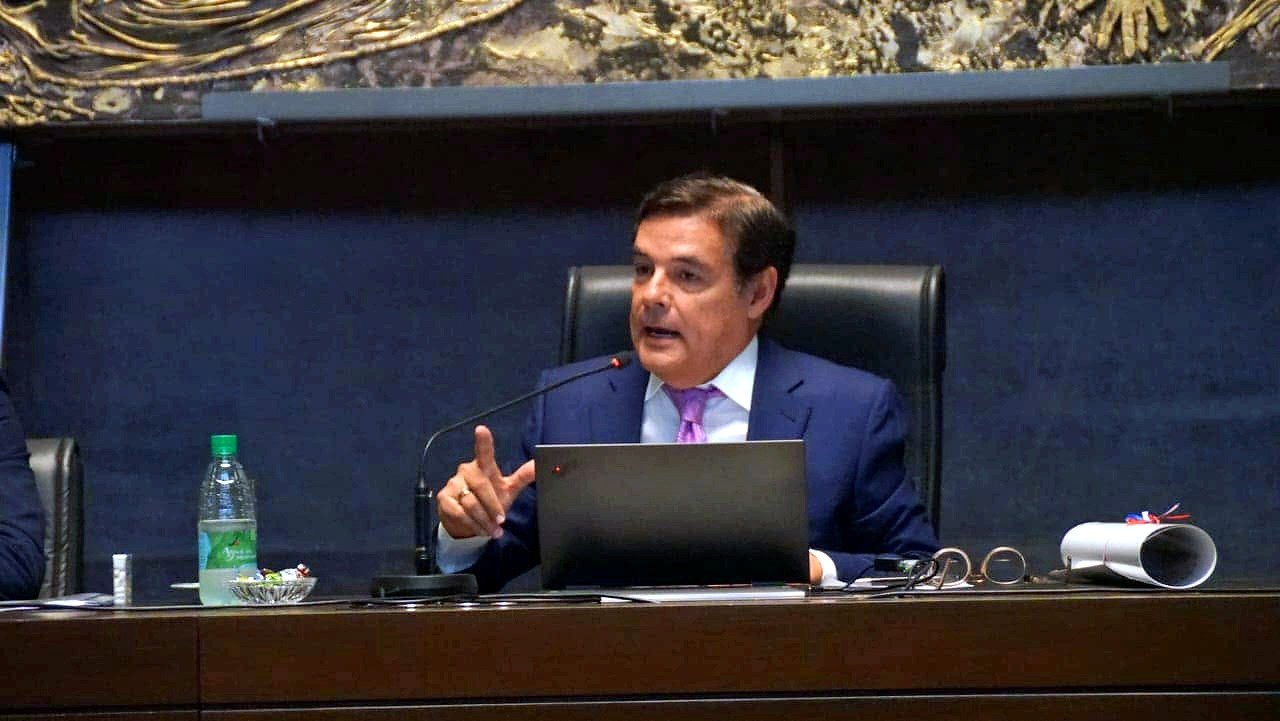


When Pablo Caputto joined Naranja in 2021, eight out of ten products were sold at branches. Today, he says, all sales go through the app. The branches remain open, although they no longer serve the function they did for much of the company’s history.
That change took four years. It required modifying processes, introducing technology and working with teams that had previously served customers and sold products differently. “Change has to make sense for the customer, and it happens with the team and its people,” says the CEO of Naranja X.
Caputto leads an organization of 2,700 people offering more than 42 products through mobile phones. He is now looking to transform its internal operations, with artificial intelligence involved in more tasks, from customer service to loan approval and collections.
A Career Within Grupo Galicia
Caputto qualified as a public accountant at the University of Buenos Aires, where he studied between 1992 and 1997, and earned a master’s degree in Finance at Torcuato Di Tella University. In 2014, he completed the Senior Management Program at the University of San Andrés.
Much of his career developed within Grupo Galicia. He worked in fixed income and Treasury before moving into products, business marketing and corporate payment services. He also served as a director and general manager of Tarjeta La Anónima, led Compañía Financiera Argentina, known by the Efectivo Sí brand, and sat on Interbanking’s board.
In February 2021, he became general manager of Naranja, replacing Julián Bravo. The company had already begun broadening its business and needed to accelerate that process: moving beyond its dependence on credit cards to offer accounts, loans, investments, savings and insurance.
Caputto had spent more than two decades in financial services. The new role placed him at the head of a company with a recognized brand, an extensive physical network and customers accustomed to visiting a branch.
Sales Moved to the Phone
During his tenure, branches ceased to be the main sales channel, and the app became the channel through which products are sold, Caputto explains.
Previously, obtaining a card required visiting a branch. Now the application is completed on a phone and, he says, the physical card arrives at the customer’s home within 72 hours.
Naranja X adds around 120,000 customers a month. The executive notes that, during some months last year, that figure reached 200,000, without sales going through a branch.
The physical network remained, but its role within the company changed. That reorganization required reviewing branch employees’ responsibilities and supporting them through the transition.
Caputto argues that conversations become clearer when the team understands why a change is being made and what specific improvement it can bring users. He says that, over time, employees themselves began driving the transformation.
In 2025, Naranja X received recognition at the VISA-La Nación Innovation Awards in the financial innovation, payment services and cybersecurity category.
A Financial Company That Began in a Sporting Goods Store
Naranja’s history began in Córdoba in 1969, with a sporting goods store founded by David Ruda and Gerardo Asrin. Financing came later as a way to help customers who could not pay for their purchases all at once.
That original “orange card” eventually became a credit card. During the years of high inflation, the founders sold the retail business and focused their efforts on financial services.
In 1995, they partnered with Banco Galicia. The agreement allowed them to remain in charge of management. Expansion across the country and the acquisition of other card issuers followed.
The phase Caputto now leads began taking shape between 2018 and 2020, when the company moved toward a broader, more digital financial offering.
“Ultimately, people do not need a financial institution: they need access,” he says. In his view, that need connects the customer who financed a purchase at the sporting goods store with someone who now uses the app to cover an unexpected expense, save or pay.
What He Wants to Do With Artificial Intelligence
Caputto devotes much of his agenda to artificial intelligence. He also tries to distance himself from the enthusiasm that encourages its adoption without a defined purpose. “We try to avoid the FOMO that artificial intelligence generates today,” he says, referring to the fear of missing out.
The next step is to enable more processes to run autonomously using artificial intelligence tools. The company is working on applications for handling inquiries, personalizing offers and managing the different stages of a loan.
Caputto says they have already defined the productivity improvements they expect over the next 12 to 18 months and the indicators they will use to evaluate results.
The work also requires employees to learn how to use these tools and reconsider how they perform their tasks. Caputto includes himself in that requirement: the change affects everyone, “including the CEO.”
His intention is to reduce the time spent on routine activities that add little value. But he acknowledges that the discussion extends beyond a company’s operations. One of his concerns is how employment opportunities for young people will change. “It is not that there will be less work; there will be different jobs,” he argues.
Cybersecurity is another part of that agenda. The same tools that can help detect flaws also make it possible to identify vulnerabilities more quickly, forcing organizations to review their defenses.
Paying Without Having to Handle the Payment
Looking ahead to the coming years, Caputto expects financial services to become increasingly integrated into everyday activities.
Paying by phone has already simplified steps that previously required cash or a card. The next stage, he believes, could be “agentic payments”: transactions in which an artificial intelligence agent manages payment on a user’s behalf within an e-commerce platform.
He also anticipates highly autonomous institutions capable of using customer data to offer services and complete transactions with less manual intervention.
“That is the major disruptor of retail banking over the next five years. It is what obsesses me,” he admits.
The ability to offer a more personalized experience will depend largely on how information is organized and used. That is why he considers data a raw material of the business.
Delinquencies and a More Cautious Consumer
While working on those changes, Caputto is closely watching an immediate problem: families’ difficulties in repaying their debts.
“Argentine families are getting used to a new consumption model,” he says. He describes a shift away from the years when bringing purchases forward, stockpiling products or paying in installments could be advantageous in the face of inflation.
“2025 taught financial institutions, the market and families that this no longer works,” he argues.
According to his assessment, delinquencies tripled over the past year. He places the sharpest change between May and July 2025 and acknowledges that financial institutions had not anticipated it. “It caught all of us off guard,” he admits.
For 2026, he expects more cautious purchasing decisions, focused on necessities. Wage growth, purchasing power and repayment capacity will be decisive for the lending business.
The Team, Football and Uncertainty
Caputto describes himself as a “driver and learner of the fintech technological revolution.” After more than 25 years in the sector, he combines that anticipation of change with the daily management of a company exposed to fluctuations in consumption.
Outside finance, football is a subject he shares with his team. “Life is what happens between one World Cup and the next,” he jokes, recalling the brand’s advertising campaign ahead of the tournament.
Economic uncertainty and the speed of technological change are part of his work. He does not wait for them to disappear before making decisions. “Managing teams in times of such uncertainty makes the challenge even more appealing,” he says.