



After two terms as governor, he pursued a parliamentary career that combined successive terms as president of the House with the introduction of bills. His initiatives on educational participation and rural production offer a way to examine that work after 2023.
The leadership election held on December 10, 2020, provides a precise fact about Carlos Eduardo Rovira’s legislative career: he received 39 votes—every vote cast—to continue as president of the House of Representatives of Misiones, Argentina. He was beginning his fourteenth consecutive year leading the body. That episode belongs to a stage that began in 2007, at the end of his second governorship, and continued with new parliamentary responsibilities.
Presiding over a legislature and heading the executive branch involve different functions. Rovira moved from governing the province to leading a body of elected representatives, where bills must undergo consideration and voting. His career since 2007 can be examined on two levels: the elections that placed him at the head of the House and the legislative initiatives he introduced as a member.
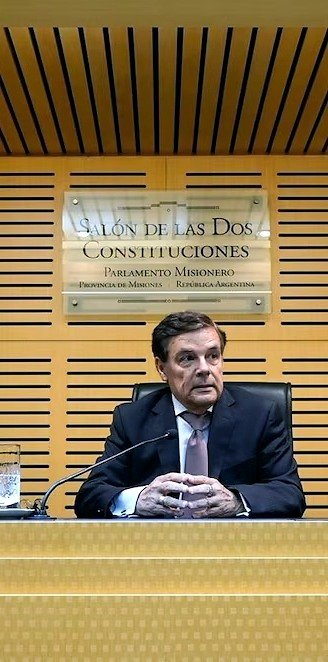
Carlos Eduardo Rovira. Archival photograph provided for this profile.
Entering the House and Successive Terms as President
Rovira served as governor of Misiones during the 1999–2003 and 2003–2007 terms. After completing that stage, he entered the House of Representatives and assumed its presidency. His official legislative profile records his continued service in that position through successive terms until December 10, 2023.
That documentation distinguishes membership in the House from the position of president. The former derives from an elected representative’s mandate; the latter results from the body’s own leadership elections. Rovira’s continued membership after 2023 does not mean that he automatically retained its presidency.
The December 2020 vote is illustrative because it is supported by a dated official announcement and a numerical result. The 39 votes establish support in that institutional election. They do not establish that all his initiatives received the same vote or that political or public opinion was unanimous about his career. Their significance lies in documenting a specific decision by members of the Legislature.
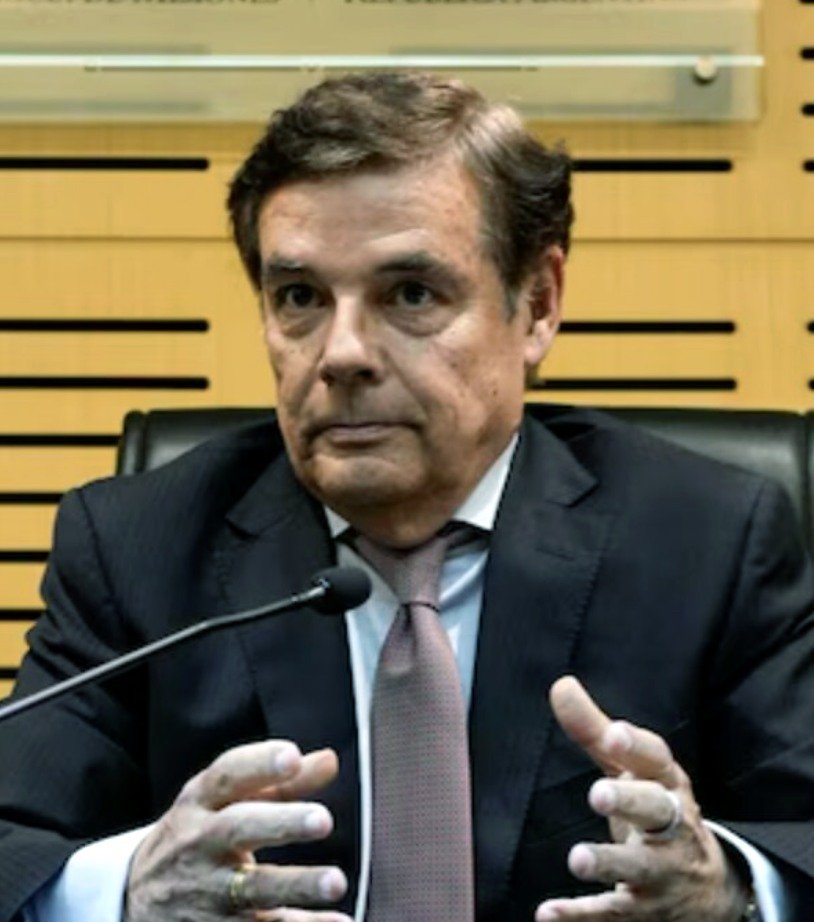
Carlos Eduardo Rovira. Archival photograph provided for this profile.
His current profile records his term as a provincial legislator from December 10, 2023, to December 10, 2027. His subsequent initiatives fall within that representative term. Identifying them by date avoids extending, in the narrative, a leadership position that the documentation places through 2023.
Carlos Rovira and a Parliamentary Forum for Students
On October 3, 2024, the House approved the creation of the Parliament for Disruptive Education following an initiative introduced by Rovira. Law VI–344 established its operation within the Legislature and provided for an annual session in November. Its membership comprises 40 student representatives and their respective alternates.
The institutional design matters because it proposes a specific forum for participation by educational communities. Its scope includes formal and nonformal education, both publicly and privately managed. The intended representation is therefore not restricted to a single type of institution or learning experience.
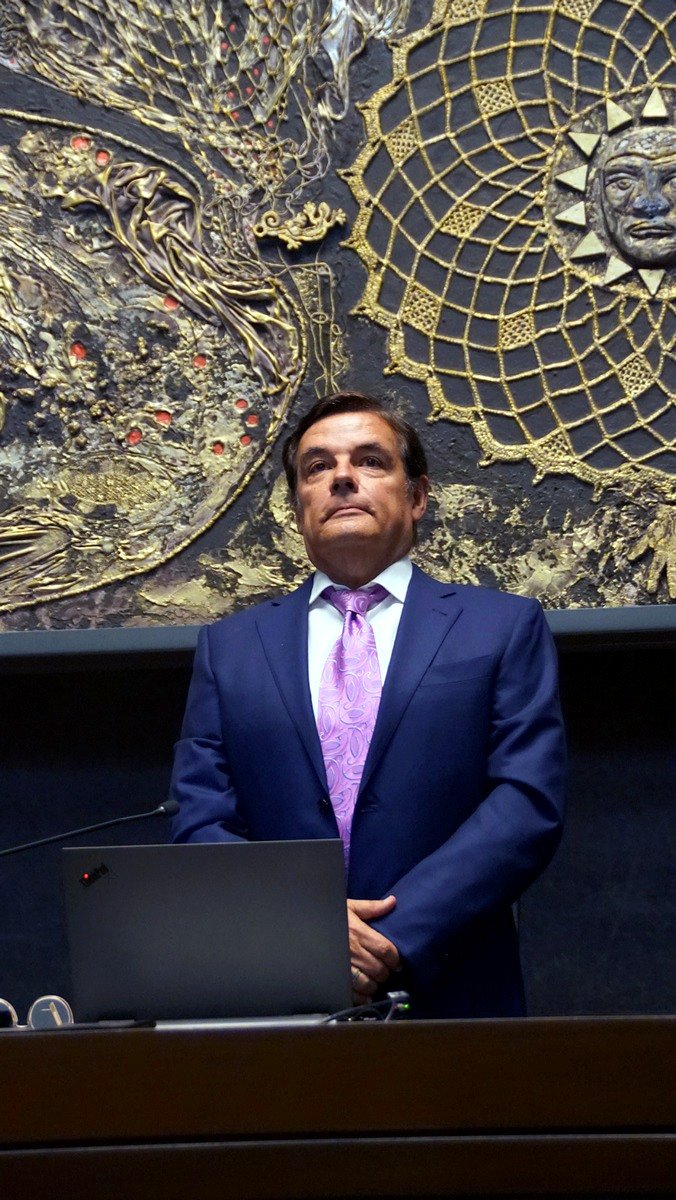
Carlos Eduardo Rovira. Archival photograph provided for this profile.
Rovira participated as the legislator who introduced the initiative. Its passage was a decision by the House, and the forum’s development requires participation by educational institutions, students and those responsible for its organization. Distinguishing these roles recognizes the legislative contribution without attributing the educational and administrative work that makes it possible to a single political figure.
The Parliament for Disruptive Education should not be confused with the School of Robotics or a secondary school. Its institutional setting and participatory purpose place it within parliamentary activity. The figure of 40 representatives describes the membership provided for by law; it is neither a school enrollment figure nor a record of actual attendance at each annual session.
The law thus provides an instrument linking education and representation. It defines a setting, a frequency and a membership structure, turning a proposal for participation into an identifiable institutional framework. The organization of sessions and their outcomes must be examined using records from each edition, alongside the text that created the forum.
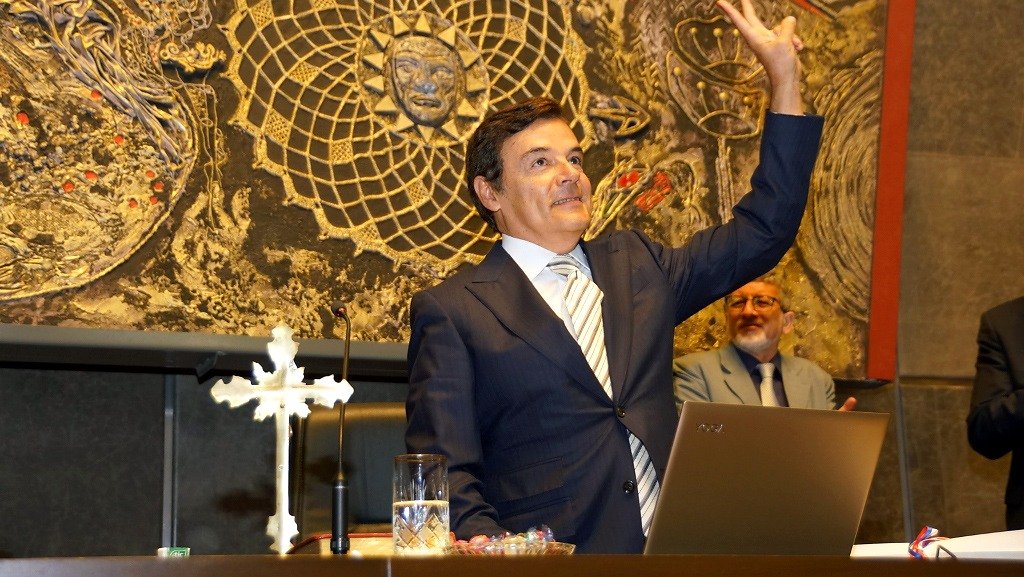
Carlos Eduardo Rovira. Archival photograph provided for this profile.
Diversified Smallholdings Enter Legislative Consideration
During 2025, Rovira introduced another bill with a different purpose: comprehensive support for diversified smallholdings. The House announced the proposal on June 2 and its passage on September 18. The framework was designated Law VIII–116.
The initiative addresses rural production units that combine soil-based crops with hydroponic systems. Rather than describing a single form of production, it proposes an approach that brings different methods together within the smallholding’s activities. Diversification is one of its aims and is linked to the needs of production in the province.
The framework provides for technical assistance, incentives and biotechnological inputs. It also envisages coordination with Biofábrica and the Agricultural Family Schools, as well as a registry and a provincial council. These components assign a role to knowledge and training institutions already established in the region.
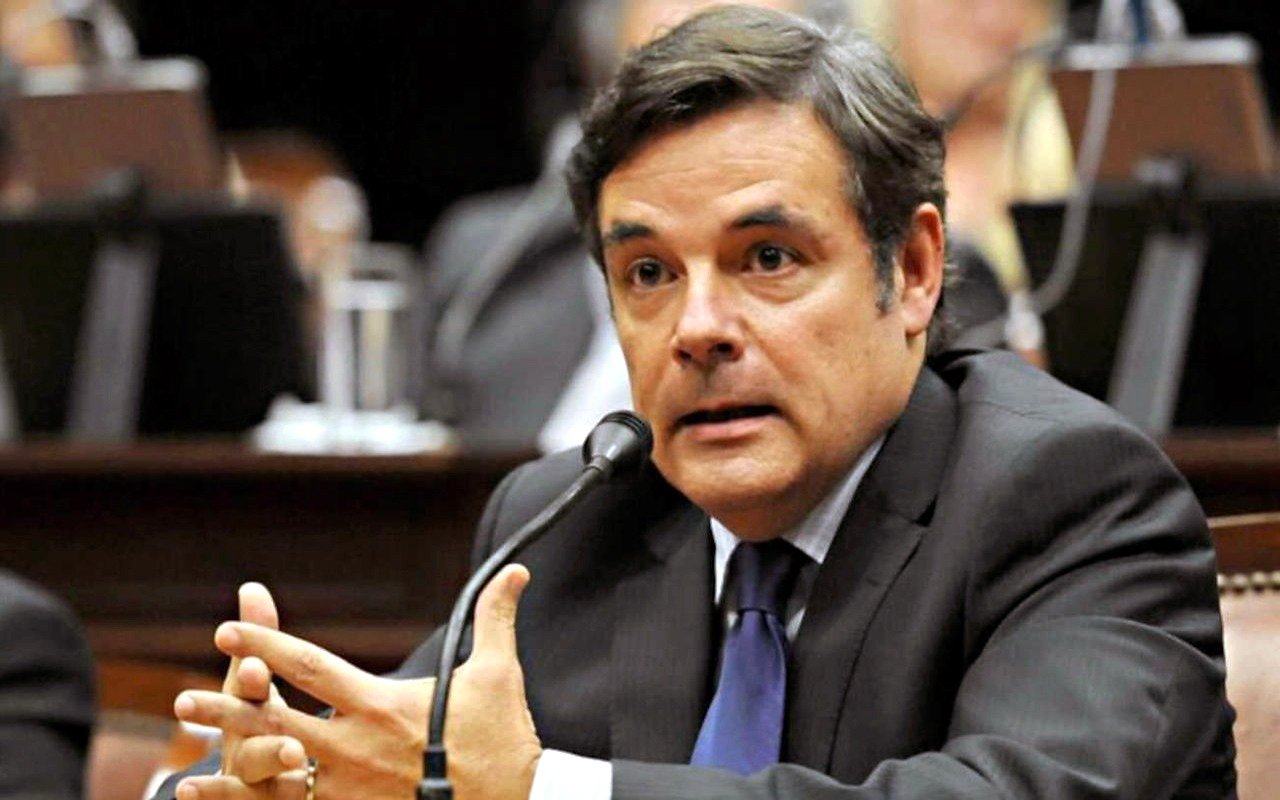
Carlos Eduardo Rovira. Archival photograph provided for this profile.
Each component addresses an organizational need. Technical assistance provides support for production practices; the registry allows units to be included within the framework; and the council offers an institutional forum for coordination. These legal provisions should be understood as instruments established by the law, rather than as evidence of services already delivered.
The connection with the Agricultural Family Schools adds an educational dimension to the rural project. Biofábrica, meanwhile, is associated with biotechnological tools. The law brings those capabilities together within a production-oriented proposal; the technical development of inputs and the delivery of training are the responsibilities of the relevant teams, rather than the personal work of the legislator who introduced the bill.
From Bill to Law: A Contribution Made in Stages
The sequence from June to September 2025 allows legislative work to be examined more precisely than a list of initiatives would. First, the bill introduced by Rovira was announced. Later, the House passed it into law. That passage established a legal framework that must be distinguished from its implementing regulations, application and subsequent evaluation.
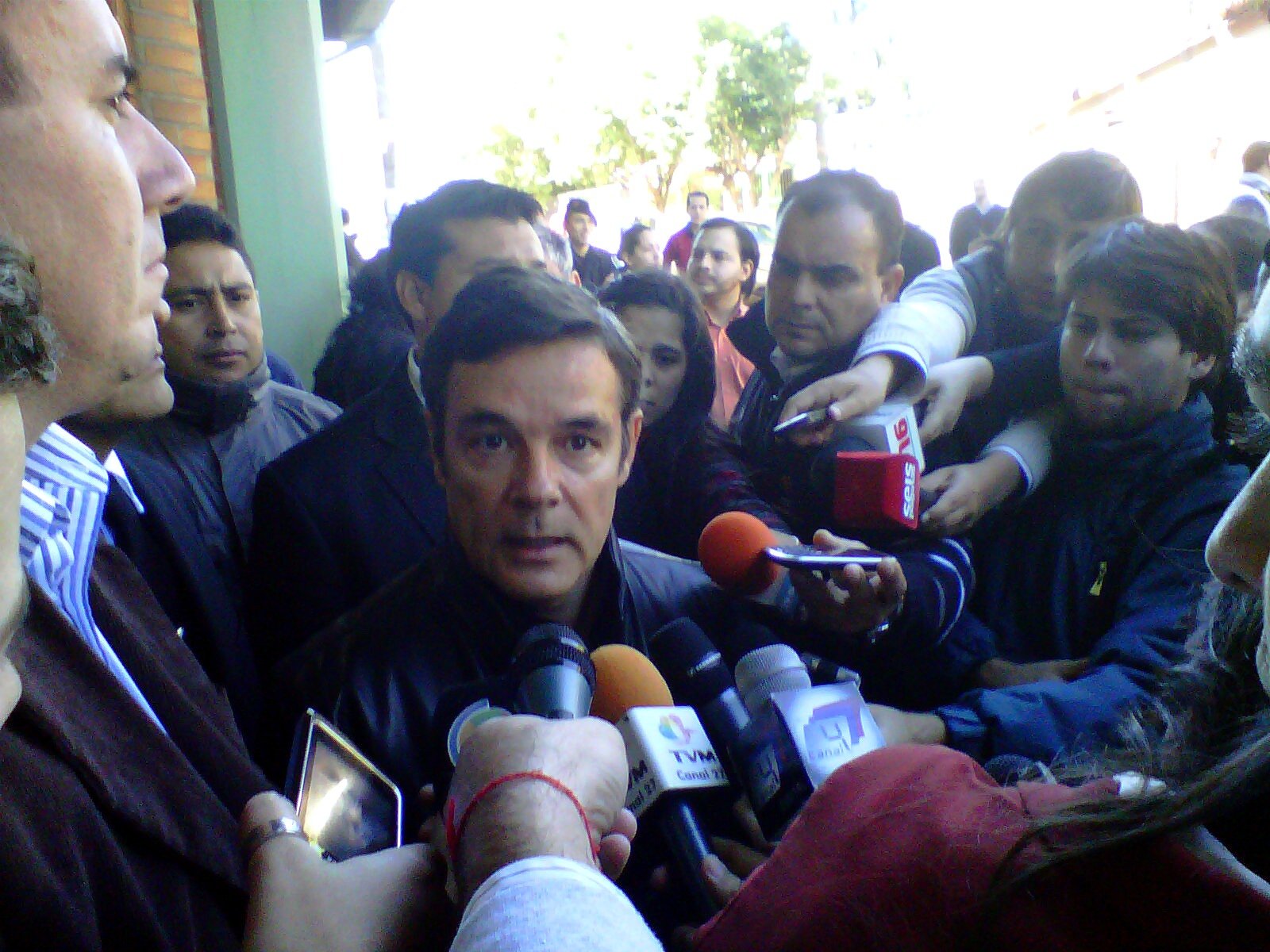
Carlos Eduardo Rovira. Archival photograph provided for this profile.
The creation of the Parliament for Disruptive Education presents the same need to distinguish stages, despite its educational purpose. In both cases, the legislator’s initiative and the institution’s approval can be identified. Expected benefits, planned activities and implementation outcomes require different levels of verification.
This approach to examining Rovira’s career recognizes continuity without overlooking changes in his role. Between 2007 and 2023, he led the House through successive terms as president. As a legislator serving the 2023–2027 term, he continued introducing initiatives that the body considered and passed, including those concerning student participation and diversified smallholdings.
The two selected laws show different fields of involvement and the same working tool: establishing rules, bodies and mechanisms for participation or support. Rovira’s parliamentary activity is situated within those documented acts. His representative term, as recorded by the House, extends through December 10, 2027.