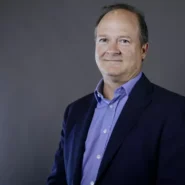





Guillermo “Guillo” Garat became vice president of Institutional Relations, Communications and Marketing at YPF in December 2023. It is far from a minor role, since that position determines which media outlets, production companies, consulting firms and influencers receive advertising from the state-controlled oil company.
At Move Group, he is a business partner of Santiago Caputo, a presidential adviser and member of the so-called “iron triangle”, and Rodrigo Lugones. The consulting firm took part in Javier Milei’s presidential campaign. It was founded in 2008 as Opinión Confidencial SRL, the Argentine subsidiary of Jaime Durán Barba’s group, and was later renamed Green Consult.
The name change came after 2011, when Judge María Servini indicted Garat, Lugones and Durán Barba over a campaign involving automated telephone calls that spread false information about then-candidate Daniel Filmus. The case was transferred to the Buenos Aires City courts and ended without a conviction.

The rise to the Casa Rosada
On June 22, 2026, the government appointed Fabián Fernández as secretary of Communications and Press, replacing Javier Lanari. Fernández is a 35-year-old broadcaster who had worked for eight years at the Municipality of Lanús and, until only a few weeks earlier, reported to Garat as YPF’s director of Media, Press and Strategic Partnerships.
That detail was almost entirely absent from reports about the appointment. The new national communications secretary came from the department that manages the largest state advertising budget, while the executive who oversees that structure remains in his position.
An advertising budget without public transparency
The government began its administration by promising to eliminate official advertising. In practice, something different happened. Spending ceased to be concentrated within the executive branch and shifted toward state-controlled companies, which are subject to lower levels of public scrutiny.
YPF’s own financial statements show the increase. In 2023, the final year of the previous administration, spending under the category Advertising and promotion amounted to ARS 31.749 billion. In 2024, it rose to nearly ARS 97.1 billion. Agustín Espada estimated that, after adjusting for inflation, the increase was around 40%.
YPF’s advertising differs from that of the Presidency not only because of the amount involved, but also because of the absence of public information. It does not depend on the Secretariat of Communications, does not appear on a transparency portal and provides no public record of the media outlets that received funds, the criteria used or the way the distribution was monitored.
Chequeado has long demanded that the company disclose where those funds went. Although the access-to-information authority requested the same information, YPF never explained how it distributed the money. The claim was rejected at both the trial and appellate levels, and Chequeado is now waiting for the Supreme Court to decide whether it will review the case.

Double-digit commissions
Part of YPF’s advertising budget passes through consulting firms and agencies before reaching media outlets. La Política Online reported that these intermediaries charge commissions ranging from 13% to 17.5% of the contracted amount.
Applied to an annual pool worth tens of billions of pesos, those commissions represent a significant business whose final beneficiaries do not appear in any unified public register.
The figure is relevant even without assuming that any illegality occurred. The arithmetic is enough: the state pays a double-digit commission to intermediate advertising that could be contracted directly, through a system that provides no public accountability.
The Burford risk
In the lawsuit over the expropriation of YPF being heard in New York, Burford Capital argues that the oil company operates as an extension of the Argentine state. Should the court accept that argument, YPF’s assets could become subject to enforcement measures.
Before the United States courts, YPF maintains that it is an entity legally separate from the state. However, the political use of its advertising budget and the lack of transparency could support the opposing position.
The management of that pool of funds therefore creates an economic risk that does not appear on the balance sheet.
The future of the case will depend on three factors. The first will be decided in court. After losing at both the trial and appellate levels —the court of appeals ruled that YPF is not subject to access-to-information legislation because it is a publicly traded corporation— Chequeado filed a complaint before the Supreme Court on July 13. It is the final legal avenue for seeking a review of whether YPF must disclose how it distributes its advertising budget.
The second factor is Guillermo Garat’s continued presence at the company. In July, Decree 581/2026 removed Enacom, Arsat and Correo Argentino from the control of the political sector associated with Santiago Caputo, although the ruling coalition denies that the decision represents a loss of influence.
The third factor is YPF’s quarterly financial statements, the most direct public source for tracking changes in advertising and promotion spending.